



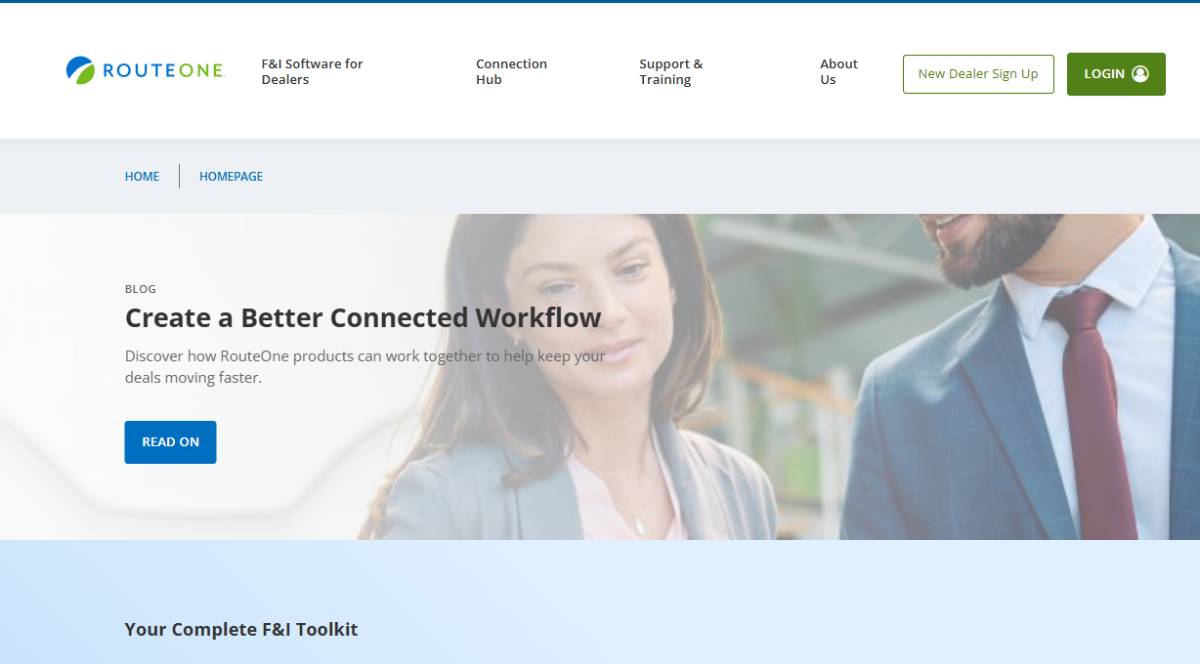
RouteOne is positioned within the evolving automotive finance technology market, helping connect dealers, lenders and other stakeholders through digital processes. Its technology-focused approach reflects the auto industry's broader shift toward faster financing workflows, greater transaction visibility and more connected dealership operations, with implications for automotive businesses seeking efficiency and scalable digital infrastructure.
RouteOne operates at the intersection of automotive retail, financing and digital transaction management. Its platform is designed to support connections between automotive dealers and financial institutions while helping streamline finance-related workflows.
The model addresses a longstanding challenge in vehicle sales: coordinating information between dealerships, lenders and customers during the financing process.
Digitalizing these interactions can reduce administrative friction, accelerate transaction processing and improve visibility across stakeholders. For dealerships, more efficient financing workflows can contribute to smoother customer experiences and improved operational productivity.
The platform's relevance extends across the automotive ecosystem, where dealers and lenders increasingly depend on connected technology to manage complex transactions and respond to changing consumer expectations.
Automotive retail has undergone significant digital transformation as consumers increasingly expect online-enabled purchasing, financing and service experiences. At the same time, dealerships continue to manage complex relationships with multiple lenders and financial-service providers.
This environment has increased demand for technology capable of connecting participants and simplifying traditionally fragmented processes. Automotive financing involves substantial amounts of documentation, credit information and regulatory requirements, making efficient information exchange particularly important.
RouteOne fits into this broader transformation by supporting digital connectivity between dealers and finance providers. The value of such infrastructure extends beyond transaction speed. Better-connected systems can help reduce duplicate data entry, improve information accuracy and provide stakeholders with greater visibility into financing activity.
For executives, the strategic issue is increasingly about creating an integrated automotive retail ecosystem. Technology that can connect dealership operations with financial partners can become an important component of that model.
Industry analysts generally view automotive finance technology as an important component of dealership modernization. As vehicle transactions become increasingly digital, finance processes must keep pace with changing customer expectations without sacrificing compliance or security.
From a dealership perspective, connectivity with multiple lenders can simplify workflows and reduce the operational burden associated with managing separate processes. For lenders, standardized digital interactions can potentially improve efficiency and provide more structured access to transaction information.
Experts also emphasize that technology alone does not eliminate the complexity of automotive financing. Credit decisions, regulatory requirements, consumer consent and data security remain critical considerations.
The competitive advantage therefore lies in combining connectivity with reliable workflows, strong data management and a user experience that supports both dealership personnel and customers.
RouteOne's positioning reflects this wider industry direction: automotive technology is increasingly focused on connecting previously separate stages of the vehicle purchasing and financing journey.
For automotive businesses, digital finance infrastructure can help improve transaction efficiency while reducing manual administrative work. Dealers may benefit from faster communication with lenders and more streamlined financing processes.
Financial institutions can also gain from standardized digital interactions with dealership partners, potentially improving operational consistency. For consumers, smoother financing workflows could contribute to a more efficient vehicle-buying experience, although transparency and responsible handling of financial information remain essential.
Executives should evaluate automotive finance platforms based on lender connectivity, workflow efficiency, integration capabilities, security and regulatory compliance. From a policy perspective, digital automotive finance increases the importance of consumer-data protection, financial transparency and responsible processing of sensitive information. Technology adoption must therefore advance alongside appropriate governance and compliance frameworks.
Automotive finance is likely to become increasingly integrated with digital retail platforms as dealers, lenders and consumers demand faster and more connected transactions. RouteOne's future significance will depend on its ability to support evolving dealership workflows, lender requirements and consumer expectations. Decision-makers should monitor automation, platform integration, data security and regulatory developments as the automotive industry continues moving toward a more digitally connected purchasing and financing ecosystem.
Source: RouteOne / Serchen
Date: August 14, 2026


