



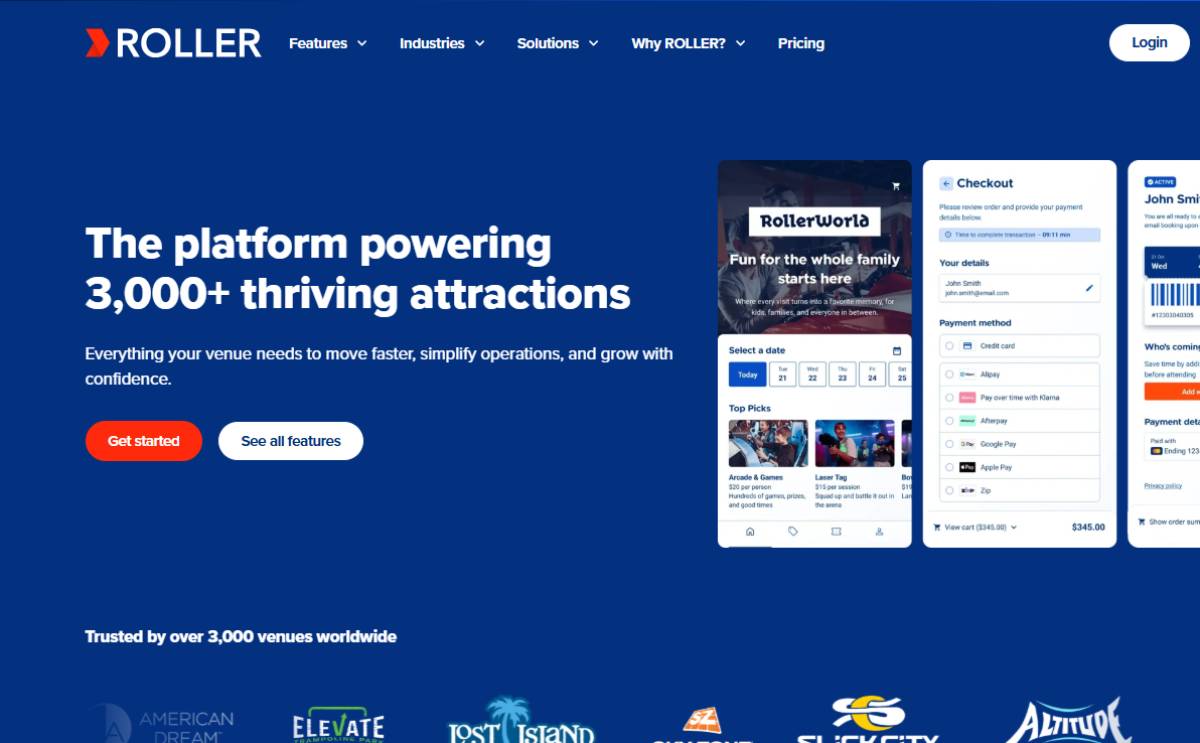
ROLLER is strengthening the digital transformation of leisure and attractions businesses through an integrated platform designed to simplify bookings, payments, guest engagement and venue operations. Its technology-led approach reflects a broader industry shift toward automation and intelligent software, helping operators improve efficiency, personalize customer experiences and build scalable revenue strategies.
ROLLER provides a centralized platform for attractions and leisure operators to manage ticketing, bookings, memberships, payments, customer relationships and operational workflows. Its technology strategy increasingly incorporates artificial intelligence to support both customer-facing interactions and internal business processes.
The platform is designed to help venues automate routine tasks while providing operators with greater visibility into performance and customer activity. Its capabilities span online and on-site transactions, reporting, marketing, guest engagement and operational management.
By bringing these functions together, ROLLER is positioning itself as a technology partner for attractions seeking to replace fragmented systems with a more connected digital operating environment.
The development comes as attractions, entertainment venues and leisure businesses face increasing pressure to deliver seamless digital experiences while controlling operating costs. Customers increasingly expect fast online booking, flexible payment options, personalized communication and immediate access to information.
At the same time, venue operators are managing increasingly complex operations across ticketing, memberships, events, customer service and revenue management. Traditional disconnected software systems can make it difficult for executives to obtain a unified view of business performance.
ROLLER's approach reflects the wider evolution of cloud-based business software, where platforms are moving beyond basic transaction management toward automation, analytics and intelligent decision support. For attraction operators, this transformation could improve operational visibility while enabling teams to focus more heavily on customer experience and revenue generation.
The trend also highlights the growing importance of scalable technology for businesses operating multiple venues or managing fluctuating visitor demand. Industry analysis increasingly points toward automation as an important component of the next generation of venue management. For attractions, automated workflows can reduce repetitive administrative activities while allowing employees to concentrate on higher-value customer interactions.
ROLLER's technology strategy reflects this direction by connecting customer engagement, booking management, payments and operational information within one platform. From an executive perspective, the value extends beyond individual software features. A unified technology environment can provide decision-makers with a clearer understanding of customer behavior, operational performance and revenue opportunities.
The increasing use of artificial intelligence also introduces a new dimension. AI-enabled systems can potentially support customer inquiries, identify opportunities and assist employees with routine processes. However, executives must balance automation with accuracy, transparency, data protection and appropriate human oversight.
The broader industry response will likely depend on whether these technologies deliver measurable improvements in customer satisfaction, operational productivity and financial performance.
For business leaders, ROLLER's platform highlights the potential advantages of consolidating multiple operational functions into a unified digital environment. Attractions can potentially reduce administrative complexity, improve customer communication and gain greater visibility across their operations.
For investors and executives, the more important consideration is measurable business impact. Technology investments will increasingly be assessed against metrics such as booking conversion, customer retention, labor efficiency, revenue growth and operating costs.
Consumers may benefit from faster booking processes, more convenient digital interactions and more personalized experiences. At the same time, organizations adopting automation will need clear policies around customer data, cybersecurity, AI governance and human intervention.
As digital systems become more deeply integrated into customer-facing operations, responsible technology management will become an increasingly important executive priority.
ROLLER's development reflects a broader movement toward intelligent, connected technology for the global attractions and leisure industry. The next stage will likely focus on deeper automation, advanced analytics, personalization and AI-assisted decision-making. Decision-makers should watch how effectively these capabilities translate into measurable operational and commercial results. For the sector, the competitive advantage may increasingly belong to operators that combine technology efficiency with strong, human-centered guest experiences.
Source: Crozdesk
Date: August 2026


