
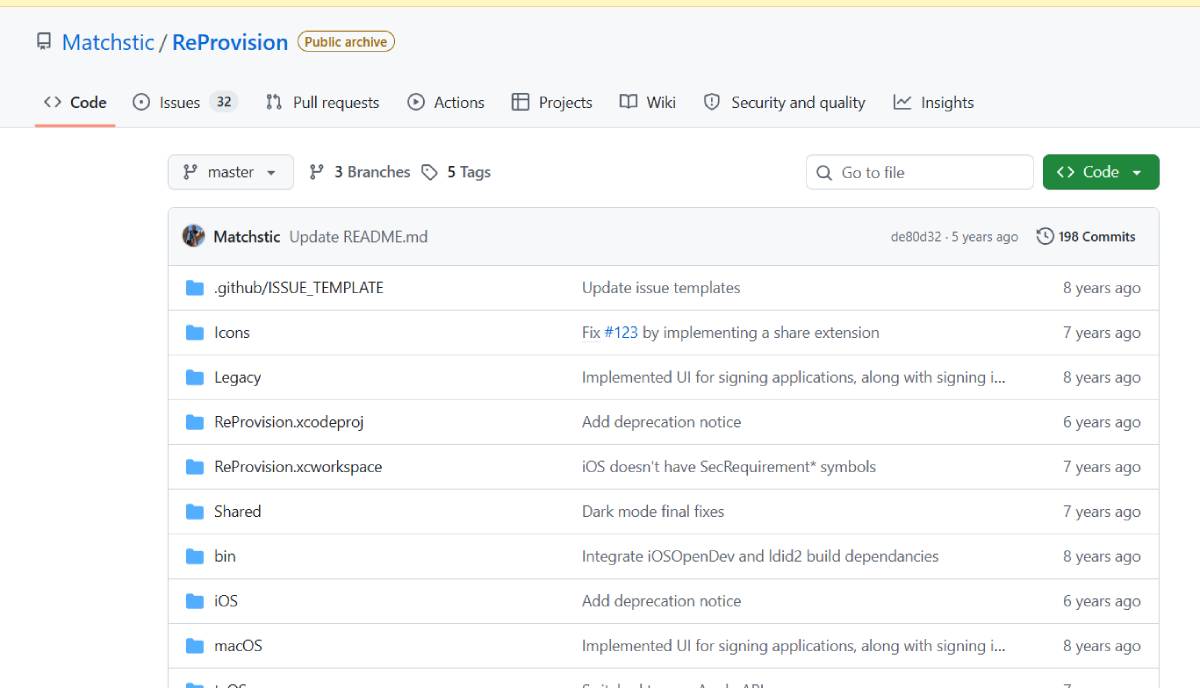
ReProvision Simplifies iOS App Management

ReProvision is designed to automate the re-signing and renewal of sideloaded iOS applications by managing Apple developer certificates and provisioning profiles on supported devices.

July 31, 2026
|

Growing demand for greater flexibility in mobile application management is increasing interest in tools that simplify iOS app signing and certificate renewal. ReProvision reflects this trend by automating portions of the app provisioning process for eligible devices, highlighting evolving user expectations around mobile software deployment and device management.

ReProvision is designed to automate the re-signing and renewal of sideloaded iOS applications by managing Apple developer certificates and provisioning profiles on supported devices. The tool reduces the manual effort required to keep compatible applications operational, improving workflow efficiency for users who rely on alternative app deployment methods.

Key stakeholders include independent developers, mobile technology enthusiasts, enterprise testers, and software researchers. The platform reflects continued demand for streamlined device management solutions while illustrating the growing interest in automation within mobile development ecosystems. Its functionality also underscores ongoing discussions surrounding software distribution models and platform flexibility.

Mobile operating systems have become increasingly secure through code-signing requirements, application verification, and tightly managed software distribution channels. Apple's ecosystem emphasizes controlled application deployment through the App Store and official enterprise programs, creating a highly secure environment for consumers while limiting alternative installation methods.

This development aligns with a broader trend across global technology markets where developers seek greater flexibility during software testing, beta distribution, and research activities. Automation tools that simplify certificate management and application provisioning have emerged to reduce repetitive administrative work for technical users.

At the same time, cybersecurity concerns, platform governance, and digital trust continue shaping regulatory discussions around application security, software integrity, and user protection. Organizations increasingly balance innovation with compliance, ensuring that productivity enhancements do not compromise device security or organizational risk management.

Mobile security analysts note that automated provisioning solutions demonstrate the increasing demand for developer productivity while highlighting the importance of maintaining secure certificate management practices. Efficient automation can reduce operational overhead for developers and testing teams when used within legitimate development environments.

Industry observers also emphasize that organizations should follow official platform policies, developer agreements, and enterprise deployment standards when managing mobile applications. Proper governance remains essential to protecting intellectual property, maintaining software integrity, and ensuring regulatory compliance.

Technology experts expect future mobile development platforms to incorporate more automated certificate management, cloud-based testing infrastructure, continuous integration pipelines, and secure deployment workflows. These capabilities could further improve software delivery efficiency without compromising platform security expectations.

For businesses, efficient application lifecycle management supports faster software testing, reduced administrative effort, and improved developer productivity. Enterprises investing in mobile applications increasingly prioritize secure automation that integrates with existing development operations.

Investors continue monitoring enterprise mobility, DevOps, and mobile application management technologies as organizations accelerate digital transformation initiatives. Policymakers and platform operators remain focused on balancing innovation with cybersecurity, privacy, software integrity, and trusted distribution frameworks.

For executives, strengthening mobile application governance while adopting secure automation tools may become increasingly important as enterprise mobility continues expanding. Demand for secure mobile development automation is expected to grow alongside enterprise application development and digital workplace transformation. Decision-makers should monitor evolving platform policies, developer ecosystem changes, mobile security standards, and enterprise deployment technologies. Organizations that successfully combine operational efficiency with strong governance, compliance, and cybersecurity practices will remain well positioned in the rapidly evolving mobile software landscape.

Source: AlternativeTo
Date: July 31, 2026

  • Featured tools
Surfer AI
Free

Surfer AI is an AI-powered content creation assistant built into the Surfer SEO platform, designed to generate SEO-optimized articles from prompts, leveraging data from search results to inform tone, structure, and relevance.

#
SEO
Learn more
Twistly AI
Paid

Twistly AI is a PowerPoint add-in that allows users to generate full slide decks, improve existing presentations, and convert various content types into polished slides directly within Microsoft PowerPoint.It streamlines presentation creation using AI-powered text analysis, image generation and content conversion.

#
Presentation
Learn more

Learn more about future of AI

Join 80,000+ Ai enthusiast getting weekly updates on exciting AI tools.
Thank you! Your submission has been received!
Oops! Something went wrong while submitting the form.

ReProvision Simplifies iOS App Management

July 31, 2026

ReProvision is designed to automate the re-signing and renewal of sideloaded iOS applications by managing Apple developer certificates and provisioning profiles on supported devices.

Growing demand for greater flexibility in mobile application management is increasing interest in tools that simplify iOS app signing and certificate renewal. ReProvision reflects this trend by automating portions of the app provisioning process for eligible devices, highlighting evolving user expectations around mobile software deployment and device management.

ReProvision is designed to automate the re-signing and renewal of sideloaded iOS applications by managing Apple developer certificates and provisioning profiles on supported devices. The tool reduces the manual effort required to keep compatible applications operational, improving workflow efficiency for users who rely on alternative app deployment methods.

Key stakeholders include independent developers, mobile technology enthusiasts, enterprise testers, and software researchers. The platform reflects continued demand for streamlined device management solutions while illustrating the growing interest in automation within mobile development ecosystems. Its functionality also underscores ongoing discussions surrounding software distribution models and platform flexibility.

Mobile operating systems have become increasingly secure through code-signing requirements, application verification, and tightly managed software distribution channels. Apple's ecosystem emphasizes controlled application deployment through the App Store and official enterprise programs, creating a highly secure environment for consumers while limiting alternative installation methods.

This development aligns with a broader trend across global technology markets where developers seek greater flexibility during software testing, beta distribution, and research activities. Automation tools that simplify certificate management and application provisioning have emerged to reduce repetitive administrative work for technical users.

At the same time, cybersecurity concerns, platform governance, and digital trust continue shaping regulatory discussions around application security, software integrity, and user protection. Organizations increasingly balance innovation with compliance, ensuring that productivity enhancements do not compromise device security or organizational risk management.

Mobile security analysts note that automated provisioning solutions demonstrate the increasing demand for developer productivity while highlighting the importance of maintaining secure certificate management practices. Efficient automation can reduce operational overhead for developers and testing teams when used within legitimate development environments.

Industry observers also emphasize that organizations should follow official platform policies, developer agreements, and enterprise deployment standards when managing mobile applications. Proper governance remains essential to protecting intellectual property, maintaining software integrity, and ensuring regulatory compliance.

Technology experts expect future mobile development platforms to incorporate more automated certificate management, cloud-based testing infrastructure, continuous integration pipelines, and secure deployment workflows. These capabilities could further improve software delivery efficiency without compromising platform security expectations.

For businesses, efficient application lifecycle management supports faster software testing, reduced administrative effort, and improved developer productivity. Enterprises investing in mobile applications increasingly prioritize secure automation that integrates with existing development operations.

Investors continue monitoring enterprise mobility, DevOps, and mobile application management technologies as organizations accelerate digital transformation initiatives. Policymakers and platform operators remain focused on balancing innovation with cybersecurity, privacy, software integrity, and trusted distribution frameworks.

For executives, strengthening mobile application governance while adopting secure automation tools may become increasingly important as enterprise mobility continues expanding. Demand for secure mobile development automation is expected to grow alongside enterprise application development and digital workplace transformation. Decision-makers should monitor evolving platform policies, developer ecosystem changes, mobile security standards, and enterprise deployment technologies. Organizations that successfully combine operational efficiency with strong governance, compliance, and cybersecurity practices will remain well positioned in the rapidly evolving mobile software landscape.

Source: AlternativeTo
Date: July 31, 2026

Promote Your Tool

Copy Embed Code

Similar Blogs

July 31, 2026
|

Deep Realms Advances Immersive Digital Experiences

Deep Realms is positioned within the category of immersive digital experiences, offering users a platform focused on exploration, creativity, and interactive engagement.
Read more
July 31, 2026
|

Spirality Expands Creative Generative Design Tools

Spirality is a digital creativity tool focused on generating spiral-based artwork, patterns, and visually engaging designs through automated processes.
Read more
July 31, 2026
|

Gallery DL Enhances Automated Content Management

Gallery-DL is a command-line program designed for downloading image galleries and collections from various online sources.
Read more
July 31, 2026
|

Transwiz Simplifies Windows Data Migration

Transwiz is designed to assist users and IT teams in transferring Windows user profiles, settings, and personal data between computers.
Read more
July 31, 2026
|

Moviejoy Drives Digital Entertainment Growth

The continued expansion of digital entertainment platforms reflects changing consumer viewing habits and accelerating investment in streaming technologies.
Read more
July 31, 2026
|

Hex Edit Advances Low-Level Data Engineering

Hex Edit provides developers, engineers, and IT professionals with the ability to inspect and modify binary files at the hexadecimal level.
Read more