



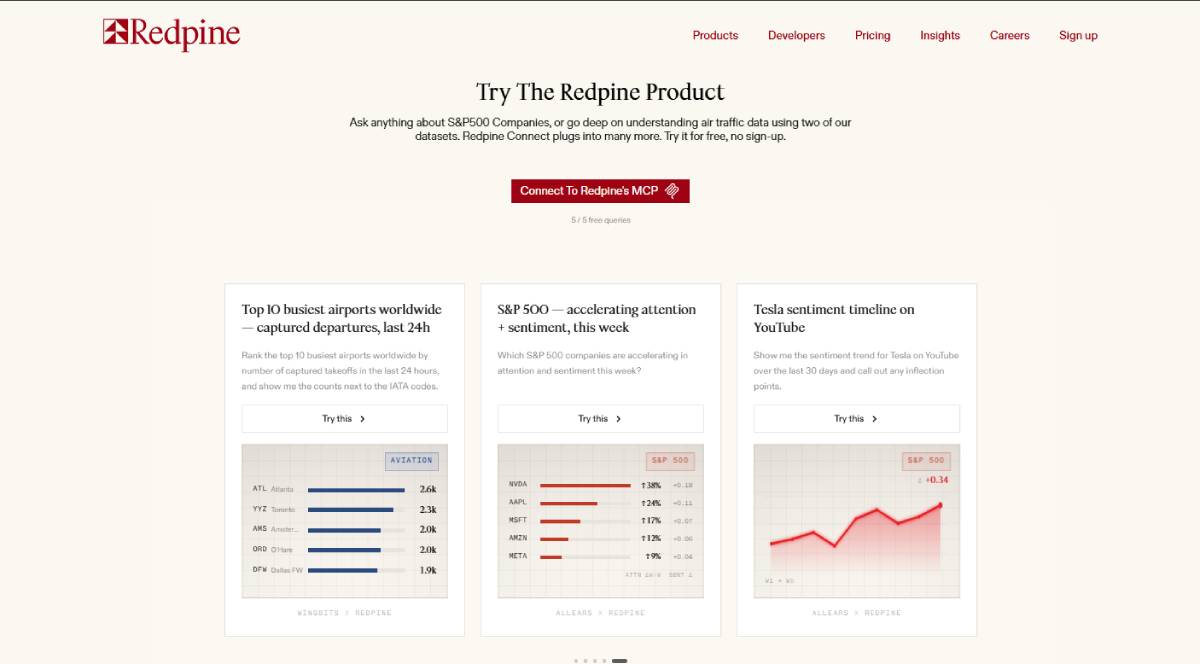
A major development in the AI data infrastructure space unfolded as Redpine secured €6.8 million in fresh funding to build a licensed data platform for AI agents. The startup aims to standardize access to compliant, high-quality datasets, signaling a shift toward regulated, subscription-style data ecosystems for enterprise AI deployment.
Redpine has raised €6.8 million in early-stage funding to develop what it describes as a “Spotify-like” infrastructure for licensed data consumption. The platform is designed to enable AI agents and enterprise systems to access structured, rights-cleared datasets through a unified API layer.
The round includes participation from European venture investors focused on AI infrastructure and data governance. The company intends to use the capital to expand dataset partnerships, strengthen licensing frameworks, and scale its developer-facing API stack. The approach targets enterprises building autonomous AI agents that require legally compliant, real-time access to curated data sources across industries.
The rise of generative AI has exposed a foundational bottleneck: access to clean, legally licensed, and structured datasets. While model capabilities have advanced rapidly, data sourcing remains fragmented, legally complex, and operationally inefficient for enterprise deployment.
Across global markets, regulators are tightening scrutiny around data provenance, copyright usage, and training transparency. This has created demand for infrastructure that can bridge the gap between raw data providers and AI system developers.
Redpine’s model aligns with a broader industry shift toward “data infrastructure layers” that sit between publishers, data owners, and AI developers. Similar to how Spotify transformed music distribution through licensing aggregation, Redpine is attempting to consolidate fragmented data rights into a standardized, monetizable ecosystem for AI agents.
Industry observers argue that licensed data infrastructure is becoming a critical layer in the AI value chain, particularly as enterprises move from experimental models to production-grade AI agents. Analysts note that the lack of standardized data licensing frameworks has been one of the biggest friction points in scaling enterprise AI systems.
Venture capital perspectives suggest that platforms like Redpine could benefit from increasing regulatory pressure in the EU around data governance and AI transparency. Experts highlight that the “agent economy” will require continuous, real-time access to structured external data sources, making API-first licensing platforms strategically important.
Some market watchers caution, however, that data aggregation businesses face complex negotiations with publishers, enterprises, and rights holders, which could slow scalability despite strong demand signals.
For enterprises, Redpine’s model could simplify compliance-heavy data sourcing and reduce legal risks associated with training and deploying AI agents. This may accelerate adoption of autonomous systems in regulated industries such as finance, healthcare, and logistics.
For investors, the deal highlights a growing opportunity in “AI data infrastructure,” a segment increasingly seen as foundational alongside compute and model layers. Policymakers may also view such platforms as critical intermediaries for enforcing data usage rights and ensuring transparency in AI systems.
However, businesses will need to reassess data procurement strategies, vendor dependencies, and licensing costs as structured data becomes increasingly monetized. The next phase will test Redpine’s ability to secure large-scale data partnerships and prove that its licensing model can scale across industries and jurisdictions. Market attention will focus on whether AI agent adoption accelerates demand for standardized data APIs. If successful, the company could position itself as a core infrastructure layer in the emerging AI agent economy.
Source: NordicTech News
Date: June 30, 2026


