
QuickBooks Strengthens Enterprise Business

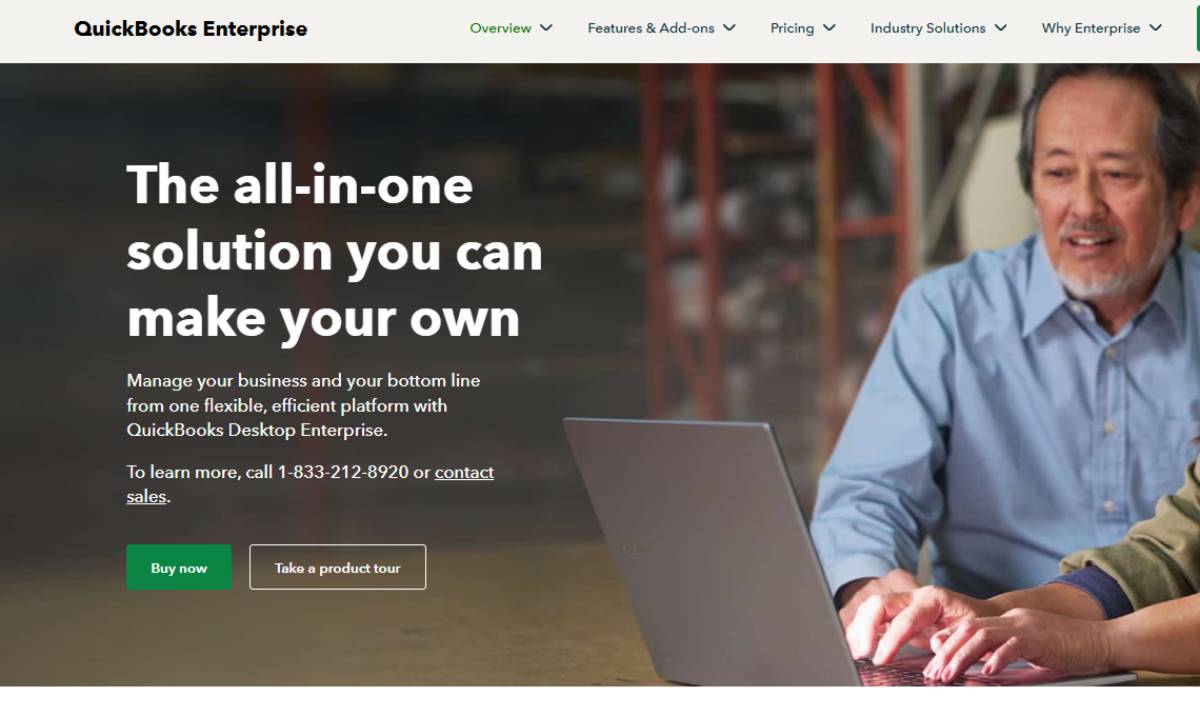
QuickBooks Desktop Enterprise is designed for businesses that require more advanced accounting capabilities than entry-level financial software typically provides.

August 12, 2026
|

QuickBooks Desktop Enterprise continues to serve growing businesses with a comprehensive accounting environment designed to manage finances, inventory, payroll, reporting and operational workflows. Its focus on scalable financial management reflects the ongoing demand among mid-sized organizations for greater control, automation and visibility without immediately moving every core accounting process to the cloud.

QuickBooks Desktop Enterprise is designed for businesses that require more advanced accounting capabilities than entry-level financial software typically provides. The platform supports financial reporting, accounts payable and receivable, inventory management, job costing, payroll and customized business reporting.

Its multi-user architecture allows organizations to provide different employees with controlled access to financial information and workflows. Advanced reporting and industry-specific functionality can also help management teams monitor business performance and make operational decisions using centralized financial data.

The product has historically been positioned toward businesses with more complex accounting requirements, including construction, manufacturing, wholesale and professional services organizations.

The accounting-software market is undergoing a significant transition as businesses increasingly evaluate cloud-based platforms, automation and integrated financial ecosystems. At the same time, many established companies continue to operate complex processes that depend on desktop accounting environments, particularly where customized workflows, historical data and established internal controls remain important.

QuickBooks Desktop Enterprise occupies this space by offering a broader feature set aimed at organizations with larger transaction volumes and more sophisticated accounting requirements. Its capabilities can help businesses manage multiple operational areas through a centralized financial system.

The platform's relevance also reflects a wider challenge facing mid-sized companies: balancing modernization with continuity. Migrating accounting infrastructure can involve significant training, data-management and process-change requirements. For organizations that prioritize established workflows and extensive functionality, a mature desktop environment can remain strategically relevant while businesses assess longer-term technology strategies.

From an executive perspective, the value of enterprise accounting software increasingly depends on how effectively it connects financial information with operational decision-making. Businesses want finance teams to move beyond transaction processing and provide timely insight into profitability, inventory, costs and cash flow.

QuickBooks Desktop Enterprise addresses this requirement through advanced reporting, customizable workflows and broader financial-management capabilities. Its ability to support multiple users and complex business processes can be particularly relevant for organizations where accounting responsibilities are distributed across departments.

However, industry observers increasingly emphasize the importance of integration, cybersecurity, accessibility and automation when evaluating financial systems. As businesses compare desktop and cloud platforms, decision-makers are likely to examine not only accounting functionality but also data accessibility, ecosystem compatibility, ongoing support and the total cost of maintaining their technology infrastructure.

For business leaders, enterprise accounting software can provide stronger financial oversight across purchasing, sales, inventory, payroll and reporting. Better visibility can support budgeting, cash-flow planning and operational decision-making while reducing dependence on disconnected spreadsheets and manual processes.

For finance departments, standardized workflows and role-based access can strengthen internal controls and improve accountability. Organizations with industry-specific requirements may also benefit from functionality tailored to complex costing and inventory processes.

The broader policy consideration is increasingly focused on financial-data security, privacy, compliance and digital resilience. As companies modernize their accounting infrastructure, executives must evaluate how financial systems protect sensitive information while meeting evolving regulatory and reporting expectations.

The future of enterprise accounting will increasingly combine established financial controls with automation, integration and real-time intelligence. QuickBooks Desktop Enterprise remains relevant for businesses that value extensive functionality and established desktop workflows, but technology leaders will continue weighing those benefits against the growing capabilities of cloud-based alternatives. The strategic priority will be selecting an accounting environment that can scale with business complexity while maintaining security, efficiency and financial visibility.

Source: Crozdesk
Date: August 12, 2026

  • Featured tools
Figstack AI
Free

Figstack AI is an intelligent assistant for developers that explains code, generates docstrings, converts code between languages, and analyzes time complexity helping you work smarter, not harder.

#
Coding
Learn more
Writesonic AI
Free

Writesonic AI is a versatile AI writing platform designed for marketers, entrepreneurs, and content creators. It helps users create blog posts, ad copies, product descriptions, social media posts, and more with ease. With advanced AI models and user-friendly tools, Writesonic streamlines content production and saves time for busy professionals.

#
Copywriting
Learn more

Learn more about future of AI

Join 80,000+ Ai enthusiast getting weekly updates on exciting AI tools.
Thank you! Your submission has been received!
Oops! Something went wrong while submitting the form.

QuickBooks Strengthens Enterprise Business

August 12, 2026

QuickBooks Desktop Enterprise is designed for businesses that require more advanced accounting capabilities than entry-level financial software typically provides.

QuickBooks Desktop Enterprise continues to serve growing businesses with a comprehensive accounting environment designed to manage finances, inventory, payroll, reporting and operational workflows. Its focus on scalable financial management reflects the ongoing demand among mid-sized organizations for greater control, automation and visibility without immediately moving every core accounting process to the cloud.

QuickBooks Desktop Enterprise is designed for businesses that require more advanced accounting capabilities than entry-level financial software typically provides. The platform supports financial reporting, accounts payable and receivable, inventory management, job costing, payroll and customized business reporting.

Its multi-user architecture allows organizations to provide different employees with controlled access to financial information and workflows. Advanced reporting and industry-specific functionality can also help management teams monitor business performance and make operational decisions using centralized financial data.

The product has historically been positioned toward businesses with more complex accounting requirements, including construction, manufacturing, wholesale and professional services organizations.

The accounting-software market is undergoing a significant transition as businesses increasingly evaluate cloud-based platforms, automation and integrated financial ecosystems. At the same time, many established companies continue to operate complex processes that depend on desktop accounting environments, particularly where customized workflows, historical data and established internal controls remain important.

QuickBooks Desktop Enterprise occupies this space by offering a broader feature set aimed at organizations with larger transaction volumes and more sophisticated accounting requirements. Its capabilities can help businesses manage multiple operational areas through a centralized financial system.

The platform's relevance also reflects a wider challenge facing mid-sized companies: balancing modernization with continuity. Migrating accounting infrastructure can involve significant training, data-management and process-change requirements. For organizations that prioritize established workflows and extensive functionality, a mature desktop environment can remain strategically relevant while businesses assess longer-term technology strategies.

From an executive perspective, the value of enterprise accounting software increasingly depends on how effectively it connects financial information with operational decision-making. Businesses want finance teams to move beyond transaction processing and provide timely insight into profitability, inventory, costs and cash flow.

QuickBooks Desktop Enterprise addresses this requirement through advanced reporting, customizable workflows and broader financial-management capabilities. Its ability to support multiple users and complex business processes can be particularly relevant for organizations where accounting responsibilities are distributed across departments.

However, industry observers increasingly emphasize the importance of integration, cybersecurity, accessibility and automation when evaluating financial systems. As businesses compare desktop and cloud platforms, decision-makers are likely to examine not only accounting functionality but also data accessibility, ecosystem compatibility, ongoing support and the total cost of maintaining their technology infrastructure.

For business leaders, enterprise accounting software can provide stronger financial oversight across purchasing, sales, inventory, payroll and reporting. Better visibility can support budgeting, cash-flow planning and operational decision-making while reducing dependence on disconnected spreadsheets and manual processes.

For finance departments, standardized workflows and role-based access can strengthen internal controls and improve accountability. Organizations with industry-specific requirements may also benefit from functionality tailored to complex costing and inventory processes.

The broader policy consideration is increasingly focused on financial-data security, privacy, compliance and digital resilience. As companies modernize their accounting infrastructure, executives must evaluate how financial systems protect sensitive information while meeting evolving regulatory and reporting expectations.

The future of enterprise accounting will increasingly combine established financial controls with automation, integration and real-time intelligence. QuickBooks Desktop Enterprise remains relevant for businesses that value extensive functionality and established desktop workflows, but technology leaders will continue weighing those benefits against the growing capabilities of cloud-based alternatives. The strategic priority will be selecting an accounting environment that can scale with business complexity while maintaining security, efficiency and financial visibility.

Source: Crozdesk
Date: August 12, 2026

Promote Your Tool

Copy Embed Code

Similar Blogs

August 12, 2026
|

Calendar Software Reshapes Digital Workflows Efficiently

Modern calendar and scheduling platforms increasingly extend beyond basic appointment management. Core capabilities include shared calendars, automated scheduling, availability coordination.
Read more
August 12, 2026
|

Bomgar Advances Secure Remote IT Access

Bomgar, now associated with BeyondTrust's remote support portfolio, has built its technology around secure remote access for enterprise IT and customer support operations.
Read more
August 12, 2026
|

Acuity Scheduling Advances Digital Appointment

Acuity Scheduling provides businesses with online appointment booking, calendar management, automated reminders, payment collection and client management capabilities.
Read more
August 12, 2026
|

Acronis Advances Integrated Cloud Cybersecurity Solutions

Acronis Cyber Protect Cloud combines cybersecurity, data protection, endpoint management and disaster recovery within a unified platform for managed service providers.
Read more
August 12, 2026
|

FixMe.IT Advances Digital IT Management

FixMe.IT provides organizations with tools for managing IT help desk operations, service requests, incidents, problems and technology assets.
Read more
August 12, 2026
|

Vyond Advances AI Enterprise Video Creation

Vyond provides organizations with tools for creating animated, mixed-media and AI-assisted videos across business functions.
Read more