



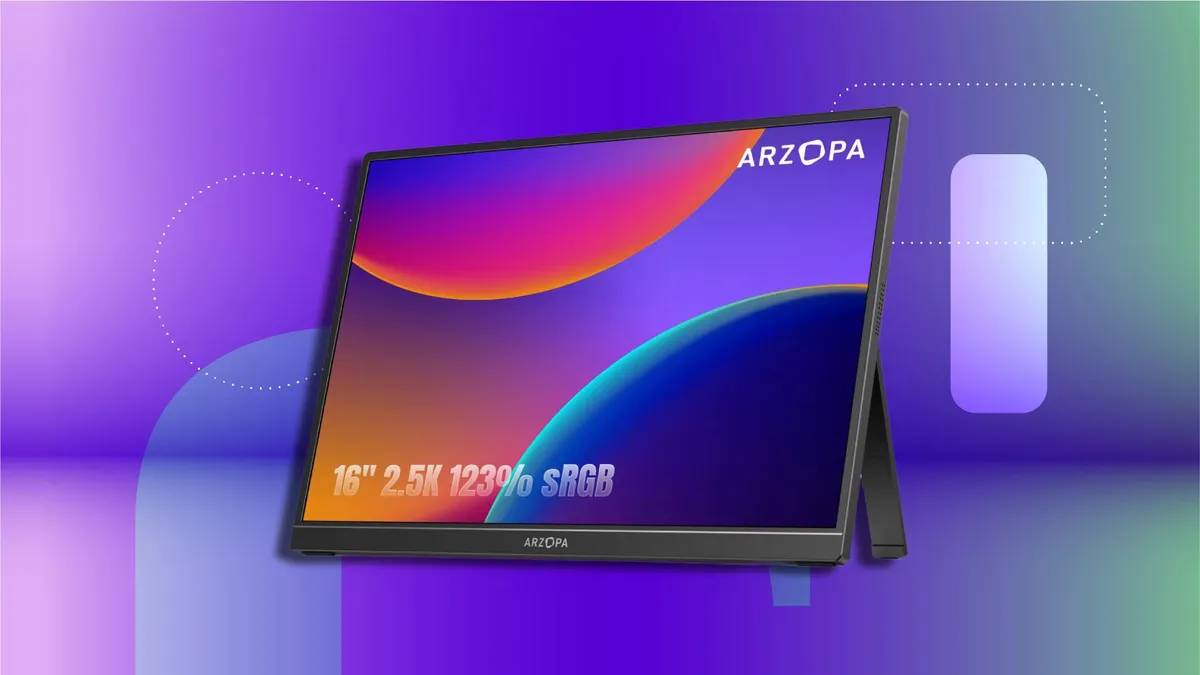
A discounted $104 portable monitor deal is drawing attention among remote workers and mobile professionals seeking expanded screen real estate. The offering reflects rising demand for flexible productivity tools in hybrid work environments, where portability and multi-screen setups are increasingly essential for efficiency, digital workflows, and on-the-go computing.
The deal features a portable second-screen monitor priced at $104, aimed at users who require additional display capacity for laptops, tablets, or mobile setups. The product is positioned for plug-and-play usability, supporting professionals working across multiple applications simultaneously.
Retail discounting highlights competitive pricing in the consumer electronics segment, where portable displays have become more accessible. The offering targets freelancers, students, and remote employees who rely on multitasking across spreadsheets, video conferencing, and creative tools. The timing aligns with ongoing seasonal promotions in global electronics retail markets, driving short-term demand spikes in productivity hardware categories.
The growing popularity of portable monitors reflects a broader transformation in work culture driven by hybrid and remote work models. Over the past few years, demand for flexible workspace solutions has surged as professionals seek to replicate multi-screen office setups outside traditional environments.
Portable displays have evolved from niche accessories into mainstream productivity tools, enabled by improvements in display technology, reduced power consumption, and USB-C connectivity standards. This shift is also tied to the expansion of the gig economy and digital-first workflows, where multitasking efficiency directly impacts output.
Globally, hardware manufacturers are competing in a saturated consumer electronics market, using aggressive pricing strategies and promotional deals to capture attention. The $104 price point reflects a broader trend of democratizing productivity technology, making multi-display setups accessible beyond enterprise users to individual consumers and students.
Industry analysts suggest that portable monitors are becoming a key growth segment within the broader personal computing accessories market. As hybrid work stabilizes globally, demand is shifting from basic laptop upgrades to workflow-enhancing peripherals that improve productivity without requiring full desktop setups.
Technology observers note that affordability is a major driver of adoption, with sub-$150 pricing opening the category to mass-market consumers. Retail analysts also highlight that promotional deals play a critical role in accelerating product visibility in highly competitive electronics segments.
Manufacturers and retailers emphasize plug-and-play compatibility, lightweight design, and cross-device functionality as key selling points. While no official corporate statements are associated with the specific deal, industry commentary consistently frames portable monitors as part of a broader ecosystem of remote productivity tools, alongside docking stations, wireless peripherals, and cloud-based collaboration platforms.
For businesses, the increasing affordability of portable monitors supports greater workforce flexibility, particularly in remote and hybrid environments. Companies may see improved productivity as employees adopt multi-screen workflows without requiring permanent office infrastructure.
For consumers, lower pricing reduces barriers to entry for productivity-enhancing tools, potentially reshaping expectations around digital work efficiency. Retailers benefit from rising demand in accessory categories that complement laptop and mobile ecosystems.
From a broader market perspective, the trend reinforces ongoing commoditization in consumer electronics, where value is increasingly driven by usability and ecosystem compatibility rather than standalone hardware innovation. This may pressure manufacturers to differentiate through software integration and bundled productivity solutions.
Looking ahead, portable monitor adoption is expected to expand further as hybrid work remains entrenched across global industries. Future competition will likely focus on higher resolution, improved portability, and seamless multi-device integration. Pricing pressure may continue as more brands enter the segment. The key question for the market is whether productivity peripherals become standard workplace equipment rather than optional accessories.
Source: CNET
Date: April 23, 2026


