
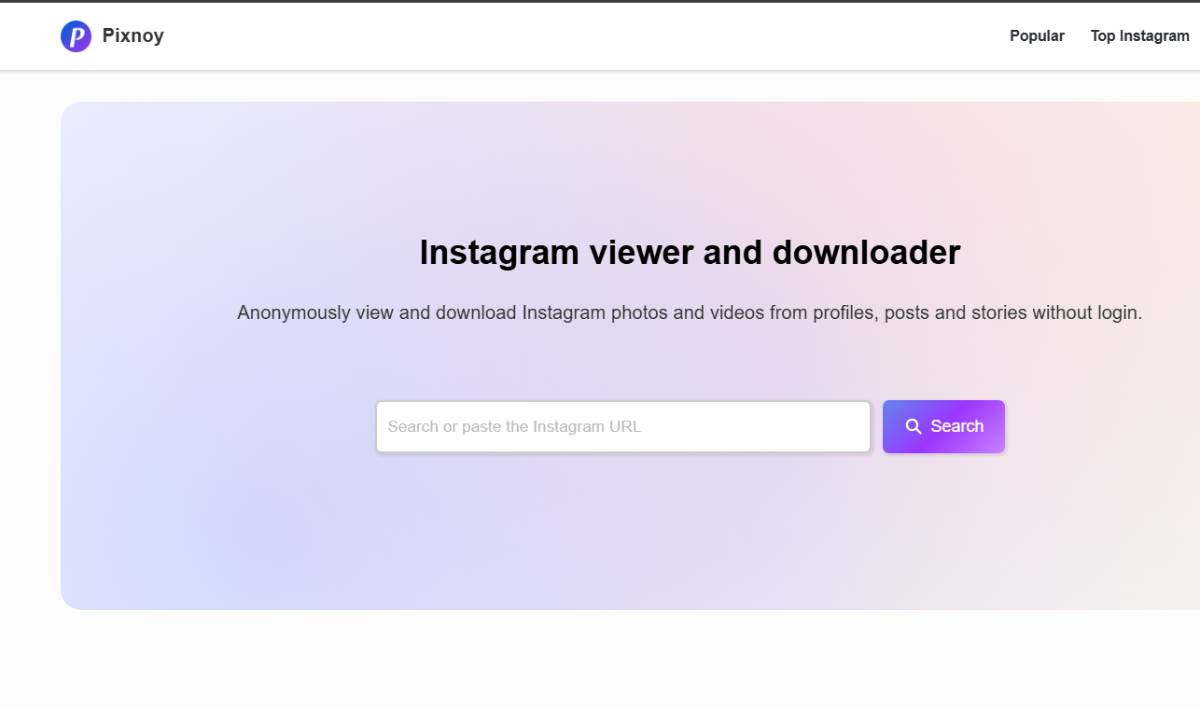
Pixnoy Expands Private Instagram Viewing

Pixnoy provides browser-based access to publicly available Instagram profiles, posts, reels, and stories without requiring users to create an Instagram account.

July 21, 2026
|

Pixnoy is gaining attention as a web-based platform that enables users to browse publicly available Instagram content without requiring an account or login. The platform reflects growing consumer demand for privacy-first digital experiences, highlighting broader shifts in how users access social media content while balancing convenience, anonymity, and data protection.

Pixnoy provides browser-based access to publicly available Instagram profiles, posts, reels, and stories without requiring users to create an Instagram account. The platform emphasizes anonymous browsing and a simplified viewing experience for publicly accessible content.

As consumers increasingly seek alternatives that minimize account creation and personal data sharing, services like Pixnoy have attracted interest among casual viewers, researchers, marketers, and media professionals. The platform represents part of a wider ecosystem of third-party tools that prioritize accessibility and user privacy while operating within the limits of publicly available social media information.

The digital economy has witnessed increasing concern over user privacy, data collection, and platform dependency. Social media companies continue expanding authentication requirements, personalized recommendations, and behavioral tracking to improve engagement and advertising performance. In response, a growing number of users are exploring privacy-focused alternatives that allow access to publicly available information without maintaining active accounts.

This trend aligns with broader movements toward anonymous browsing, decentralized digital services, and greater user control over personal data. Simultaneously, businesses increasingly rely on publicly accessible social media content for competitive intelligence, market research, and brand monitoring. Platforms like Pixnoy illustrate how third-party services can bridge accessibility gaps while reflecting evolving consumer preferences for convenience, transparency, and reduced digital footprints.

Technology analysts note that privacy has become a defining competitive factor across digital platforms, influencing both consumer behavior and software innovation. Industry experts argue that users increasingly value tools that reduce unnecessary data collection while preserving access to publicly available online information. Digital marketing specialists also recognize the usefulness of anonymous viewing platforms for market analysis, influencer research, and competitive monitoring.

However, experts emphasize that third-party services operating around major social platforms must continually adapt to changing platform policies, technical restrictions, and evolving privacy regulations. Industry observers believe future growth in this segment will depend on balancing user convenience, legal compliance, cybersecurity standards, and responsible handling of publicly accessible content.

For businesses, the growing popularity of privacy-oriented viewing tools reinforces the importance of managing public-facing digital content strategically, as information remains widely accessible beyond official platform ecosystems. Marketing teams may increasingly leverage anonymous browsing tools for competitive benchmarking and trend analysis without influencing platform algorithms.

Investors are likely to monitor opportunities in privacy-enhancing technologies and browser-based digital services. Regulators and platform operators, meanwhile, will continue evaluating how third-party applications interact with publicly available content while ensuring compliance with privacy legislation, platform terms of service, intellectual property protections, and responsible data usage standards.

Demand for privacy-first digital services is expected to continue growing as consumers seek greater control over their online activities. Future platforms may integrate artificial intelligence, enhanced search capabilities, and stronger privacy protections while adapting to evolving platform policies. Decision-makers should monitor developments in digital privacy regulation, platform governance, and consumer behavior as anonymous browsing tools become an increasingly visible component of the broader social media ecosystem.

Source: AlternativeTo
Date: July 21, 2026

  • Featured tools
Beautiful AI
Free

Beautiful AI is an AI-powered presentation platform that automates slide design and formatting, enabling users to create polished, on-brand presentations quickly.

#
Presentation
Learn more
Tome AI
Free

Tome AI is an AI-powered storytelling and presentation tool designed to help users create compelling narratives and presentations quickly and efficiently. It leverages advanced AI technologies to generate content, images, and animations based on user input.

#
Presentation
#
Startup Tools
Learn more

Learn more about future of AI

Join 80,000+ Ai enthusiast getting weekly updates on exciting AI tools.
Thank you! Your submission has been received!
Oops! Something went wrong while submitting the form.

Pixnoy Expands Private Instagram Viewing

July 21, 2026

Pixnoy provides browser-based access to publicly available Instagram profiles, posts, reels, and stories without requiring users to create an Instagram account.

Pixnoy is gaining attention as a web-based platform that enables users to browse publicly available Instagram content without requiring an account or login. The platform reflects growing consumer demand for privacy-first digital experiences, highlighting broader shifts in how users access social media content while balancing convenience, anonymity, and data protection.

Pixnoy provides browser-based access to publicly available Instagram profiles, posts, reels, and stories without requiring users to create an Instagram account. The platform emphasizes anonymous browsing and a simplified viewing experience for publicly accessible content.

As consumers increasingly seek alternatives that minimize account creation and personal data sharing, services like Pixnoy have attracted interest among casual viewers, researchers, marketers, and media professionals. The platform represents part of a wider ecosystem of third-party tools that prioritize accessibility and user privacy while operating within the limits of publicly available social media information.

The digital economy has witnessed increasing concern over user privacy, data collection, and platform dependency. Social media companies continue expanding authentication requirements, personalized recommendations, and behavioral tracking to improve engagement and advertising performance. In response, a growing number of users are exploring privacy-focused alternatives that allow access to publicly available information without maintaining active accounts.

This trend aligns with broader movements toward anonymous browsing, decentralized digital services, and greater user control over personal data. Simultaneously, businesses increasingly rely on publicly accessible social media content for competitive intelligence, market research, and brand monitoring. Platforms like Pixnoy illustrate how third-party services can bridge accessibility gaps while reflecting evolving consumer preferences for convenience, transparency, and reduced digital footprints.

Technology analysts note that privacy has become a defining competitive factor across digital platforms, influencing both consumer behavior and software innovation. Industry experts argue that users increasingly value tools that reduce unnecessary data collection while preserving access to publicly available online information. Digital marketing specialists also recognize the usefulness of anonymous viewing platforms for market analysis, influencer research, and competitive monitoring.

However, experts emphasize that third-party services operating around major social platforms must continually adapt to changing platform policies, technical restrictions, and evolving privacy regulations. Industry observers believe future growth in this segment will depend on balancing user convenience, legal compliance, cybersecurity standards, and responsible handling of publicly accessible content.

For businesses, the growing popularity of privacy-oriented viewing tools reinforces the importance of managing public-facing digital content strategically, as information remains widely accessible beyond official platform ecosystems. Marketing teams may increasingly leverage anonymous browsing tools for competitive benchmarking and trend analysis without influencing platform algorithms.

Investors are likely to monitor opportunities in privacy-enhancing technologies and browser-based digital services. Regulators and platform operators, meanwhile, will continue evaluating how third-party applications interact with publicly available content while ensuring compliance with privacy legislation, platform terms of service, intellectual property protections, and responsible data usage standards.

Demand for privacy-first digital services is expected to continue growing as consumers seek greater control over their online activities. Future platforms may integrate artificial intelligence, enhanced search capabilities, and stronger privacy protections while adapting to evolving platform policies. Decision-makers should monitor developments in digital privacy regulation, platform governance, and consumer behavior as anonymous browsing tools become an increasingly visible component of the broader social media ecosystem.

Source: AlternativeTo
Date: July 21, 2026

Promote Your Tool

Copy Embed Code

Similar Blogs

July 21, 2026
|

Coolors Revolutionizes Digital Color Design

Coolors has emerged as a widely used color-generation and design support platform, offering tools that help users create, explore, and manage color palettes efficiently.
Read more
July 21, 2026
|

Font Squirrel Advances Open-Source Typography

Font Squirrel has become a recognized resource for designers looking for free fonts suitable for personal and commercial projects.
Read more
July 21, 2026
|

Tumlook Evolves Visual Content Sharing

Tumlook emerged as a platform associated with visual content sharing and blogging experiences, offering users a way to organize, publish, and explore creative posts.
Read more
July 21, 2026
|

Weavesilk Showcases Generative Digital Creativity

Weavesilk became known as an interactive digital art platform that allows users to create symmetrical, flowing artwork through intuitive drawing movements.
Read more
July 21, 2026
|

SpotiDown Expands Digital Music Management

SpotiDown gained attention as a tool associated with downloading or managing music content from streaming platforms, reflecting user interest in offline access and personalized media experiences.
Read more
July 21, 2026
|

Ryubing Sparks Gaming Emulation Debate

Ryubing emerged as an alternative project connected to the wider Nintendo Switch emulation ecosystem, following increased interest in open-source gaming technologies.
Read more