
PeekYou Platforms Transform Digital Identity

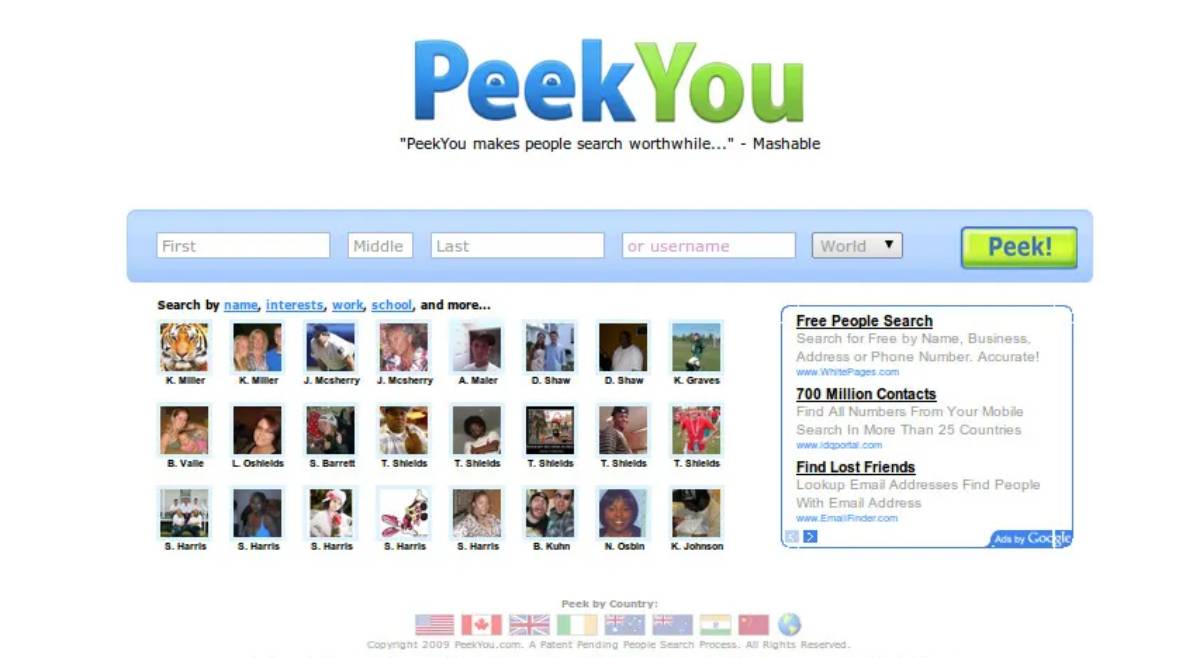
PeekYou is an online people search platform designed to help users discover publicly available information about individuals across digital sources.

July 29, 2026
|

The expansion of online people search platforms reflects growing interest in digital identity discovery, public information access, and online presence management. PeekYou represents a broader shift toward tools that organize publicly available information across the web, influencing how individuals, businesses, and researchers understand digital footprints in an increasingly connected world.

PeekYou is an online people search platform designed to help users discover publicly available information about individuals across digital sources. The service focuses on aggregating online profiles, social media references, and publicly accessible data to create searchable identity profiles.

The platform operates within the broader people-search and digital information ecosystem, where users increasingly seek ways to understand online identities. Key stakeholders include consumers, businesses conducting research, marketers, and privacy advocates. As digital footprints continue expanding, platforms in this category face increasing attention around accuracy, transparency, and responsible handling of publicly available information.

The growth of people search technology is closely connected to the expansion of the internet, social media, and digital identity. As individuals create more online profiles and publicly share information, demand has increased for tools that organize scattered digital records into searchable formats.

Over the past decade, businesses have used online identity research for recruitment, customer insights, fraud prevention, and market analysis. At the same time, privacy concerns have become a major discussion point as consumers seek greater control over their personal information.

The development of digital identity platforms aligns with a wider technology trend toward data aggregation and online intelligence services. However, increasing regulatory focus on data protection, consent, and transparency is reshaping how companies collect and present publicly available information. The balance between accessibility and privacy remains central to the future of this industry.

Technology analysts view people search platforms as part of the broader digital intelligence market, where information accessibility and data management continue evolving. Experts note that these services can provide value by helping users locate information, reconnect with contacts, and better understand online identities.

However, cybersecurity and privacy specialists emphasize the importance of responsible data practices. Industry observers argue that platforms must prioritize accuracy, user transparency, and compliance with emerging privacy regulations.

Analysts suggest that future developments in this sector will likely involve stronger verification systems, improved data management controls, and greater user empowerment. Artificial intelligence may also influence how digital information is organized and analyzed, creating both opportunities and challenges. As online identities become increasingly important, companies will need to build trust while delivering useful information services.

For businesses, digital identity platforms can support areas such as recruitment, customer research, fraud detection, and competitive analysis. Organizations using these tools must ensure compliance with privacy regulations and maintain ethical data practices.

Investors may view digital identity solutions as part of the expanding data economy, where information management becomes increasingly valuable. Policymakers face the challenge of creating frameworks that protect individual privacy while allowing responsible innovation.

Consumers are becoming more aware of their digital footprints and may demand greater control over personal information. The future success of people-search platforms will depend on transparency, security, and responsible use of publicly available data.

The digital identity sector is expected to evolve as artificial intelligence, privacy technologies, and data regulations reshape online information management. Decision-makers should monitor developments in identity verification, consumer data rights, and ethical data practices. Platforms that combine useful discovery tools with strong privacy protections will be better positioned as individuals and organizations navigate an increasingly interconnected digital environment.

Source: AlternativeTo
Date: July 21, 2026

  • Featured tools
Tome AI
Free

Tome AI is an AI-powered storytelling and presentation tool designed to help users create compelling narratives and presentations quickly and efficiently. It leverages advanced AI technologies to generate content, images, and animations based on user input.

#
Presentation
#
Startup Tools
Learn more
WellSaid Ai
Free

WellSaid AI is an advanced text-to-speech platform that transforms written text into lifelike, human-quality voiceovers.

#
Text to Speech
Learn more

Learn more about future of AI

Join 80,000+ Ai enthusiast getting weekly updates on exciting AI tools.
Thank you! Your submission has been received!
Oops! Something went wrong while submitting the form.

PeekYou Platforms Transform Digital Identity

July 29, 2026

PeekYou is an online people search platform designed to help users discover publicly available information about individuals across digital sources.

The expansion of online people search platforms reflects growing interest in digital identity discovery, public information access, and online presence management. PeekYou represents a broader shift toward tools that organize publicly available information across the web, influencing how individuals, businesses, and researchers understand digital footprints in an increasingly connected world.

PeekYou is an online people search platform designed to help users discover publicly available information about individuals across digital sources. The service focuses on aggregating online profiles, social media references, and publicly accessible data to create searchable identity profiles.

The platform operates within the broader people-search and digital information ecosystem, where users increasingly seek ways to understand online identities. Key stakeholders include consumers, businesses conducting research, marketers, and privacy advocates. As digital footprints continue expanding, platforms in this category face increasing attention around accuracy, transparency, and responsible handling of publicly available information.

The growth of people search technology is closely connected to the expansion of the internet, social media, and digital identity. As individuals create more online profiles and publicly share information, demand has increased for tools that organize scattered digital records into searchable formats.

Over the past decade, businesses have used online identity research for recruitment, customer insights, fraud prevention, and market analysis. At the same time, privacy concerns have become a major discussion point as consumers seek greater control over their personal information.

The development of digital identity platforms aligns with a wider technology trend toward data aggregation and online intelligence services. However, increasing regulatory focus on data protection, consent, and transparency is reshaping how companies collect and present publicly available information. The balance between accessibility and privacy remains central to the future of this industry.

Technology analysts view people search platforms as part of the broader digital intelligence market, where information accessibility and data management continue evolving. Experts note that these services can provide value by helping users locate information, reconnect with contacts, and better understand online identities.

However, cybersecurity and privacy specialists emphasize the importance of responsible data practices. Industry observers argue that platforms must prioritize accuracy, user transparency, and compliance with emerging privacy regulations.

Analysts suggest that future developments in this sector will likely involve stronger verification systems, improved data management controls, and greater user empowerment. Artificial intelligence may also influence how digital information is organized and analyzed, creating both opportunities and challenges. As online identities become increasingly important, companies will need to build trust while delivering useful information services.

For businesses, digital identity platforms can support areas such as recruitment, customer research, fraud detection, and competitive analysis. Organizations using these tools must ensure compliance with privacy regulations and maintain ethical data practices.

Investors may view digital identity solutions as part of the expanding data economy, where information management becomes increasingly valuable. Policymakers face the challenge of creating frameworks that protect individual privacy while allowing responsible innovation.

Consumers are becoming more aware of their digital footprints and may demand greater control over personal information. The future success of people-search platforms will depend on transparency, security, and responsible use of publicly available data.

The digital identity sector is expected to evolve as artificial intelligence, privacy technologies, and data regulations reshape online information management. Decision-makers should monitor developments in identity verification, consumer data rights, and ethical data practices. Platforms that combine useful discovery tools with strong privacy protections will be better positioned as individuals and organizations navigate an increasingly interconnected digital environment.

Source: AlternativeTo
Date: July 21, 2026

Promote Your Tool

Copy Embed Code

Similar Blogs

July 29, 2026
|

EmulationStation Enhances Retro Gaming Experience

EmulationStation is a front-end interface designed to organize and present video game emulation libraries through a streamlined user experience.
Read more
July 29, 2026
|

Tomoson Expands Influencer Marketing Collaboration

Tomoson operates as an influencer marketing platform designed to help brands collaborate with content creators and manage promotional campaigns.
Read more
July 29, 2026
|

ZeroBin.net Advances Secure Data Sharing

ZeroBin.net operates as a privacy-oriented platform that allows users to share encrypted information through temporary digital channels.
Read more
July 29, 2026
|

Gaia Expands Digital Knowledge Access

Gaia operates within the broader category of digital platforms focused on information discovery, organization, and knowledge accessibility.
Read more
July 29, 2026
|

MailDrop Expands Privacy Email Solutions

MailDrop operates as a temporary email service designed to help users create disposable email addresses for online registrations and digital interactions.
Read more
July 29, 2026
|

MacX YouTube Downloader Enhances Video Management

MacX YouTube Downloader is a multimedia software solution designed to support video downloading, conversion, and management from online platforms.
Read more