
Opera Expands AI Browser Ecosystem With Chatbot Connector

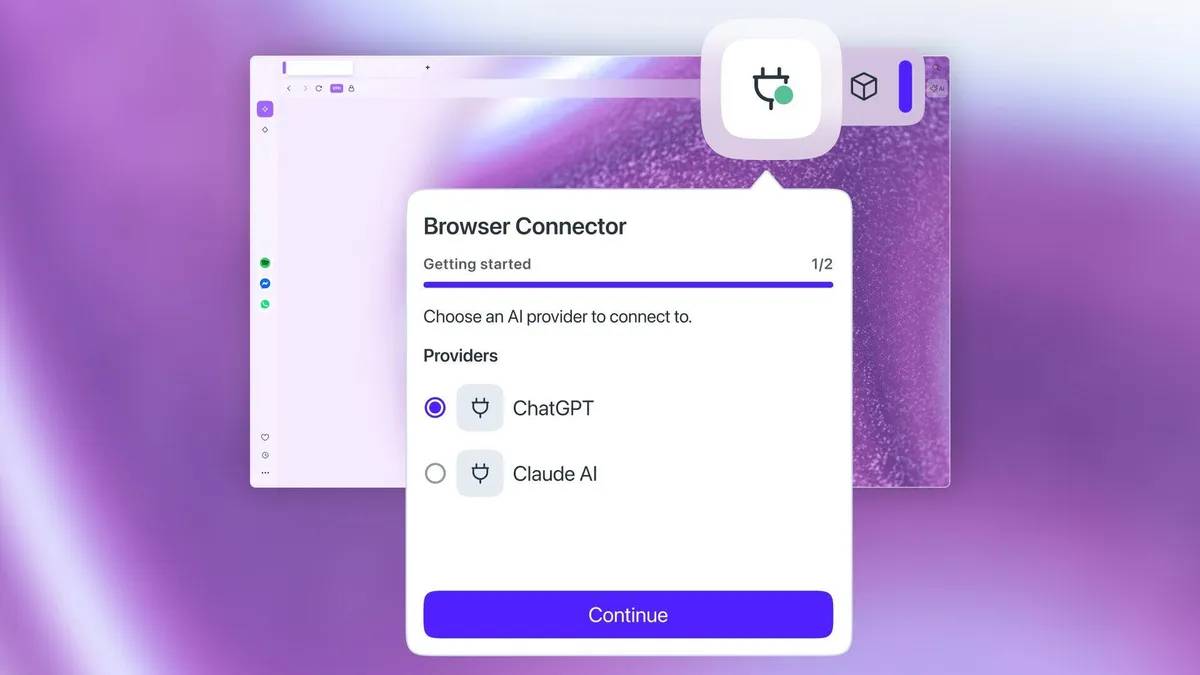
The new Browser Connector from Opera Browser enables seamless integration of external AI chatbots into the browsing interface, allowing users to access conversational AI tools without leaving active webpages.

April 20, 2026
|
Image Source: Opera

A major development in the browser wars has emerged as Opera Browser introduces a new “Browser Connector” feature designed to integrate AI chatbots directly into its browsing environment. The move signals a strategic shift toward AI-native browsing, intensifying competition among global tech firms to redefine user interaction, search, and productivity within the web ecosystem.

The new Browser Connector from Opera Browser enables seamless integration of external AI chatbots into the browsing interface, allowing users to access conversational AI tools without leaving active webpages. The feature is designed to support productivity, research, and contextual assistance in real time.

Key stakeholders include browser developers, AI platform providers, and enterprise software ecosystems. The rollout reflects an industry-wide race to embed AI capabilities into core internet infrastructure. This comes as competition intensifies among browsers seeking differentiation beyond speed and privacy, with AI integration emerging as a central competitive frontier in digital navigation tools.

The browser industry is undergoing a structural transformation driven by the rapid adoption of artificial intelligence. Traditional browsers, once defined by rendering speed and security features, are now evolving into intelligent platforms capable of contextual reasoning and task automation.

The development aligns with a broader trend across global markets where AI is being embedded into foundational digital infrastructure. Companies are repositioning browsers as “AI gateways” rather than passive access tools, enabling real-time assistance, summarization, and workflow automation.

Historically, browser competition has been dominated by search integration and extension ecosystems. However, the emergence of AI-native interfaces is reshaping this dynamic, potentially reducing dependency on traditional search engines and altering digital advertising models. This shift marks a new phase in the evolution of internet consumption behavior.

Industry analysts suggest that the move by Opera Browser reflects an accelerated push toward AI-first user experiences in web navigation. Experts argue that integrating chatbots directly into browsers could significantly reduce friction in information retrieval and task execution.

Technology strategists note that this development positions browsers as “AI orchestration layers,” connecting multiple AI services through a unified interface. However, concerns remain regarding data privacy, model accuracy, and dependency on third-party AI providers.

Analysts also highlight that browser vendors are under pressure to innovate as traditional search-driven revenue models face disruption. The integration of AI tools is increasingly seen as essential to maintaining relevance in a rapidly evolving digital ecosystem where user expectations are shifting toward conversational and context-aware computing.

For businesses, the AI integration strategy by Opera Browser could reshape digital marketing, SEO strategies, and user engagement models. Enterprises may need to rethink how content is discovered and consumed in AI-mediated browsing environments.

Investors are likely to view AI-enabled browsers as a new growth frontier in the software ecosystem, with potential monetization opportunities through enterprise AI services and contextual advertising models.

From a policy perspective, the convergence of AI and browsers raises questions around data governance, transparency in AI interactions, and cross-platform interoperability standards. Regulators may need to assess how embedded AI systems influence user behavior and data flow across digital ecosystems.

Looking ahead, the success of Opera Browser’s AI integration will depend on adoption rates, ecosystem compatibility, and user trust in embedded AI systems. Decision-makers should monitor how quickly competing browsers respond with similar AI-native capabilities. The key uncertainty remains whether AI-integrated browsing becomes a standard feature or fragments into competing proprietary ecosystems.

Source: CNET
Date: April 2026

  • Featured tools
Copy Ai
Free

Copy AI is one of the most popular AI writing tools designed to help professionals create high-quality content quickly. Whether you are a product manager drafting feature descriptions or a marketer creating ad copy, Copy AI can save hours of work while maintaining creativity and tone.

#
Copywriting
Learn more
Wonder AI
Free

Wonder AI is a versatile AI-powered creative platform that generates text, images, and audio with minimal input, designed for fast storytelling, visual creation, and audio content generation

#
Art Generator
Learn more

Learn more about future of AI

Join 80,000+ Ai enthusiast getting weekly updates on exciting AI tools.
Thank you! Your submission has been received!
Oops! Something went wrong while submitting the form.

Opera Expands AI Browser Ecosystem With Chatbot Connector

April 20, 2026

The new Browser Connector from Opera Browser enables seamless integration of external AI chatbots into the browsing interface, allowing users to access conversational AI tools without leaving active webpages.

Image Source: Opera

A major development in the browser wars has emerged as Opera Browser introduces a new “Browser Connector” feature designed to integrate AI chatbots directly into its browsing environment. The move signals a strategic shift toward AI-native browsing, intensifying competition among global tech firms to redefine user interaction, search, and productivity within the web ecosystem.

The new Browser Connector from Opera Browser enables seamless integration of external AI chatbots into the browsing interface, allowing users to access conversational AI tools without leaving active webpages. The feature is designed to support productivity, research, and contextual assistance in real time.

Key stakeholders include browser developers, AI platform providers, and enterprise software ecosystems. The rollout reflects an industry-wide race to embed AI capabilities into core internet infrastructure. This comes as competition intensifies among browsers seeking differentiation beyond speed and privacy, with AI integration emerging as a central competitive frontier in digital navigation tools.

The browser industry is undergoing a structural transformation driven by the rapid adoption of artificial intelligence. Traditional browsers, once defined by rendering speed and security features, are now evolving into intelligent platforms capable of contextual reasoning and task automation.

The development aligns with a broader trend across global markets where AI is being embedded into foundational digital infrastructure. Companies are repositioning browsers as “AI gateways” rather than passive access tools, enabling real-time assistance, summarization, and workflow automation.

Historically, browser competition has been dominated by search integration and extension ecosystems. However, the emergence of AI-native interfaces is reshaping this dynamic, potentially reducing dependency on traditional search engines and altering digital advertising models. This shift marks a new phase in the evolution of internet consumption behavior.

Industry analysts suggest that the move by Opera Browser reflects an accelerated push toward AI-first user experiences in web navigation. Experts argue that integrating chatbots directly into browsers could significantly reduce friction in information retrieval and task execution.

Technology strategists note that this development positions browsers as “AI orchestration layers,” connecting multiple AI services through a unified interface. However, concerns remain regarding data privacy, model accuracy, and dependency on third-party AI providers.

Analysts also highlight that browser vendors are under pressure to innovate as traditional search-driven revenue models face disruption. The integration of AI tools is increasingly seen as essential to maintaining relevance in a rapidly evolving digital ecosystem where user expectations are shifting toward conversational and context-aware computing.

For businesses, the AI integration strategy by Opera Browser could reshape digital marketing, SEO strategies, and user engagement models. Enterprises may need to rethink how content is discovered and consumed in AI-mediated browsing environments.

Investors are likely to view AI-enabled browsers as a new growth frontier in the software ecosystem, with potential monetization opportunities through enterprise AI services and contextual advertising models.

From a policy perspective, the convergence of AI and browsers raises questions around data governance, transparency in AI interactions, and cross-platform interoperability standards. Regulators may need to assess how embedded AI systems influence user behavior and data flow across digital ecosystems.

Looking ahead, the success of Opera Browser’s AI integration will depend on adoption rates, ecosystem compatibility, and user trust in embedded AI systems. Decision-makers should monitor how quickly competing browsers respond with similar AI-native capabilities. The key uncertainty remains whether AI-integrated browsing becomes a standard feature or fragments into competing proprietary ecosystems.

Source: CNET
Date: April 2026

Promote Your Tool

Copy Embed Code

Similar Blogs

June 25, 2026
|

OQ Tech Boosts Satellite Position

The European financing package will support OQ Technology’s expansion of its low Earth orbit (LEO) satellite constellation aimed at providing direct-to-device connectivity.
Read more
June 25, 2026
|

Women Led Startups Show Funding Gap

The startup ecosystem has seen a steady increase in women-founded and women-led companies, particularly in sectors such as digital services, healthtech, fintech, and sustainability-driven innovation.
Read more
June 25, 2026
|

AI Healthcare Unlocks Transformation Potential

AI applications in healthcare are expanding across multiple domains, including clinical decision support, medical imaging, drug discovery, and patient management systems.
Read more
June 25, 2026
|

Helical Raises $10M for AI Drug Lab

The funding round will enable Helical to scale its virtual AI lab infrastructure, which simulates complex biological processes for drug discovery.
Read more
June 25, 2026
|

Digital Healthtech Faces Investor Pressure

The guidance highlights that digital health startups must now demonstrate stronger clinical validation, data security standards, and measurable patient outcomes to secure investor confidence.
Read more
June 25, 2026
|

Luxembourg Space Strategy Turns Decade

Over the past ten years, Luxembourg has systematically developed its space sector through targeted investments, policy frameworks, and partnerships with private space companies.
Read more