
OnceHub Advances Automated Business Scheduling

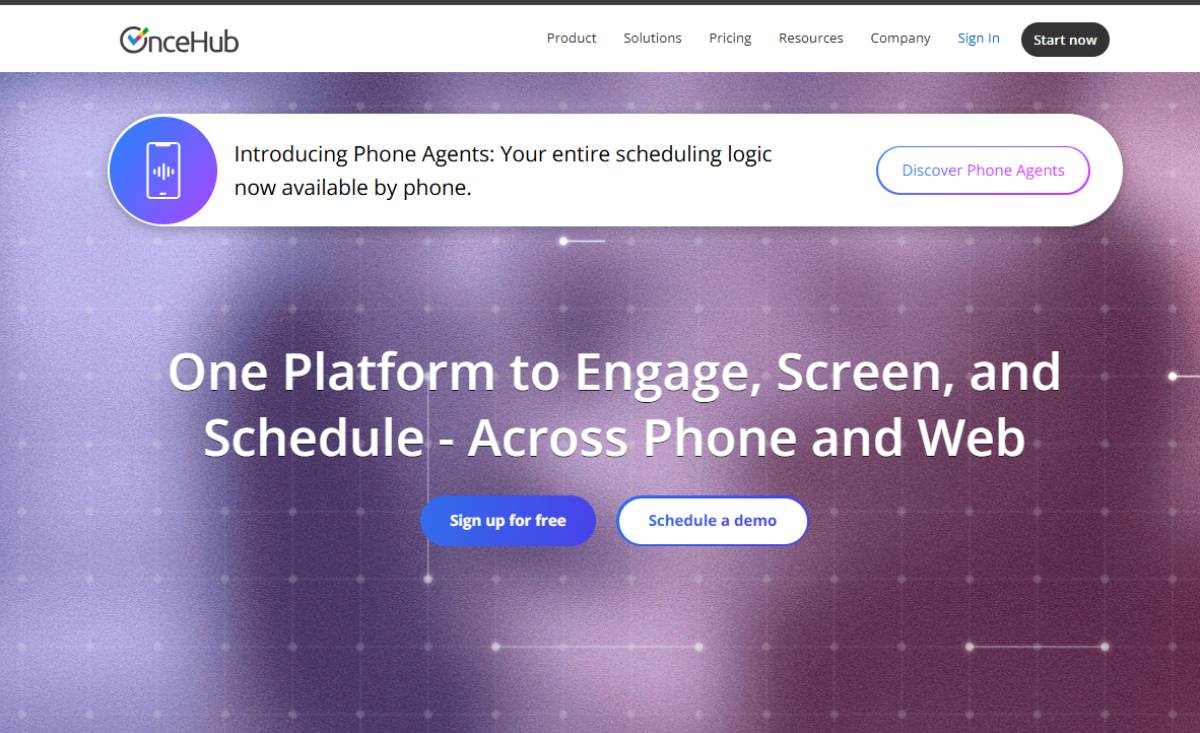
OnceHub provides scheduling and appointment-management capabilities designed to help organizations automate the process of arranging meetings and customer appointments.

August 11, 2026
|

OnceHub is strengthening the business scheduling technology market with tools designed to automate appointment booking, meeting coordination and customer interactions. Its approach addresses a growing operational challenge for organizations managing increasingly distributed teams and digital customer journeys, where efficient scheduling can reduce administrative friction and help businesses convert more interactions into productive meetings.

OnceHub provides scheduling and appointment-management capabilities designed to help organizations automate the process of arranging meetings and customer appointments. Businesses can use scheduling workflows to allow prospects, customers and other stakeholders to select available times based on predefined rules.

The platform can support different scheduling scenarios, including individual meetings, group sessions and appointment-based interactions. Automated confirmations, reminders and scheduling workflows can reduce the manual coordination typically required through email and phone communication.

The technology is relevant across sales, customer service, consulting, professional services, education and other appointment-driven operations. For executives, scheduling automation can help improve employee productivity while creating a more convenient experience for customers and prospects.

The development aligns with a broader shift toward automation across business operations. Scheduling has traditionally involved multiple emails, calendar checks and manual confirmations, creating unnecessary friction for both employees and customers.

As organizations adopt remote and hybrid work models, coordinating meetings across teams, locations and time zones has become increasingly complex. At the same time, customers increasingly expect businesses to provide immediate, self-service options for booking appointments and consultations.

Scheduling platforms address these challenges by connecting availability, booking rules, calendars and communication workflows. This allows organizations to standardize appointment processes while reducing repetitive administrative work.

For revenue-focused teams, scheduling technology can also influence conversion rates. A prospective customer who can quickly book a meeting may be less likely to abandon the sales process. For service organizations, streamlined booking can improve resource utilization and customer satisfaction.

The strategic importance therefore extends beyond calendars. Automated scheduling is increasingly becoming part of customer-experience, sales and operational infrastructure. Business technology specialists increasingly view scheduling automation as a practical entry point for broader workflow transformation. By automating repetitive coordination tasks, organizations can allow employees to spend more time on customer-facing and strategic activities.

OnceHub's positioning reflects this trend by combining scheduling functionality with automated booking experiences. The approach can help businesses establish standardized processes while giving customers greater control over when interactions occur.

For executives, however, successful scheduling automation depends on more than appointment availability. Organizations need to consider routing rules, calendar synchronization, reminders, integrations and the overall customer journey.

Data protection is another consideration. Scheduling systems can process names, contact details, meeting information and other customer data, making security and appropriate data-management practices important.

Industry observers would also examine how scheduling platforms integrate with CRM, video-conferencing, marketing and customer-service systems. Deeper integration can make scheduling a more valuable component of the broader business workflow.

For businesses, automated scheduling can reduce administrative workloads, accelerate appointment booking and improve calendar utilization. Sales teams may benefit from shorter delays between prospect engagement and meetings, while service businesses can streamline appointment management.

For executives, the technology can support operational efficiency and customer-experience goals. Standardized scheduling workflows can also help organizations manage high volumes of appointments without requiring equivalent increases in administrative resources.

Customers benefit from self-service booking, reminders and greater flexibility when selecting appointment times. From a policy perspective, organizations should consider privacy, security and data-retention requirements when scheduling platforms process customer information. Businesses operating across jurisdictions may also need to account for different regulatory expectations surrounding personal data.

Scheduling technology is likely to become increasingly intelligent as artificial intelligence and automation are integrated into business workflows. Future systems may recommend meeting times, automatically route prospects to appropriate teams and optimize appointment allocation based on business priorities.

Decision-makers should watch how scheduling platforms evolve from simple calendar tools into broader workflow engines. The strongest solutions will combine convenience, automation and integration while delivering measurable improvements in productivity, customer experience and revenue operations.

Source: Crozdesk; OnceHub
Date: August 11, 2026

  • Featured tools
Surfer AI
Free

Surfer AI is an AI-powered content creation assistant built into the Surfer SEO platform, designed to generate SEO-optimized articles from prompts, leveraging data from search results to inform tone, structure, and relevance.

#
SEO
Learn more
Tome AI
Free

Tome AI is an AI-powered storytelling and presentation tool designed to help users create compelling narratives and presentations quickly and efficiently. It leverages advanced AI technologies to generate content, images, and animations based on user input.

#
Presentation
#
Startup Tools
Learn more

Learn more about future of AI

Join 80,000+ Ai enthusiast getting weekly updates on exciting AI tools.
Thank you! Your submission has been received!
Oops! Something went wrong while submitting the form.

OnceHub Advances Automated Business Scheduling

August 11, 2026

OnceHub provides scheduling and appointment-management capabilities designed to help organizations automate the process of arranging meetings and customer appointments.

OnceHub is strengthening the business scheduling technology market with tools designed to automate appointment booking, meeting coordination and customer interactions. Its approach addresses a growing operational challenge for organizations managing increasingly distributed teams and digital customer journeys, where efficient scheduling can reduce administrative friction and help businesses convert more interactions into productive meetings.

OnceHub provides scheduling and appointment-management capabilities designed to help organizations automate the process of arranging meetings and customer appointments. Businesses can use scheduling workflows to allow prospects, customers and other stakeholders to select available times based on predefined rules.

The platform can support different scheduling scenarios, including individual meetings, group sessions and appointment-based interactions. Automated confirmations, reminders and scheduling workflows can reduce the manual coordination typically required through email and phone communication.

The technology is relevant across sales, customer service, consulting, professional services, education and other appointment-driven operations. For executives, scheduling automation can help improve employee productivity while creating a more convenient experience for customers and prospects.

The development aligns with a broader shift toward automation across business operations. Scheduling has traditionally involved multiple emails, calendar checks and manual confirmations, creating unnecessary friction for both employees and customers.

As organizations adopt remote and hybrid work models, coordinating meetings across teams, locations and time zones has become increasingly complex. At the same time, customers increasingly expect businesses to provide immediate, self-service options for booking appointments and consultations.

Scheduling platforms address these challenges by connecting availability, booking rules, calendars and communication workflows. This allows organizations to standardize appointment processes while reducing repetitive administrative work.

For revenue-focused teams, scheduling technology can also influence conversion rates. A prospective customer who can quickly book a meeting may be less likely to abandon the sales process. For service organizations, streamlined booking can improve resource utilization and customer satisfaction.

The strategic importance therefore extends beyond calendars. Automated scheduling is increasingly becoming part of customer-experience, sales and operational infrastructure. Business technology specialists increasingly view scheduling automation as a practical entry point for broader workflow transformation. By automating repetitive coordination tasks, organizations can allow employees to spend more time on customer-facing and strategic activities.

OnceHub's positioning reflects this trend by combining scheduling functionality with automated booking experiences. The approach can help businesses establish standardized processes while giving customers greater control over when interactions occur.

For executives, however, successful scheduling automation depends on more than appointment availability. Organizations need to consider routing rules, calendar synchronization, reminders, integrations and the overall customer journey.

Data protection is another consideration. Scheduling systems can process names, contact details, meeting information and other customer data, making security and appropriate data-management practices important.

Industry observers would also examine how scheduling platforms integrate with CRM, video-conferencing, marketing and customer-service systems. Deeper integration can make scheduling a more valuable component of the broader business workflow.

For businesses, automated scheduling can reduce administrative workloads, accelerate appointment booking and improve calendar utilization. Sales teams may benefit from shorter delays between prospect engagement and meetings, while service businesses can streamline appointment management.

For executives, the technology can support operational efficiency and customer-experience goals. Standardized scheduling workflows can also help organizations manage high volumes of appointments without requiring equivalent increases in administrative resources.

Customers benefit from self-service booking, reminders and greater flexibility when selecting appointment times. From a policy perspective, organizations should consider privacy, security and data-retention requirements when scheduling platforms process customer information. Businesses operating across jurisdictions may also need to account for different regulatory expectations surrounding personal data.

Scheduling technology is likely to become increasingly intelligent as artificial intelligence and automation are integrated into business workflows. Future systems may recommend meeting times, automatically route prospects to appropriate teams and optimize appointment allocation based on business priorities.

Decision-makers should watch how scheduling platforms evolve from simple calendar tools into broader workflow engines. The strongest solutions will combine convenience, automation and integration while delivering measurable improvements in productivity, customer experience and revenue operations.

Source: Crozdesk; OnceHub
Date: August 11, 2026

Promote Your Tool

Copy Embed Code

Similar Blogs

August 11, 2026
|

uBrand Advances Digital Asset Management

uBrand provides a digital platform designed to help organizations manage brand-related content and assets within a centralized environment.
Read more
August 11, 2026
|

Jamf Now Simplifies Apple Device Management

Jamf Now is designed to simplify mobile device management for organizations using Apple hardware.
Read more
August 11, 2026
|

Connecteam Advances Digital Workforce Management

Connecteam provides a workforce-management platform designed to support businesses with employees who spend much of their working time away from traditional desks.
Read more
August 11, 2026
|

ADP Vantage Advances Enterprise Workforce Management

ADP Vantage HCM is positioned as an enterprise human capital management solution designed to support organizations with complex workforce requirements.
Read more
August 11, 2026
|

OnceHub Advances Automated Business Scheduling

OnceHub provides scheduling and appointment-management capabilities designed to help organizations automate the process of arranging meetings and customer appointments.
Read more
August 11, 2026
|

BlueConic Advances Customer Data Management

BlueConic provides a customer data platform designed to help organizations collect, unify and activate customer information from multiple sources.
Read more