
Omada Health Expands Digital Care Solutions

Omada reported first-quarter 2026 revenue of $78 million, representing 42% year-over-year growth. Total members reached 1.02 million, up 51%, while its net loss narrowed to $3 million from $9 million a year earlier. Adjusted EBITDA improved to $1 million from a $4 million loss.

August 12, 2026
|

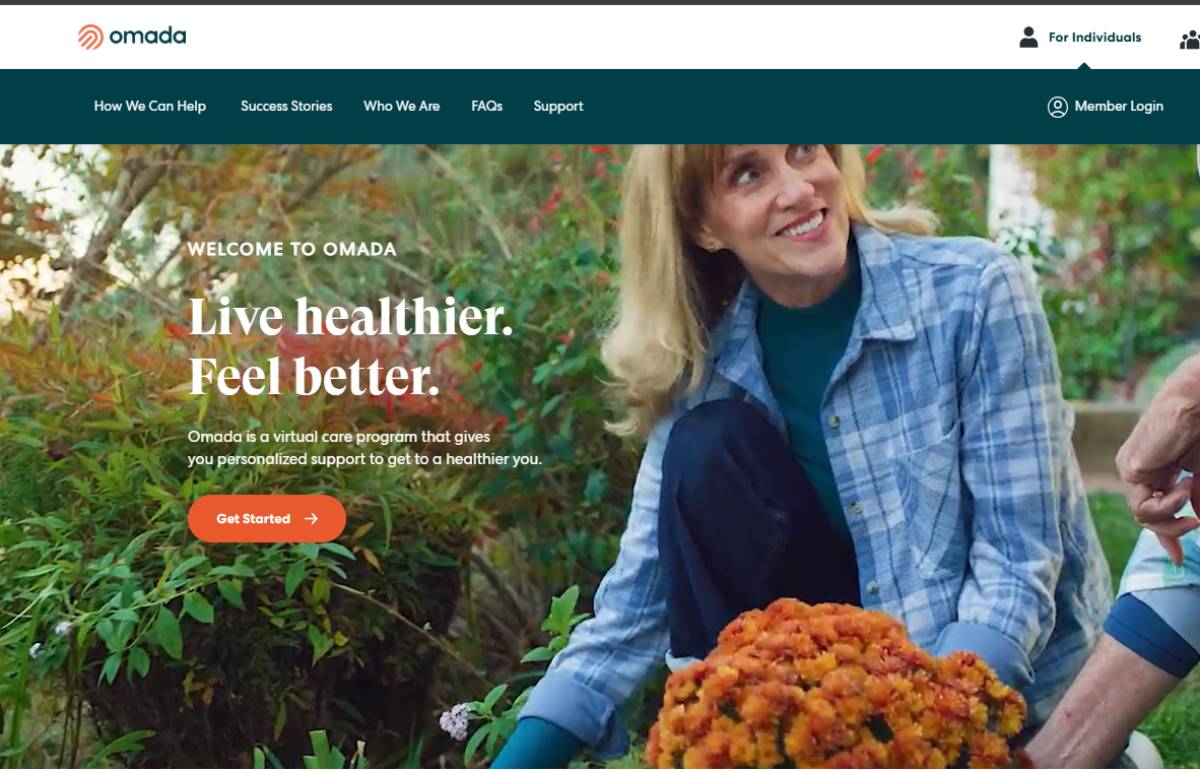
Omada Health is accelerating its expansion in digital chronic-care management as demand rises for technology-enabled solutions addressing obesity, diabetes, hypertension and other cardiometabolic conditions. The company’s membership growth, expanding pharmacy-benefit partnerships and deeper GLP-1 capabilities signal a broader shift toward continuous, virtual-first healthcare delivery for employers and health plans.

Omada reported first-quarter 2026 revenue of $78 million, representing 42% year-over-year growth. Total members reached 1.02 million, up 51%, while its net loss narrowed to $3 million from $9 million a year earlier. Adjusted EBITDA improved to $1 million from a $4 million loss.

The company also expanded its distribution channels, joining Optum Rx’s Weight Engage portfolio and becoming an independent program administrator for Eli Lilly’s Employer Connect. Omada now has relationships with all three leading U.S. pharmacy benefit managers, broadening access to its GLP-1 and cardiometabolic care model.

The development comes as healthcare organizations increasingly seek scalable approaches to chronic diseases that require support beyond traditional doctor visits. Obesity, diabetes, hypertension and cholesterol disorders create long-term costs for employers and health plans, increasing interest in virtual platforms that can provide continuous engagement.

Omada’s model combines human-led care teams, connected devices and AI-enabled technology to support members between clinical appointments. The company says it has served more than two million members since launch across more than 2,000 employers, health plans, pharmacy benefit managers and health systems.

GLP-1 medications have further reshaped the market. Omada supported more than 150,000 members using GLP-1s by the end of 2025, compared with more than 50,000 at the end of 2024. The company is positioning behavioral, lifestyle and clinical support as a complement to medication-based weight management.

Omada’s latest results suggest that digital-health companies are increasingly being evaluated on measurable financial and clinical performance rather than technology adoption alone. The company’s improving margins, narrowing losses and growing membership indicate increasing operating leverage as its platform scales.

CEO and co-founder Sean Duffy said surpassing one million members represented a milestone reflecting the company’s growth and operating leverage. He also emphasized the significance of relationships with the three leading pharmacy benefit managers as employers navigate GLP-1 and broader cardiometabolic strategies.

Separately, Omada reported a 12-week comparative analysis in which members using its GLP-1 Care Track lost, on average, 1.8 times more total weight and reduced body-fat percentage by more than twice the comparison group, while preserving lean muscle mass.

For employers and health plans, Omada’s expansion could provide a more integrated approach to chronic-condition management, particularly as organizations reassess how to support employees using GLP-1 medications. Its partnerships with major PBMs can also improve access to digital support through existing benefit infrastructure.

For investors, the key metrics will be revenue growth, member retention, margins and evidence that digital interventions generate measurable healthcare value. Omada expects 2026 revenue of $322 million to $330 million and adjusted EBITDA of $14 million to $20 million.

For policymakers, the company’s growth raises broader questions around healthcare affordability, medication access, patient data, clinical oversight and the appropriate role of virtual providers in chronic-care delivery.

Omada’s next phase will focus on scaling its cardiometabolic platform while maintaining financial discipline and demonstrating durable clinical outcomes. The company’s growing GLP-1 capabilities and expanded distribution network could strengthen its competitive position as employers seek more comprehensive digital-care solutions.

For executives, the central question is whether virtual-first healthcare can consistently combine clinical effectiveness, patient engagement and economic value at national scale.

Source: Omada Health Investor Relations and company announcements
Date: August 12, 2026

  • Featured tools
Murf Ai
Free

Murf AI Review – Advanced AI Voice Generator for Realistic Voiceovers

#
Text to Speech
Learn more
Beautiful AI
Free

Beautiful AI is an AI-powered presentation platform that automates slide design and formatting, enabling users to create polished, on-brand presentations quickly.

#
Presentation
Learn more

Learn more about future of AI

Join 80,000+ Ai enthusiast getting weekly updates on exciting AI tools.
Thank you! Your submission has been received!
Oops! Something went wrong while submitting the form.

Omada Health Expands Digital Care Solutions

August 12, 2026

Omada reported first-quarter 2026 revenue of $78 million, representing 42% year-over-year growth. Total members reached 1.02 million, up 51%, while its net loss narrowed to $3 million from $9 million a year earlier. Adjusted EBITDA improved to $1 million from a $4 million loss.

Omada Health is accelerating its expansion in digital chronic-care management as demand rises for technology-enabled solutions addressing obesity, diabetes, hypertension and other cardiometabolic conditions. The company’s membership growth, expanding pharmacy-benefit partnerships and deeper GLP-1 capabilities signal a broader shift toward continuous, virtual-first healthcare delivery for employers and health plans.

Omada reported first-quarter 2026 revenue of $78 million, representing 42% year-over-year growth. Total members reached 1.02 million, up 51%, while its net loss narrowed to $3 million from $9 million a year earlier. Adjusted EBITDA improved to $1 million from a $4 million loss.

The company also expanded its distribution channels, joining Optum Rx’s Weight Engage portfolio and becoming an independent program administrator for Eli Lilly’s Employer Connect. Omada now has relationships with all three leading U.S. pharmacy benefit managers, broadening access to its GLP-1 and cardiometabolic care model.

The development comes as healthcare organizations increasingly seek scalable approaches to chronic diseases that require support beyond traditional doctor visits. Obesity, diabetes, hypertension and cholesterol disorders create long-term costs for employers and health plans, increasing interest in virtual platforms that can provide continuous engagement.

Omada’s model combines human-led care teams, connected devices and AI-enabled technology to support members between clinical appointments. The company says it has served more than two million members since launch across more than 2,000 employers, health plans, pharmacy benefit managers and health systems.

GLP-1 medications have further reshaped the market. Omada supported more than 150,000 members using GLP-1s by the end of 2025, compared with more than 50,000 at the end of 2024. The company is positioning behavioral, lifestyle and clinical support as a complement to medication-based weight management.

Omada’s latest results suggest that digital-health companies are increasingly being evaluated on measurable financial and clinical performance rather than technology adoption alone. The company’s improving margins, narrowing losses and growing membership indicate increasing operating leverage as its platform scales.

CEO and co-founder Sean Duffy said surpassing one million members represented a milestone reflecting the company’s growth and operating leverage. He also emphasized the significance of relationships with the three leading pharmacy benefit managers as employers navigate GLP-1 and broader cardiometabolic strategies.

Separately, Omada reported a 12-week comparative analysis in which members using its GLP-1 Care Track lost, on average, 1.8 times more total weight and reduced body-fat percentage by more than twice the comparison group, while preserving lean muscle mass.

For employers and health plans, Omada’s expansion could provide a more integrated approach to chronic-condition management, particularly as organizations reassess how to support employees using GLP-1 medications. Its partnerships with major PBMs can also improve access to digital support through existing benefit infrastructure.

For investors, the key metrics will be revenue growth, member retention, margins and evidence that digital interventions generate measurable healthcare value. Omada expects 2026 revenue of $322 million to $330 million and adjusted EBITDA of $14 million to $20 million.

For policymakers, the company’s growth raises broader questions around healthcare affordability, medication access, patient data, clinical oversight and the appropriate role of virtual providers in chronic-care delivery.

Omada’s next phase will focus on scaling its cardiometabolic platform while maintaining financial discipline and demonstrating durable clinical outcomes. The company’s growing GLP-1 capabilities and expanded distribution network could strengthen its competitive position as employers seek more comprehensive digital-care solutions.

For executives, the central question is whether virtual-first healthcare can consistently combine clinical effectiveness, patient engagement and economic value at national scale.

Source: Omada Health Investor Relations and company announcements
Date: August 12, 2026

Promote Your Tool

Copy Embed Code

Similar Blogs

August 12, 2026
|

FixMe.IT Advances Digital IT Management

FixMe.IT provides organizations with tools for managing IT help desk operations, service requests, incidents, problems and technology assets.
Read more
August 12, 2026
|

Vyond Advances AI Enterprise Video Creation

Vyond provides organizations with tools for creating animated, mixed-media and AI-assisted videos across business functions.
Read more
August 12, 2026
|

QuickBooks Strengthens Enterprise Business

QuickBooks Desktop Enterprise is designed for businesses that require more advanced accounting capabilities than entry-level financial software typically provides.
Read more
August 12, 2026
|

SureCost Advances Intelligent Pharmacy Supply

SureCost brings pharmacy procurement, inventory management and supply intelligence into a centralized technology environment.
Read more
August 12, 2026
|

Arting AI Advances Generative Visual Creation

Arting AI brings several creative capabilities into a unified environment, including text-to-image and image-to-image generation, image enhancement.
Read more
August 12, 2026
|

Loomly Strengthens Social Media Management Tools

Loomly brings core social media activities into a unified workspace, covering content calendars, post creation, scheduling, collaboration and publishing.
Read more