
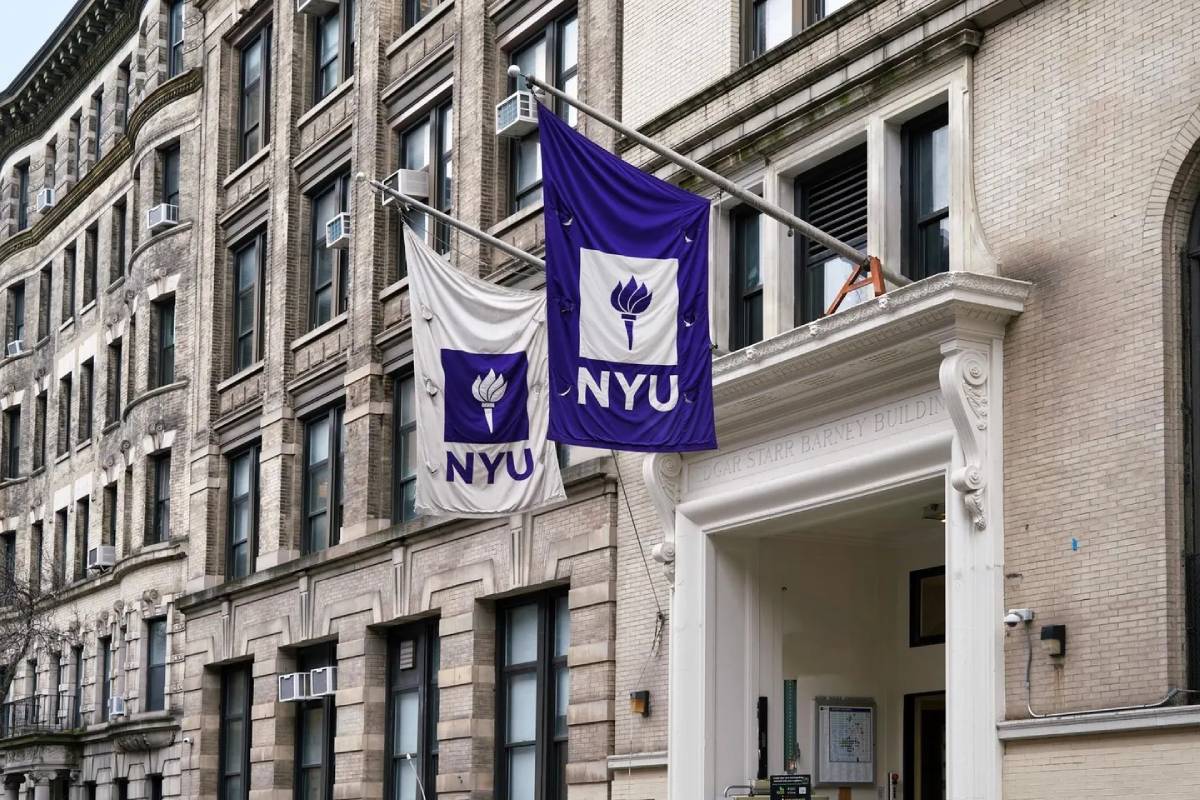
NYU Expands Global AI Certification Access

New York University (NYU) has partnered with Google to provide all alumni with complimentary access to the Google AI Professional Certificate program.

June 10, 2026
|
Image Source:  Forbes

A significant development in higher education and workforce transformation emerged as New York University announced free access to Google's AI Professional Certificate for its global alumni community. The initiative reflects growing efforts by universities and technology companies to address the accelerating demand for artificial intelligence skills, signaling broader shifts in talent development, workforce competitiveness, and the future of lifelong learning.

New York University (NYU) has partnered with Google to provide all alumni with complimentary access to the Google AI Professional Certificate program. The initiative is designed to help graduates acquire practical artificial intelligence skills amid rapid technological change across industries.

The certificate program covers AI fundamentals, prompt engineering, responsible AI practices, and real-world business applications. Alumni will be able to access the training through online learning platforms, enabling participation regardless of geographic location or career stage.

The move positions NYU among a growing number of institutions investing in lifelong learning initiatives as AI reshapes labor markets. It also strengthens collaboration between academia and the technology sector in preparing workers for AI-driven economic transformation.

The announcement comes as governments, corporations, and educational institutions worldwide confront an emerging AI skills gap. The rapid adoption of generative AI technologies has increased demand for workers who understand how to deploy, manage, and collaborate with AI systems across diverse sectors.

The development aligns with a broader trend across global markets where universities are evolving beyond traditional degree providers into long-term career development partners. As technological disruption accelerates, professionals increasingly require continuous reskilling throughout their careers rather than relying solely on formal education completed early in life.

Major technology firms including Google, Microsoft, Amazon, and IBM have expanded professional certification programs in recent years, recognizing that workforce readiness is becoming a critical factor in AI adoption. Simultaneously, policymakers in the United States, Europe, and Asia have prioritized digital skills development as part of broader economic competitiveness strategies.

For higher education institutions, AI literacy is rapidly becoming as important as digital literacy was during the internet era, creating pressure to offer graduates ongoing access to emerging technologies and training opportunities.

NYU leaders have framed the initiative as an extension of the university’s commitment to supporting alumni throughout their professional journeys. By providing access to industry-recognized AI credentials, the institution aims to help graduates remain competitive in an evolving labor market increasingly shaped by automation and intelligent systems.

Google executives have consistently emphasized that AI adoption will require widespread workforce training rather than expertise confined to technical specialists. The company argues that practical AI literacy is becoming essential across business functions, including marketing, finance, operations, healthcare, education, and public administration.

Industry analysts broadly support such partnerships, viewing them as an effective mechanism for narrowing the gap between academic education and rapidly changing employer requirements. Many experts believe that certifications focused on applied AI skills can help workers adapt more quickly than traditional curriculum updates.

At the same time, labor economists caution that credentials alone may not fully address workforce displacement concerns, underscoring the importance of continuous learning and organizational investment in employee development.

For businesses, the initiative could contribute to a larger pool of AI-literate professionals capable of supporting digital transformation projects and productivity improvements. Employers may increasingly prioritize candidates with demonstrated AI competencies as adoption expands across sectors.

Investors may view programs like this as evidence that AI workforce development is becoming a significant economic opportunity for both educational institutions and technology providers. The growing market for professional upskilling services is expected to expand alongside enterprise AI adoption.

For policymakers, the partnership highlights the importance of public-private collaboration in workforce development. Governments seeking to maintain economic competitiveness may look to similar models as they develop strategies to address labor market disruption and emerging skills shortages.

Attention will now turn to participation rates, completion outcomes, and the broader impact of AI certification programs on career advancement and workforce readiness. Universities, employers, and policymakers will closely monitor whether such initiatives meaningfully improve labor market resilience in an increasingly AI-driven economy.

As artificial intelligence becomes embedded across industries, lifelong learning partnerships between academia and technology firms may become a defining feature of the future workforce landscape.

Source: Forbes
Date:
June 9, 2026

  • Featured tools
Wonder AI
Free

Wonder AI is a versatile AI-powered creative platform that generates text, images, and audio with minimal input, designed for fast storytelling, visual creation, and audio content generation

#
Art Generator
Learn more
Copy Ai
Free

Copy AI is one of the most popular AI writing tools designed to help professionals create high-quality content quickly. Whether you are a product manager drafting feature descriptions or a marketer creating ad copy, Copy AI can save hours of work while maintaining creativity and tone.

#
Copywriting
Learn more

Learn more about future of AI

Join 80,000+ Ai enthusiast getting weekly updates on exciting AI tools.
Thank you! Your submission has been received!
Oops! Something went wrong while submitting the form.

NYU Expands Global AI Certification Access

June 10, 2026

New York University (NYU) has partnered with Google to provide all alumni with complimentary access to the Google AI Professional Certificate program.

Image Source:  Forbes

A significant development in higher education and workforce transformation emerged as New York University announced free access to Google's AI Professional Certificate for its global alumni community. The initiative reflects growing efforts by universities and technology companies to address the accelerating demand for artificial intelligence skills, signaling broader shifts in talent development, workforce competitiveness, and the future of lifelong learning.

New York University (NYU) has partnered with Google to provide all alumni with complimentary access to the Google AI Professional Certificate program. The initiative is designed to help graduates acquire practical artificial intelligence skills amid rapid technological change across industries.

The certificate program covers AI fundamentals, prompt engineering, responsible AI practices, and real-world business applications. Alumni will be able to access the training through online learning platforms, enabling participation regardless of geographic location or career stage.

The move positions NYU among a growing number of institutions investing in lifelong learning initiatives as AI reshapes labor markets. It also strengthens collaboration between academia and the technology sector in preparing workers for AI-driven economic transformation.

The announcement comes as governments, corporations, and educational institutions worldwide confront an emerging AI skills gap. The rapid adoption of generative AI technologies has increased demand for workers who understand how to deploy, manage, and collaborate with AI systems across diverse sectors.

The development aligns with a broader trend across global markets where universities are evolving beyond traditional degree providers into long-term career development partners. As technological disruption accelerates, professionals increasingly require continuous reskilling throughout their careers rather than relying solely on formal education completed early in life.

Major technology firms including Google, Microsoft, Amazon, and IBM have expanded professional certification programs in recent years, recognizing that workforce readiness is becoming a critical factor in AI adoption. Simultaneously, policymakers in the United States, Europe, and Asia have prioritized digital skills development as part of broader economic competitiveness strategies.

For higher education institutions, AI literacy is rapidly becoming as important as digital literacy was during the internet era, creating pressure to offer graduates ongoing access to emerging technologies and training opportunities.

NYU leaders have framed the initiative as an extension of the university’s commitment to supporting alumni throughout their professional journeys. By providing access to industry-recognized AI credentials, the institution aims to help graduates remain competitive in an evolving labor market increasingly shaped by automation and intelligent systems.

Google executives have consistently emphasized that AI adoption will require widespread workforce training rather than expertise confined to technical specialists. The company argues that practical AI literacy is becoming essential across business functions, including marketing, finance, operations, healthcare, education, and public administration.

Industry analysts broadly support such partnerships, viewing them as an effective mechanism for narrowing the gap between academic education and rapidly changing employer requirements. Many experts believe that certifications focused on applied AI skills can help workers adapt more quickly than traditional curriculum updates.

At the same time, labor economists caution that credentials alone may not fully address workforce displacement concerns, underscoring the importance of continuous learning and organizational investment in employee development.

For businesses, the initiative could contribute to a larger pool of AI-literate professionals capable of supporting digital transformation projects and productivity improvements. Employers may increasingly prioritize candidates with demonstrated AI competencies as adoption expands across sectors.

Investors may view programs like this as evidence that AI workforce development is becoming a significant economic opportunity for both educational institutions and technology providers. The growing market for professional upskilling services is expected to expand alongside enterprise AI adoption.

For policymakers, the partnership highlights the importance of public-private collaboration in workforce development. Governments seeking to maintain economic competitiveness may look to similar models as they develop strategies to address labor market disruption and emerging skills shortages.

Attention will now turn to participation rates, completion outcomes, and the broader impact of AI certification programs on career advancement and workforce readiness. Universities, employers, and policymakers will closely monitor whether such initiatives meaningfully improve labor market resilience in an increasingly AI-driven economy.

As artificial intelligence becomes embedded across industries, lifelong learning partnerships between academia and technology firms may become a defining feature of the future workforce landscape.

Source: Forbes
Date:
June 9, 2026

Promote Your Tool

Copy Embed Code

Similar Blogs

June 19, 2026
|

Apple iPhone Camera Controls Expand AI

The report outlines how users can modify or disable AI-assisted camera functions on Apple iPhone devices, particularly features that influence image processing and computational enhancements.
Read more
June 19, 2026
|

Samsung Expands Galaxy AI Controls Push

The guide details how users can adjust or disable AI-driven features on Samsung Galaxy smartphones, including tools integrated into Samsung Galaxy smartphones.
Read more
June 19, 2026
|

Google Expands Smart Home Ecosystem

The latest compilation of Google voice commands focuses on how users can interact with Google Assistant and connected smart home systems. Commands span entertainment, home automation, productivity, navigation.
Read more
June 19, 2026
|

AI Dating Apps Face User Backlash

Survey data indicates that while adoption of AI-based dating assistants and companion tools is increasing, user sentiment is becoming increasingly polarized.
Read more
June 19, 2026
|

Apple Signals Price Hikes Amid Cost Pressures

Apple CEO Tim Cook indicated that escalating costs tied to components such as memory, advanced processors, and logistics are becoming structurally embedded across the company’s manufacturing pipeline.
Read more
June 19, 2026
|

Adobe Embeds AI Assistants Across Tools

Adobe is positioning these assistants as task-oriented agents capable of handling repetitive editing workflows such as object removal.
Read more