
NVIDIA Signals Explosive AI Infrastructure Demand Surge

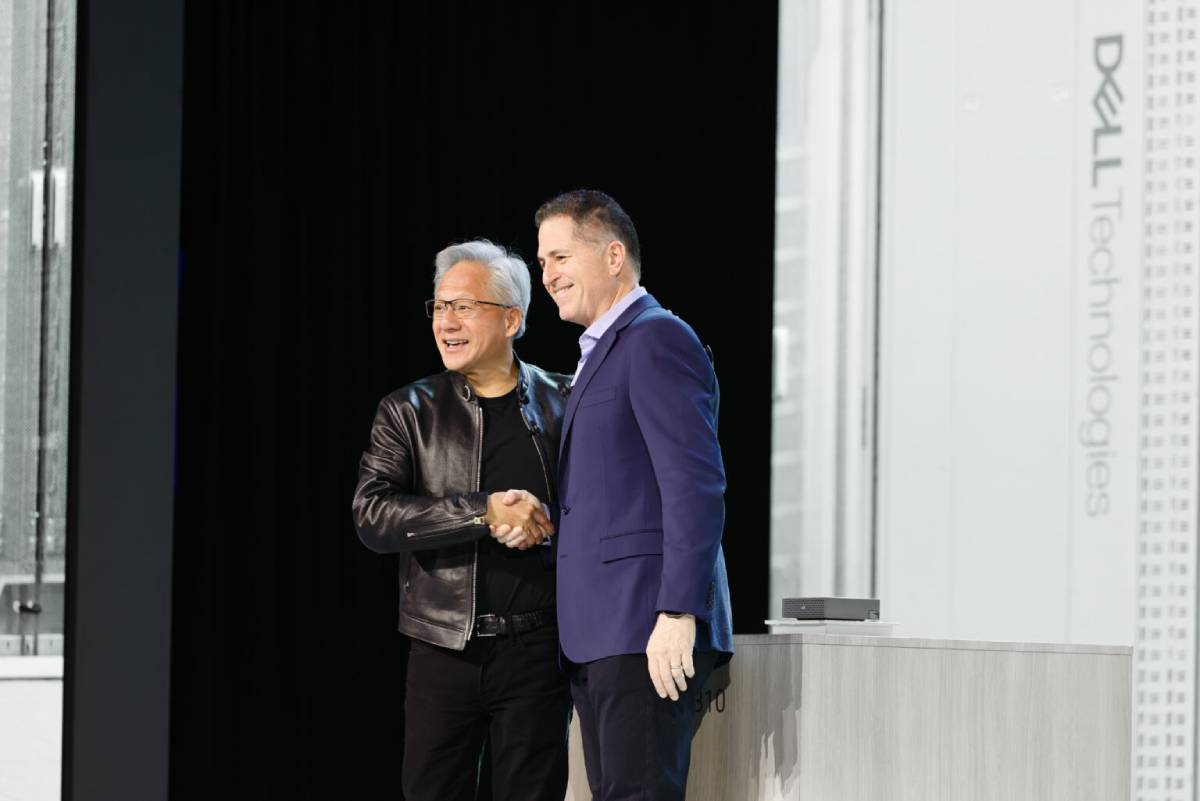
Speaking at Dell Technologies World, NVIDIA CEO Jensen Huang highlighted unprecedented demand growth for AI computing infrastructure, emphasizing the rapid expansion of enterprise adoption and agentic AI systems.

May 19, 2026
|
Image Source: NVIDIA Blog Report

A major escalation in the global AI infrastructure race is underway as Jensen Huang declared that demand for AI computing is becoming “utterly parabolic” during remarks at Dell Technologies World. The statement underscores accelerating enterprise AI adoption, with significant implications for cloud infrastructure, semiconductor markets, and global technology investment strategies.

Speaking at Dell Technologies World, NVIDIA CEO Jensen Huang highlighted unprecedented demand growth for AI computing infrastructure, emphasizing the rapid expansion of enterprise adoption and agentic AI systems. The remarks were made in the context of deeper collaboration between NVIDIA and Dell Technologies on enterprise AI deployment solutions.

The discussion focused on accelerating demand for AI servers, accelerated computing platforms, and integrated enterprise infrastructure capable of supporting advanced generative AI workloads. Huang’s comments reinforce industry expectations that AI-driven computing requirements are expanding faster than traditional infrastructure supply chains can currently accommodate.

The comments come amid an unprecedented global expansion in AI infrastructure investment. Since the mainstream adoption of generative AI platforms, demand for high-performance GPUs, AI servers, and specialized data centre systems has surged across industries.

NVIDIA has emerged as one of the most strategically important companies in the AI ecosystem due to its dominance in accelerated computing hardware. Meanwhile, enterprise technology firms such as Dell Technologies are positioning themselves as critical deployment partners for organizations seeking to operationalize AI capabilities at scale.

Historically, infrastructure cycles in technology have been driven by cloud computing and internet expansion. The current AI cycle, however, demands substantially higher computational density, energy consumption, and capital investment, fundamentally reshaping enterprise IT priorities and global semiconductor supply chains.

Industry analysts interpret Huang’s remarks as a strong signal that AI infrastructure demand remains in an early growth phase rather than nearing saturation. Experts argue that enterprise adoption of generative AI, autonomous agents, and multimodal systems is driving a structural transformation in computing markets.

Technology strategists note that NVIDIA’s leadership position in GPUs and AI accelerators gives the company significant influence over the pace and economics of AI deployment globally. Analysts also emphasize that collaborations between hardware providers and enterprise infrastructure firms are becoming increasingly important as organizations seek integrated AI deployment solutions rather than standalone hardware components.

Market observers caution, however, that “parabolic” growth in demand may intensify pressure on semiconductor manufacturing, power grids, cooling systems, and supply chains. The sustainability of rapid AI expansion is expected to become a central issue for both corporate leaders and policymakers.

For enterprises, Huang’s comments reinforce the urgency of investing in AI-ready infrastructure and workforce capabilities. Companies that delay AI integration may face widening competitive disadvantages as AI adoption accelerates across sectors.

For investors, the statement further validates expectations that AI infrastructure spending will remain a dominant growth theme across semiconductors, cloud computing, and enterprise technology markets.

For policymakers, the rapid escalation in AI compute demand raises concerns around energy consumption, semiconductor supply resilience, and digital sovereignty. Analysts warn that governments may increasingly prioritize domestic AI infrastructure capacity as a strategic national asset in the global technology competition.

Looking ahead, the AI infrastructure race is expected to intensify as enterprises scale deployment of generative AI and autonomous systems. Decision-makers will closely monitor whether supply chains can keep pace with accelerating demand for AI hardware and data centre capacity. Key uncertainties include energy availability, geopolitical semiconductor tensions, and whether current investment levels can sustain long-term profitability across the AI ecosystem.

Source: NVIDIA Blog Report
Date: May 19, 2026

  • Featured tools
Tome AI
Free

Tome AI is an AI-powered storytelling and presentation tool designed to help users create compelling narratives and presentations quickly and efficiently. It leverages advanced AI technologies to generate content, images, and animations based on user input.

#
Presentation
#
Startup Tools
Learn more
Neuron AI
Free

Neuron AI is an AI-driven content optimization platform that helps creators produce SEO-friendly content by combining semantic SEO, competitor analysis, and AI-assisted writing workflows.

#
SEO
Learn more

Learn more about future of AI

Join 80,000+ Ai enthusiast getting weekly updates on exciting AI tools.
Thank you! Your submission has been received!
Oops! Something went wrong while submitting the form.

NVIDIA Signals Explosive AI Infrastructure Demand Surge

May 19, 2026

Speaking at Dell Technologies World, NVIDIA CEO Jensen Huang highlighted unprecedented demand growth for AI computing infrastructure, emphasizing the rapid expansion of enterprise adoption and agentic AI systems.

Image Source: NVIDIA Blog Report

A major escalation in the global AI infrastructure race is underway as Jensen Huang declared that demand for AI computing is becoming “utterly parabolic” during remarks at Dell Technologies World. The statement underscores accelerating enterprise AI adoption, with significant implications for cloud infrastructure, semiconductor markets, and global technology investment strategies.

Speaking at Dell Technologies World, NVIDIA CEO Jensen Huang highlighted unprecedented demand growth for AI computing infrastructure, emphasizing the rapid expansion of enterprise adoption and agentic AI systems. The remarks were made in the context of deeper collaboration between NVIDIA and Dell Technologies on enterprise AI deployment solutions.

The discussion focused on accelerating demand for AI servers, accelerated computing platforms, and integrated enterprise infrastructure capable of supporting advanced generative AI workloads. Huang’s comments reinforce industry expectations that AI-driven computing requirements are expanding faster than traditional infrastructure supply chains can currently accommodate.

The comments come amid an unprecedented global expansion in AI infrastructure investment. Since the mainstream adoption of generative AI platforms, demand for high-performance GPUs, AI servers, and specialized data centre systems has surged across industries.

NVIDIA has emerged as one of the most strategically important companies in the AI ecosystem due to its dominance in accelerated computing hardware. Meanwhile, enterprise technology firms such as Dell Technologies are positioning themselves as critical deployment partners for organizations seeking to operationalize AI capabilities at scale.

Historically, infrastructure cycles in technology have been driven by cloud computing and internet expansion. The current AI cycle, however, demands substantially higher computational density, energy consumption, and capital investment, fundamentally reshaping enterprise IT priorities and global semiconductor supply chains.

Industry analysts interpret Huang’s remarks as a strong signal that AI infrastructure demand remains in an early growth phase rather than nearing saturation. Experts argue that enterprise adoption of generative AI, autonomous agents, and multimodal systems is driving a structural transformation in computing markets.

Technology strategists note that NVIDIA’s leadership position in GPUs and AI accelerators gives the company significant influence over the pace and economics of AI deployment globally. Analysts also emphasize that collaborations between hardware providers and enterprise infrastructure firms are becoming increasingly important as organizations seek integrated AI deployment solutions rather than standalone hardware components.

Market observers caution, however, that “parabolic” growth in demand may intensify pressure on semiconductor manufacturing, power grids, cooling systems, and supply chains. The sustainability of rapid AI expansion is expected to become a central issue for both corporate leaders and policymakers.

For enterprises, Huang’s comments reinforce the urgency of investing in AI-ready infrastructure and workforce capabilities. Companies that delay AI integration may face widening competitive disadvantages as AI adoption accelerates across sectors.

For investors, the statement further validates expectations that AI infrastructure spending will remain a dominant growth theme across semiconductors, cloud computing, and enterprise technology markets.

For policymakers, the rapid escalation in AI compute demand raises concerns around energy consumption, semiconductor supply resilience, and digital sovereignty. Analysts warn that governments may increasingly prioritize domestic AI infrastructure capacity as a strategic national asset in the global technology competition.

Looking ahead, the AI infrastructure race is expected to intensify as enterprises scale deployment of generative AI and autonomous systems. Decision-makers will closely monitor whether supply chains can keep pace with accelerating demand for AI hardware and data centre capacity. Key uncertainties include energy availability, geopolitical semiconductor tensions, and whether current investment levels can sustain long-term profitability across the AI ecosystem.

Source: NVIDIA Blog Report
Date: May 19, 2026

Promote Your Tool

Copy Embed Code

Similar Blogs

June 23, 2026
|

Sokin Secures European Payments License

Sokin has acquired Norwegian fintech firm Settle in a transaction that provides access to a valuable Electronic Money Institution (EMI) license.
Read more
June 23, 2026
|

Twin Prime Bets Defence AI

Twin Prime has secured $10 million in fresh funding to expand its defence-focused AI systems, which prioritize sensor fusion, detection, and real-time environmental interpretation over generative or chatbot-based models.
Read more
June 23, 2026
|

Northzone Backs Physical AI Shift

Northzone has appointed a new partner to lead its physical AI investment strategy, marking a deliberate shift toward embodied intelligence—systems that interact directly with physical environments.
Read more
June 23, 2026
|

Switzerland Hosts Iran US Technical Talks

The upcoming technical-level discussions between Iranian and US representatives will focus on procedural and issue-specific frameworks rather than high-level political agreements.
Read more
June 23, 2026
|

Switzerland Extends Ukrainian Protection Status

Swiss federal authorities are reviewing the possibility of extending S protection status, which grants temporary residence rights and access to essential services for Ukrainian nationals fleeing the war.
Read more
June 23, 2026
|

Swiss FM Engages Iran Diplomacy

Swiss Foreign Minister Ignazio Cassis held formal discussions with Iran’s foreign minister, focusing on bilateral relations and broader regional security dynamics.
Read more