
Nvidia Lands Apple Amid Valuation Scrutiny

Apple revealed that it is utilizing Nvidia technology as part of its expanding artificial intelligence infrastructure strategy, marking a notable shift for a company that has historically preferred tight control over its hardware and software supply chain.

June 10, 2026
|
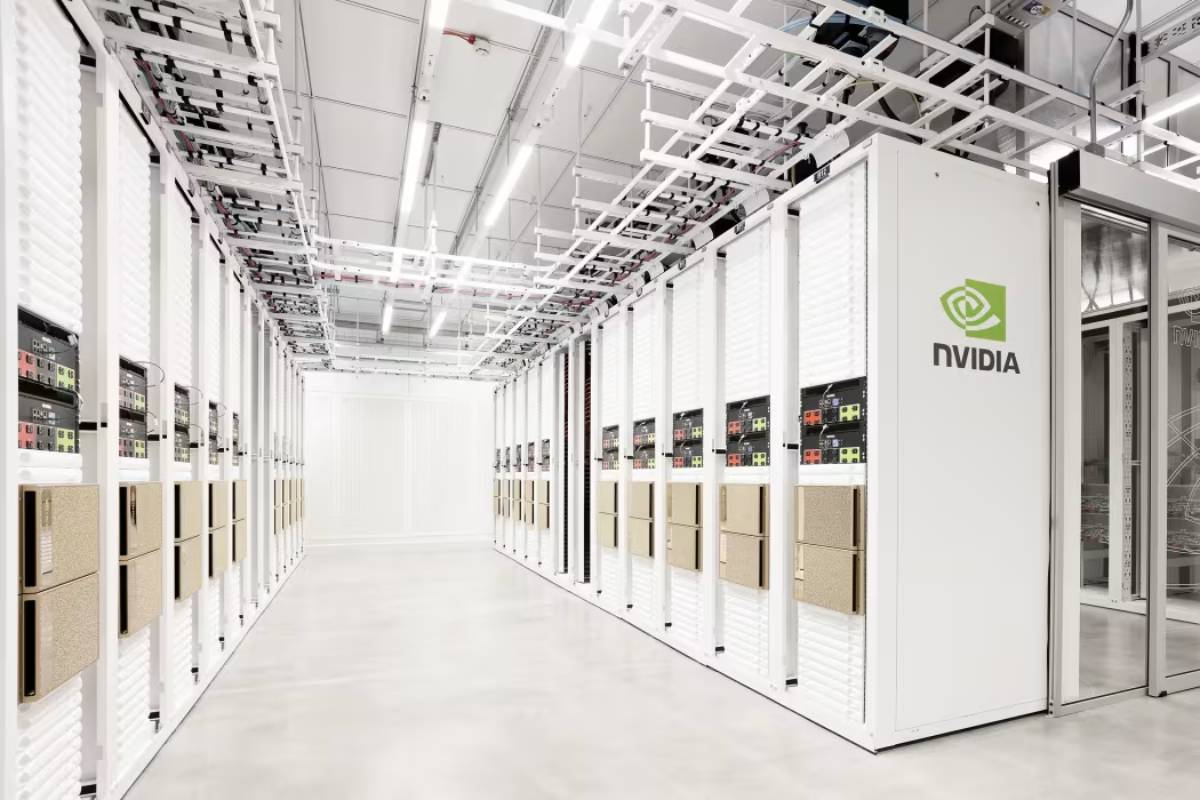
Image Source:  Barron's

A significant milestone in the artificial intelligence industry emerged as Nvidia secured Apple as an AI infrastructure customer, strengthening its position at the center of the global AI ecosystem. Yet despite the strategic win, Nvidia’s shares faced downward pressure, underscoring growing investor concerns about valuations, earnings sustainability, and the next phase of AI-driven market growth.

Apple revealed that it is utilizing Nvidia technology as part of its expanding artificial intelligence infrastructure strategy, marking a notable shift for a company that has historically preferred tight control over its hardware and software supply chain. The development represents a significant commercial endorsement for Nvidia, whose graphics processing units (GPUs) have become the industry standard for AI training and deployment.

However, the announcement failed to boost Nvidia’s stock performance. Instead, shares declined as investors focused on broader concerns surrounding AI-sector valuations, future growth rates, and the ability of technology companies to justify enormous capital expenditures.

The market reaction highlights a changing investor environment where strategic partnerships alone may no longer be sufficient to sustain elevated stock prices. Increasingly, investors are demanding evidence that AI investments will translate into durable revenue growth and profitability.

The development comes amid a transformative period for the global technology industry. Nvidia has become one of the primary beneficiaries of the AI boom, with demand for its chips surging as technology firms, cloud providers, governments, and enterprises race to build AI infrastructure.

The company’s rise has been fueled by explosive growth in generative AI applications following the emergence of large language models. Major technology firms including Microsoft, Amazon, Alphabet, Meta, and Oracle have collectively committed hundreds of billions of dollars to AI-related infrastructure, driving unprecedented demand for advanced semiconductors.

Apple’s relationship with Nvidia carries additional significance given the history between the two companies. For years, Apple largely moved away from Nvidia hardware in favor of alternative technologies and internally developed silicon. The renewed engagement suggests that even companies pursuing custom AI strategies may still depend on Nvidia’s capabilities for specific workloads.

The development aligns with a broader trend across global markets where AI infrastructure providers have become critical enablers of digital transformation, geopolitical competitiveness, and economic growth. However, growing questions around return on investment are introducing new volatility into the sector.

Industry analysts view Apple’s adoption of Nvidia technology as a validation of the chipmaker’s continued leadership in the AI infrastructure market. Many experts argue that Nvidia’s software ecosystem, developer tools, and computing architecture remain difficult for competitors to replicate at scale.

Market observers note that Apple’s decision demonstrates how even the largest technology companies continue to rely on external AI infrastructure providers despite investing heavily in proprietary solutions. This dynamic reinforces Nvidia’s strategic importance across the global AI supply chain.

At the same time, analysts suggest that investor expectations have reached exceptionally high levels. Following years of extraordinary gains, Nvidia faces increasing pressure to deliver sustained revenue growth, maintain margins, and demonstrate that demand for AI infrastructure remains durable.

Financial strategists also point to broader market concerns, including rising interest rates, geopolitical uncertainty, export restrictions on advanced semiconductors, and growing scrutiny of AI-related spending. These factors are contributing to heightened volatility despite positive corporate developments.

For businesses, the partnership highlights Nvidia’s continued dominance in AI infrastructure and reinforces the importance of advanced computing capabilities in enterprise AI adoption. Companies planning large-scale AI deployments may increasingly align technology strategies around proven infrastructure providers.

Investors are likely to view the development as both an opportunity and a warning. While demand for AI infrastructure remains strong, market participants are becoming more selective, rewarding companies that can demonstrate measurable financial returns rather than relying solely on future growth narratives.

For policymakers, the concentration of AI computing power among a small number of suppliers raises questions regarding supply chain resilience, competition, and national technology security. Governments worldwide continue to evaluate policies affecting semiconductor production, export controls, and strategic technology investments.

Attention will now focus on Nvidia’s upcoming earnings performance, AI infrastructure demand trends, and the pace of adoption among major enterprise and consumer technology companies. Investors will be looking for evidence that growing customer relationships are translating into sustainable long-term revenue growth.

As AI moves from experimentation to large-scale deployment, Nvidia’s ability to maintain its leadership position while meeting increasingly demanding investor expectations will remain a defining factor for the broader technology sector.

Source: Barron's
Date:
June 10, 2026

  • Featured tools
Alli AI
Free

Alli AI is an all-in-one, AI-powered SEO automation platform that streamlines on-page optimization, site auditing, speed improvements, schema generation, internal linking, and ranking insights.

#
SEO
Learn more
Beautiful AI
Free

Beautiful AI is an AI-powered presentation platform that automates slide design and formatting, enabling users to create polished, on-brand presentations quickly.

#
Presentation
Learn more

Learn more about future of AI

Join 80,000+ Ai enthusiast getting weekly updates on exciting AI tools.
Thank you! Your submission has been received!
Oops! Something went wrong while submitting the form.

Nvidia Lands Apple Amid Valuation Scrutiny

June 10, 2026

Apple revealed that it is utilizing Nvidia technology as part of its expanding artificial intelligence infrastructure strategy, marking a notable shift for a company that has historically preferred tight control over its hardware and software supply chain.

Image Source:  Barron's

A significant milestone in the artificial intelligence industry emerged as Nvidia secured Apple as an AI infrastructure customer, strengthening its position at the center of the global AI ecosystem. Yet despite the strategic win, Nvidia’s shares faced downward pressure, underscoring growing investor concerns about valuations, earnings sustainability, and the next phase of AI-driven market growth.

Apple revealed that it is utilizing Nvidia technology as part of its expanding artificial intelligence infrastructure strategy, marking a notable shift for a company that has historically preferred tight control over its hardware and software supply chain. The development represents a significant commercial endorsement for Nvidia, whose graphics processing units (GPUs) have become the industry standard for AI training and deployment.

However, the announcement failed to boost Nvidia’s stock performance. Instead, shares declined as investors focused on broader concerns surrounding AI-sector valuations, future growth rates, and the ability of technology companies to justify enormous capital expenditures.

The market reaction highlights a changing investor environment where strategic partnerships alone may no longer be sufficient to sustain elevated stock prices. Increasingly, investors are demanding evidence that AI investments will translate into durable revenue growth and profitability.

The development comes amid a transformative period for the global technology industry. Nvidia has become one of the primary beneficiaries of the AI boom, with demand for its chips surging as technology firms, cloud providers, governments, and enterprises race to build AI infrastructure.

The company’s rise has been fueled by explosive growth in generative AI applications following the emergence of large language models. Major technology firms including Microsoft, Amazon, Alphabet, Meta, and Oracle have collectively committed hundreds of billions of dollars to AI-related infrastructure, driving unprecedented demand for advanced semiconductors.

Apple’s relationship with Nvidia carries additional significance given the history between the two companies. For years, Apple largely moved away from Nvidia hardware in favor of alternative technologies and internally developed silicon. The renewed engagement suggests that even companies pursuing custom AI strategies may still depend on Nvidia’s capabilities for specific workloads.

The development aligns with a broader trend across global markets where AI infrastructure providers have become critical enablers of digital transformation, geopolitical competitiveness, and economic growth. However, growing questions around return on investment are introducing new volatility into the sector.

Industry analysts view Apple’s adoption of Nvidia technology as a validation of the chipmaker’s continued leadership in the AI infrastructure market. Many experts argue that Nvidia’s software ecosystem, developer tools, and computing architecture remain difficult for competitors to replicate at scale.

Market observers note that Apple’s decision demonstrates how even the largest technology companies continue to rely on external AI infrastructure providers despite investing heavily in proprietary solutions. This dynamic reinforces Nvidia’s strategic importance across the global AI supply chain.

At the same time, analysts suggest that investor expectations have reached exceptionally high levels. Following years of extraordinary gains, Nvidia faces increasing pressure to deliver sustained revenue growth, maintain margins, and demonstrate that demand for AI infrastructure remains durable.

Financial strategists also point to broader market concerns, including rising interest rates, geopolitical uncertainty, export restrictions on advanced semiconductors, and growing scrutiny of AI-related spending. These factors are contributing to heightened volatility despite positive corporate developments.

For businesses, the partnership highlights Nvidia’s continued dominance in AI infrastructure and reinforces the importance of advanced computing capabilities in enterprise AI adoption. Companies planning large-scale AI deployments may increasingly align technology strategies around proven infrastructure providers.

Investors are likely to view the development as both an opportunity and a warning. While demand for AI infrastructure remains strong, market participants are becoming more selective, rewarding companies that can demonstrate measurable financial returns rather than relying solely on future growth narratives.

For policymakers, the concentration of AI computing power among a small number of suppliers raises questions regarding supply chain resilience, competition, and national technology security. Governments worldwide continue to evaluate policies affecting semiconductor production, export controls, and strategic technology investments.

Attention will now focus on Nvidia’s upcoming earnings performance, AI infrastructure demand trends, and the pace of adoption among major enterprise and consumer technology companies. Investors will be looking for evidence that growing customer relationships are translating into sustainable long-term revenue growth.

As AI moves from experimentation to large-scale deployment, Nvidia’s ability to maintain its leadership position while meeting increasingly demanding investor expectations will remain a defining factor for the broader technology sector.

Source: Barron's
Date:
June 10, 2026

Promote Your Tool

Copy Embed Code

Similar Blogs

June 19, 2026
|

Apple iPhone Camera Controls Expand AI

The report outlines how users can modify or disable AI-assisted camera functions on Apple iPhone devices, particularly features that influence image processing and computational enhancements.
Read more
June 19, 2026
|

Samsung Expands Galaxy AI Controls Push

The guide details how users can adjust or disable AI-driven features on Samsung Galaxy smartphones, including tools integrated into Samsung Galaxy smartphones.
Read more
June 19, 2026
|

Google Expands Smart Home Ecosystem

The latest compilation of Google voice commands focuses on how users can interact with Google Assistant and connected smart home systems. Commands span entertainment, home automation, productivity, navigation.
Read more
June 19, 2026
|

AI Dating Apps Face User Backlash

Survey data indicates that while adoption of AI-based dating assistants and companion tools is increasing, user sentiment is becoming increasingly polarized.
Read more
June 19, 2026
|

Apple Signals Price Hikes Amid Cost Pressures

Apple CEO Tim Cook indicated that escalating costs tied to components such as memory, advanced processors, and logistics are becoming structurally embedded across the company’s manufacturing pipeline.
Read more
June 19, 2026
|

Adobe Embeds AI Assistants Across Tools

Adobe is positioning these assistants as task-oriented agents capable of handling repetitive editing workflows such as object removal.
Read more