



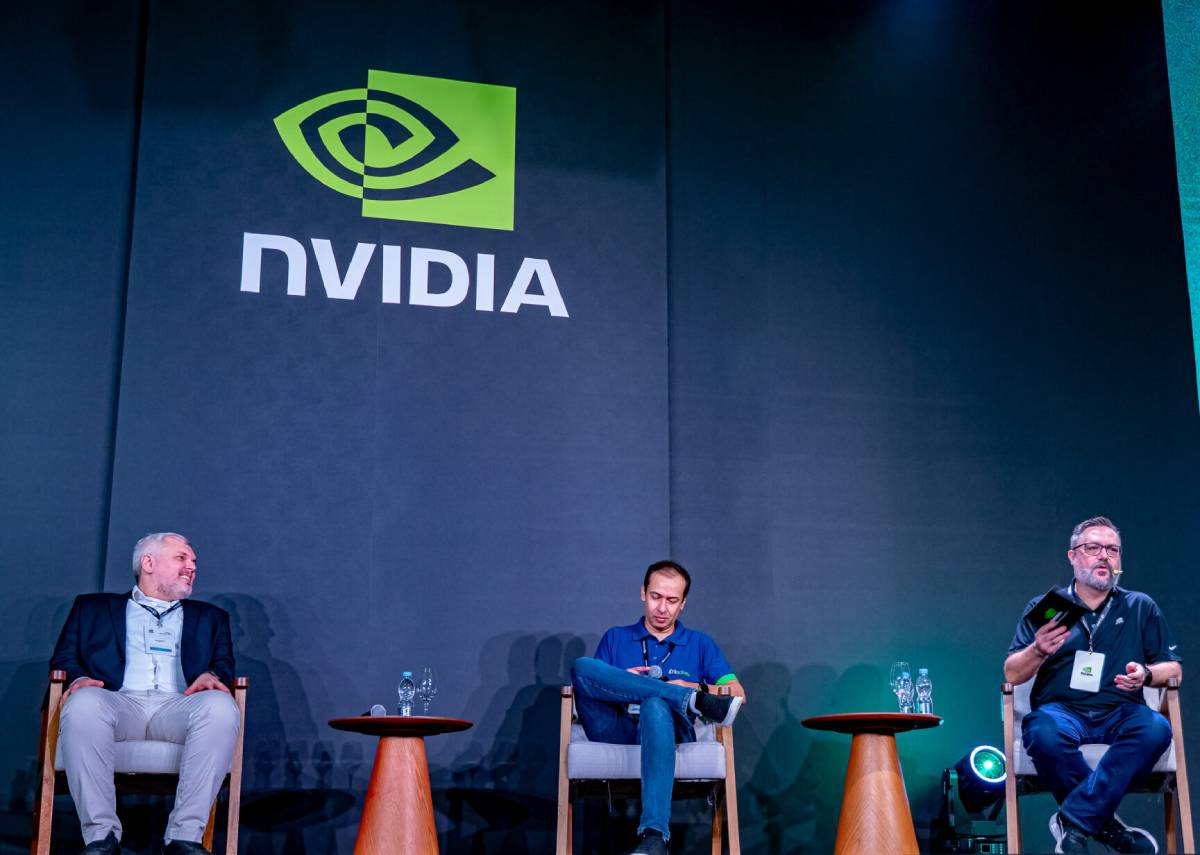
A strategic expansion into Latin America’s AI ecosystem took center stage as NVIDIA hosted its first AI Day in São Paulo. The event signals the chipmaker’s intent to deepen regional partnerships, accelerate AI infrastructure deployment, and position Brazil as a growing node in the global artificial intelligence economy.
The inaugural AI Day brought together developers, startups, enterprise leaders, and public-sector stakeholders to showcase advancements in accelerated computing, generative AI, and industry-specific AI applications.
NVIDIA executives highlighted demand for high-performance GPUs, AI frameworks, and cloud-based compute solutions powering sectors such as finance, healthcare, energy, and agribusiness.
The event emphasized ecosystem development from training local talent to strengthening collaborations with universities and enterprises. Brazil, Latin America’s largest economy, is emerging as a regional AI hub, supported by expanding data center capacity and government-backed digital transformation initiatives.
The gathering underscores NVIDIA’s broader strategy to embed its hardware and software stack into national AI roadmaps worldwide. The development aligns with a broader trend in which AI infrastructure investment is expanding beyond North America, Europe, and East Asia. As demand for generative AI accelerates, countries are competing to build domestic capacity in data centers, advanced chips, and AI research talent.
NVIDIA, whose GPUs underpin much of today’s AI model training and inference workloads, has become central to this global expansion. The company’s platforms are widely used by hyperscalers, startups, and research institutions.
Latin America has historically lagged in high-performance computing infrastructure compared to the US and China. However, rising digital adoption, fintech innovation, and cloud penetration are reshaping the region’s technology landscape.
By hosting AI Day in São Paulo, NVIDIA is reinforcing its role not just as a chip supplier, but as an ecosystem architect supporting regional AI ambition.
Industry analysts view NVIDIA’s regional outreach as both commercially strategic and geopolitically astute. Expanding into emerging markets diversifies revenue streams and strengthens supply chain resilience.
Executives at the event reportedly emphasized the importance of “sovereign AI” enabling nations to build and manage their own AI capabilities rather than relying entirely on foreign infrastructure.
Technology policy experts note that Brazil’s regulatory environment and growing startup ecosystem make it a promising AI growth market. At the same time, infrastructure constraints including energy reliability and semiconductor supply remain structural challenges.
Market observers suggest NVIDIA’s ability to cultivate local developer communities may determine long-term platform loyalty, particularly as competitors seek footholds in emerging economies.
The event reflects the broader race to globalize AI adoption beyond established tech capitals. For enterprises in Latin America, NVIDIA’s engagement could accelerate AI deployment across industries, lowering barriers to access advanced computing tools.
Investors may interpret the expansion as a signal of sustained global demand for AI infrastructure, reinforcing the company’s strategic positioning. Governments in the region could view the partnership opportunities as catalysts for economic modernization and workforce upskilling. However, policymakers must balance AI-driven growth with data governance, cybersecurity, and energy policy considerations. For global executives, the takeaway is clear: emerging markets are becoming critical battlegrounds in the AI infrastructure race.
The next phase will likely involve expanded cloud partnerships, data center investments, and talent development initiatives across Latin America. Decision-makers will watch whether Brazil can convert ecosystem momentum into scalable AI startups and enterprise adoption. As AI competition becomes increasingly global, regional hubs like São Paulo may play a decisive role in shaping the next wave of innovation.
Source: NVIDIA Blog
Date: February 2026


