



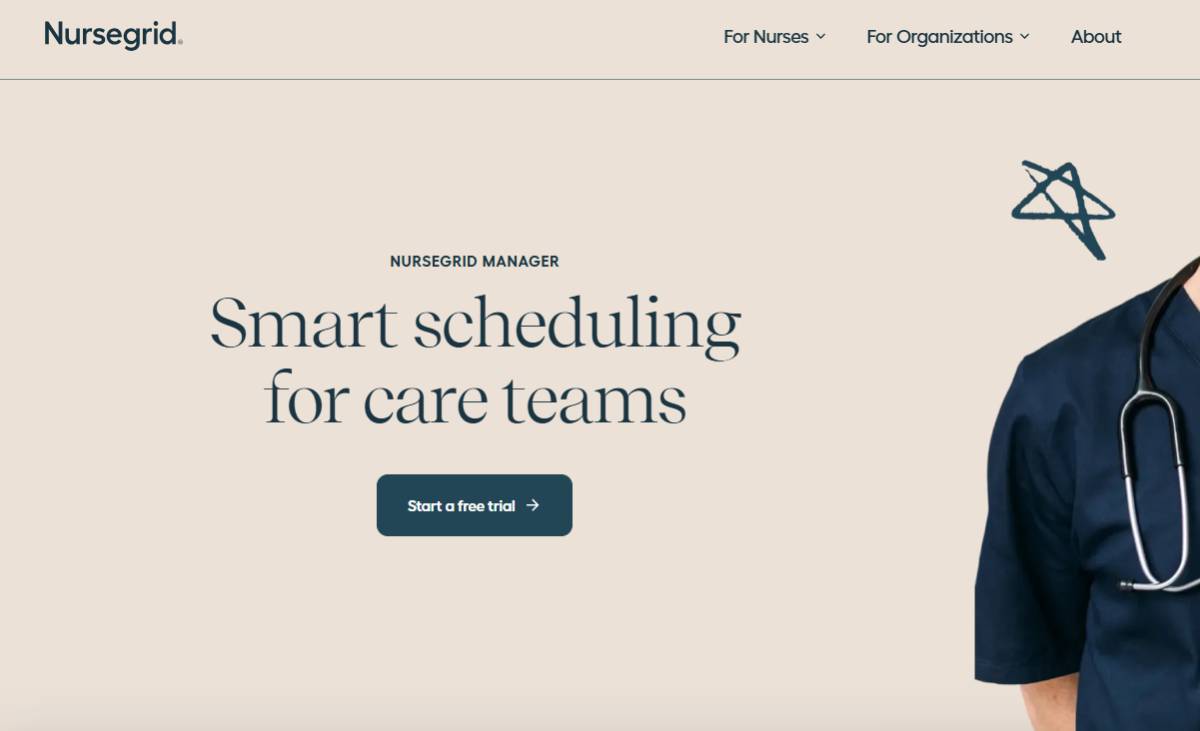
NurseGrid Manager is advancing digital workforce coordination in healthcare by bringing scheduling, shift communication and staffing visibility into a connected platform. The solution addresses a critical operational challenge for hospitals and care teams: coordinating complex nursing schedules while improving coverage, reducing administrative workload and giving frontline staff greater visibility and flexibility.
NurseGrid Manager enables healthcare managers to create, manage and distribute staff schedules while employees can access updates through the Nursegrid mobile application. Core capabilities include self-scheduling, open-shift management, shift swaps, giveaways and real-time schedule updates.
The platform is designed for healthcare teams of up to 250 staff members and is listed at $5 per staff member per month, according to Nursegrid. The company also promotes a 30-day free trial.
Nursegrid says its broader platform has more than 650,000 active users, highlighting the scale of its healthcare workforce technology ecosystem. The development comes as healthcare organizations face continuing pressure to balance staffing requirements, labor costs and employee expectations. Nursing workforce management is particularly complex because schedules must account for availability, shift requirements, coverage levels and frequent last-minute changes.
NurseGrid Manager reflects a broader industry transition away from spreadsheets, paper schedules and fragmented communication toward centralized workforce-management platforms. By connecting managers with employees through mobile technology, the system aims to make scheduling more transparent and responsive.
The wider Nursegrid platform has established a significant presence among nursing professionals, while its integration into HealthStream's healthcare workforce technology portfolio strengthens its position within the broader digital healthcare ecosystem.
For healthcare executives, the importance extends beyond scheduling convenience. More efficient workforce coordination can influence overtime, staffing gaps, employee satisfaction and the organization's ability to respond to changing patient-care demands.
Nursegrid positions Manager around three central objectives: helping managers save time, improving staff satisfaction and increasing staffing efficiency. The company says managers can gain real-time visibility into staff availability and scheduled hours, helping them respond more quickly to coverage requirements.
Nursegrid has also reported that 80% of its Manager customers were filling more open shifts while avoiding unnecessary overtime. This is a company-reported performance claim rather than an independently verified industry benchmark and should therefore be evaluated alongside an organization's own workforce data.
The mobile-first model is particularly significant because healthcare professionals often operate away from traditional office environments. Immediate access to schedules and shift information can reduce communication delays and provide employees with greater participation in scheduling decisions.
For executives, the strategic test will be whether improved digital coordination produces measurable operational and workforce outcomes. For healthcare organizations, digital scheduling technology could help reduce administrative inefficiencies while providing managers with stronger visibility into staffing requirements. Automated communication and self-service scheduling may also reduce the time spent coordinating routine changes.
For nurses and other healthcare workers, mobile access can improve transparency around schedules, availability and shift opportunities. For investors and healthcare technology leaders, workforce-management platforms represent a growing segment of healthcare digitization focused on operational efficiency rather than direct clinical care.
However, organizations must consider data privacy, system integration, workforce regulations and clinical staffing requirements before adoption. Technology should support managerial decision-making while maintaining appropriate safeguards around patient care and workforce standards.
Healthcare workforce technology is likely to move toward greater automation, predictive staffing and real-time workforce intelligence. NurseGrid Manager is positioned within this broader transformation by connecting scheduling with mobile workforce communication. Decision-makers should watch adoption, measurable labor savings, interoperability and employee satisfaction as key indicators of long-term value. The next competitive advantage may come from turning workforce data into faster, smarter staffing decisions.
Source: Nursegrid
Date: August 13, 2026


