
Nscale Narvik Drives Sustainable AI Compute

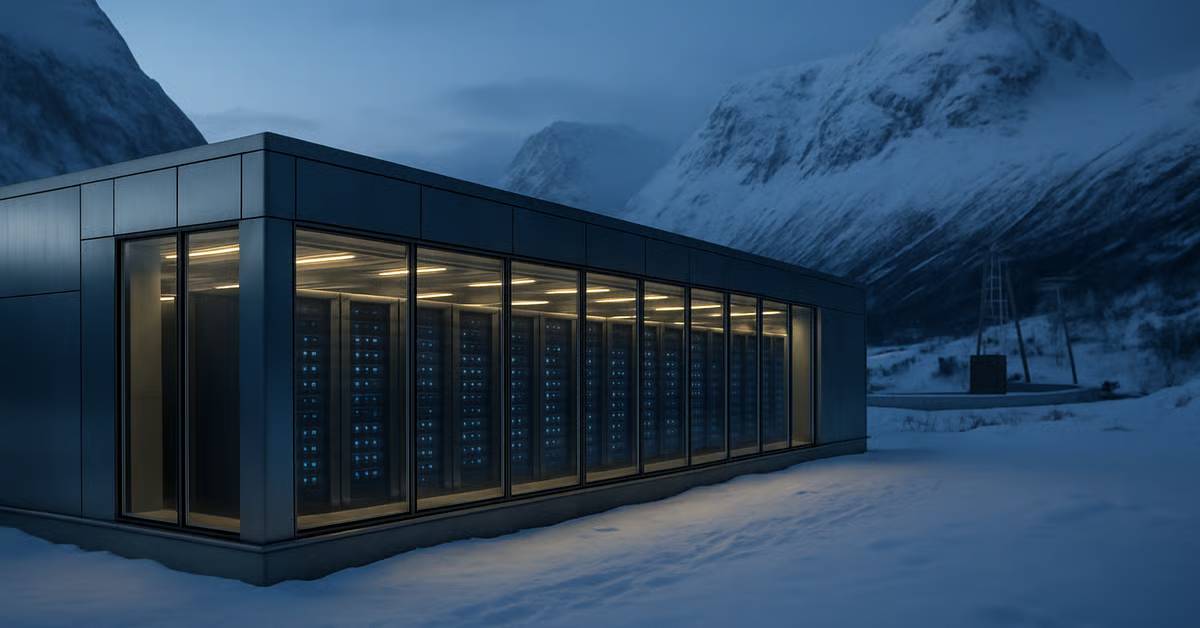
Nscale’s Narvik project focuses on building advanced AI infrastructure powered by Norway’s abundant renewable energy resources.

July 29, 2026
|

A major shift is unfolding in Europe’s artificial intelligence infrastructure landscape as Nscale advances plans to transform Norway’s renewable energy advantage into a large-scale AI computing hub in Narvik. The investment highlights a growing global race to secure sustainable data centre capacity, reshaping how governments, enterprises, and technology leaders approach AI growth.

Nscale’s Narvik project focuses on building advanced AI infrastructure powered by Norway’s abundant renewable energy resources. The initiative positions the Arctic region as a potential strategic location for energy-efficient computing operations.

The financing and development plans reflect increasing demand for AI-ready data centres capable of supporting large language models, enterprise applications, and high-performance computing workloads.

Key stakeholders include Nscale, regional authorities, technology investors, and businesses seeking reliable AI infrastructure. The project also strengthens Europe’s ambitions to reduce dependence on overseas computing capacity while accelerating domestic digital infrastructure growth.

The development aligns with a broader global trend where AI expansion is creating unprecedented demand for computing power, electricity, and specialised infrastructure. Data centres supporting AI workloads require significantly more energy than traditional facilities, pushing companies to search for locations offering reliable, affordable, and sustainable power.

Norway has emerged as an attractive destination due to its renewable energy supply, particularly hydropower, cooler climate, and established digital infrastructure ecosystem. Across Europe, governments are increasingly focused on developing sovereign AI capabilities as concerns grow around data security, technology dependence, and geopolitical competition.

The Narvik investment reflects a wider transformation of energy-rich regions into digital infrastructure centres. Similar strategies are being pursued globally as companies seek sustainable alternatives for next-generation computing.

Industry analysts view Nscale’s Narvik strategy as part of a larger movement toward decentralised AI infrastructure. Experts suggest that access to clean energy will become a critical competitive advantage as artificial intelligence adoption increases worldwide.

Technology leaders have emphasised that future AI growth will depend not only on advanced chips and software but also on physical infrastructure capable of supporting intensive workloads. Data centre operators are increasingly prioritising locations with renewable energy availability, regulatory stability, and strong connectivity.

Regional policymakers are also expected to highlight the economic benefits, including job creation, technology investment, and stronger positioning in Europe’s digital economy. However, analysts note that balancing AI expansion with environmental considerations and local energy demand will remain a key challenge.

For global enterprises, Nscale’s Narvik project signals a changing landscape for AI infrastructure investment. Companies developing AI products may increasingly prioritise partnerships with sustainable data centre providers to manage rising operational costs and environmental commitments.

Investors may view energy-efficient computing hubs as strategic assets in the AI economy. Governments could also accelerate policies supporting renewable-powered digital infrastructure to strengthen technological independence.

However, policymakers will need to address challenges related to energy consumption, regional impact, and infrastructure development. The success of projects like Narvik could influence future decisions about where Europe’s AI computing capacity is built.

Nscale’s Narvik expansion represents a potential blueprint for Europe’s next generation of AI infrastructure. As demand for computing power continues to accelerate, regions with clean energy advantages may become increasingly valuable. Decision-makers will watch whether the project attracts additional technology partnerships, scales efficiently, and demonstrates that AI growth can align with sustainability goals. The outcome could shape Europe’s competitive position in the global AI race.

Source: Nordic Tech News
Date: July 2026

  • Featured tools
Scalenut AI
Free

Scalenut AI is an all-in-one SEO content platform that combines AI-driven writing, keyword research, competitor insights, and optimization tools to help you plan, create, and rank content.

#
SEO
Learn more
Hostinger Horizons
Freemium

Hostinger Horizons is an AI-powered platform that allows users to build and deploy custom web applications without writing code. It packs hosting, domain management and backend integration into a unified tool for rapid app creation.

#
Startup Tools
#
Coding
#
Project Management
Learn more

Learn more about future of AI

Join 80,000+ Ai enthusiast getting weekly updates on exciting AI tools.
Thank you! Your submission has been received!
Oops! Something went wrong while submitting the form.

Nscale Narvik Drives Sustainable AI Compute

July 29, 2026

Nscale’s Narvik project focuses on building advanced AI infrastructure powered by Norway’s abundant renewable energy resources.

A major shift is unfolding in Europe’s artificial intelligence infrastructure landscape as Nscale advances plans to transform Norway’s renewable energy advantage into a large-scale AI computing hub in Narvik. The investment highlights a growing global race to secure sustainable data centre capacity, reshaping how governments, enterprises, and technology leaders approach AI growth.

Nscale’s Narvik project focuses on building advanced AI infrastructure powered by Norway’s abundant renewable energy resources. The initiative positions the Arctic region as a potential strategic location for energy-efficient computing operations.

The financing and development plans reflect increasing demand for AI-ready data centres capable of supporting large language models, enterprise applications, and high-performance computing workloads.

Key stakeholders include Nscale, regional authorities, technology investors, and businesses seeking reliable AI infrastructure. The project also strengthens Europe’s ambitions to reduce dependence on overseas computing capacity while accelerating domestic digital infrastructure growth.

The development aligns with a broader global trend where AI expansion is creating unprecedented demand for computing power, electricity, and specialised infrastructure. Data centres supporting AI workloads require significantly more energy than traditional facilities, pushing companies to search for locations offering reliable, affordable, and sustainable power.

Norway has emerged as an attractive destination due to its renewable energy supply, particularly hydropower, cooler climate, and established digital infrastructure ecosystem. Across Europe, governments are increasingly focused on developing sovereign AI capabilities as concerns grow around data security, technology dependence, and geopolitical competition.

The Narvik investment reflects a wider transformation of energy-rich regions into digital infrastructure centres. Similar strategies are being pursued globally as companies seek sustainable alternatives for next-generation computing.

Industry analysts view Nscale’s Narvik strategy as part of a larger movement toward decentralised AI infrastructure. Experts suggest that access to clean energy will become a critical competitive advantage as artificial intelligence adoption increases worldwide.

Technology leaders have emphasised that future AI growth will depend not only on advanced chips and software but also on physical infrastructure capable of supporting intensive workloads. Data centre operators are increasingly prioritising locations with renewable energy availability, regulatory stability, and strong connectivity.

Regional policymakers are also expected to highlight the economic benefits, including job creation, technology investment, and stronger positioning in Europe’s digital economy. However, analysts note that balancing AI expansion with environmental considerations and local energy demand will remain a key challenge.

For global enterprises, Nscale’s Narvik project signals a changing landscape for AI infrastructure investment. Companies developing AI products may increasingly prioritise partnerships with sustainable data centre providers to manage rising operational costs and environmental commitments.

Investors may view energy-efficient computing hubs as strategic assets in the AI economy. Governments could also accelerate policies supporting renewable-powered digital infrastructure to strengthen technological independence.

However, policymakers will need to address challenges related to energy consumption, regional impact, and infrastructure development. The success of projects like Narvik could influence future decisions about where Europe’s AI computing capacity is built.

Nscale’s Narvik expansion represents a potential blueprint for Europe’s next generation of AI infrastructure. As demand for computing power continues to accelerate, regions with clean energy advantages may become increasingly valuable. Decision-makers will watch whether the project attracts additional technology partnerships, scales efficiently, and demonstrates that AI growth can align with sustainability goals. The outcome could shape Europe’s competitive position in the global AI race.

Source: Nordic Tech News
Date: July 2026

Promote Your Tool

Copy Embed Code

Similar Blogs

July 29, 2026
|

EmulationStation Enhances Retro Gaming Experience

EmulationStation is a front-end interface designed to organize and present video game emulation libraries through a streamlined user experience.
Read more
July 29, 2026
|

Tomoson Expands Influencer Marketing Collaboration

Tomoson operates as an influencer marketing platform designed to help brands collaborate with content creators and manage promotional campaigns.
Read more
July 29, 2026
|

ZeroBin.net Advances Secure Data Sharing

ZeroBin.net operates as a privacy-oriented platform that allows users to share encrypted information through temporary digital channels.
Read more
July 29, 2026
|

Gaia Expands Digital Knowledge Access

Gaia operates within the broader category of digital platforms focused on information discovery, organization, and knowledge accessibility.
Read more
July 29, 2026
|

MailDrop Expands Privacy Email Solutions

MailDrop operates as a temporary email service designed to help users create disposable email addresses for online registrations and digital interactions.
Read more
July 29, 2026
|

MacX YouTube Downloader Enhances Video Management

MacX YouTube Downloader is a multimedia software solution designed to support video downloading, conversion, and management from online platforms.
Read more