
Norwegian Robotics Startup Raises €12M

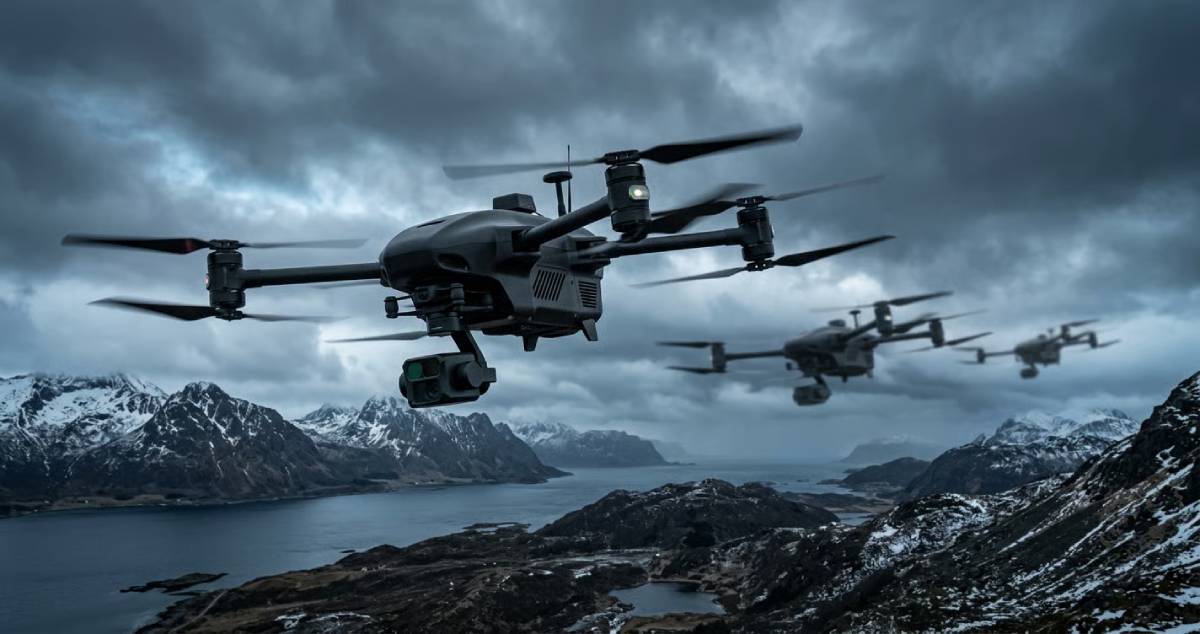
Six Robotics secured €12 million in a seed round aimed at scaling its “swarm intelligence” platform, which functions as the central decision-making layer for coordinated drone operations.

July 3, 2026
|
Image Source:  Nordic Tech News

A Norwegian robotics company has raised €12 million in seed funding to develop advanced software that coordinates autonomous drone swarms. The investment signals accelerating momentum in defense-grade AI systems, where machine autonomy and distributed intelligence are reshaping modern warfare, surveillance, and critical infrastructure monitoring across global security markets.

Six Robotics secured €12 million in a seed round aimed at scaling its “swarm intelligence” platform, which functions as the central decision-making layer for coordinated drone operations. The technology enables multiple unmanned systems to operate collaboratively, adapt in real time, and execute complex missions with minimal human intervention.

The funding round reflects growing investor appetite for defense-tech and autonomous systems across Europe and NATO-aligned markets. Strategic interest is being driven by rising demand for scalable, AI-powered battlefield solutions, particularly in surveillance, reconnaissance, and electronic warfare applications. The company plans to expand engineering capabilities and accelerate deployment-ready solutions for defense and dual-use sectors.

The development comes amid a global shift toward autonomous defense systems, where drone swarms are increasingly viewed as a force multiplier in modern military strategy. Unlike traditional unmanned aerial vehicles, swarm systems rely on decentralized intelligence, allowing large groups of drones to coordinate without centralized control.

This approach is being explored by defense agencies worldwide as part of broader modernization programs integrating AI, robotics, and real-time data analytics. Europe, in particular, has intensified investment in defense innovation due to heightened geopolitical tensions and evolving security requirements.

Startups operating in this space are benefiting from dual-use demand, where technologies designed for defense also have applications in disaster response, border surveillance, infrastructure monitoring, and maritime security. This convergence of commercial and military use cases is driving increased venture capital participation in robotics and autonomous systems.

Industry analysts describe swarm intelligence as one of the most strategically significant advancements in modern defense robotics. By enabling coordinated decision-making across multiple autonomous units, these systems reduce reliance on human operators while increasing mission efficiency and resilience in contested environments.

Defense technology experts note that the integration of artificial intelligence allows drone swarms to dynamically respond to environmental changes, electronic interference, and evolving mission objectives. However, they also emphasize the importance of robust ethical frameworks, cybersecurity safeguards, and regulatory oversight as autonomy levels increase.

Venture capital observers highlight that funding activity in autonomous defense systems has surged in recent years, driven by both geopolitical uncertainty and rapid advancements in edge computing, machine learning, and sensor technologies. Collaboration between startups, defense contractors, and government agencies is expected to play a critical role in scaling these capabilities responsibly.

For businesses, the funding underscores growing opportunities in autonomous systems, AI infrastructure, robotics engineering, and defense-grade software development. Investors are increasingly viewing swarm intelligence and unmanned systems as high-growth segments within the broader defense-tech ecosystem.

Governments are likely to strengthen procurement pipelines and regulatory frameworks to support responsible deployment of autonomous military technologies. At the same time, concerns around escalation risks and operational control will shape policy discussions.

For executives and industry leaders, the shift signals that autonomy is becoming a defining competitive advantage in defense innovation, with significant implications for supply chains, cybersecurity architecture, and cross-border technology partnerships.

As autonomous systems evolve, drone swarm technology is expected to move from experimental deployment to operational integration across defense and security missions. The coming years will likely see increased standardization, regulatory scrutiny, and international collaboration. Companies capable of combining AI, robotics, and secure mission-critical software will be well positioned to shape the next phase of autonomous defense capabilities.

Source: Nordic Tech News
Date: July 3, 2026

  • Featured tools
Alli AI
Free

Alli AI is an all-in-one, AI-powered SEO automation platform that streamlines on-page optimization, site auditing, speed improvements, schema generation, internal linking, and ranking insights.

#
SEO
Learn more
Wonder AI
Free

Wonder AI is a versatile AI-powered creative platform that generates text, images, and audio with minimal input, designed for fast storytelling, visual creation, and audio content generation

#
Art Generator
Learn more

Learn more about future of AI

Join 80,000+ Ai enthusiast getting weekly updates on exciting AI tools.
Thank you! Your submission has been received!
Oops! Something went wrong while submitting the form.

Norwegian Robotics Startup Raises €12M

July 3, 2026

Six Robotics secured €12 million in a seed round aimed at scaling its “swarm intelligence” platform, which functions as the central decision-making layer for coordinated drone operations.

Image Source:  Nordic Tech News

A Norwegian robotics company has raised €12 million in seed funding to develop advanced software that coordinates autonomous drone swarms. The investment signals accelerating momentum in defense-grade AI systems, where machine autonomy and distributed intelligence are reshaping modern warfare, surveillance, and critical infrastructure monitoring across global security markets.

Six Robotics secured €12 million in a seed round aimed at scaling its “swarm intelligence” platform, which functions as the central decision-making layer for coordinated drone operations. The technology enables multiple unmanned systems to operate collaboratively, adapt in real time, and execute complex missions with minimal human intervention.

The funding round reflects growing investor appetite for defense-tech and autonomous systems across Europe and NATO-aligned markets. Strategic interest is being driven by rising demand for scalable, AI-powered battlefield solutions, particularly in surveillance, reconnaissance, and electronic warfare applications. The company plans to expand engineering capabilities and accelerate deployment-ready solutions for defense and dual-use sectors.

The development comes amid a global shift toward autonomous defense systems, where drone swarms are increasingly viewed as a force multiplier in modern military strategy. Unlike traditional unmanned aerial vehicles, swarm systems rely on decentralized intelligence, allowing large groups of drones to coordinate without centralized control.

This approach is being explored by defense agencies worldwide as part of broader modernization programs integrating AI, robotics, and real-time data analytics. Europe, in particular, has intensified investment in defense innovation due to heightened geopolitical tensions and evolving security requirements.

Startups operating in this space are benefiting from dual-use demand, where technologies designed for defense also have applications in disaster response, border surveillance, infrastructure monitoring, and maritime security. This convergence of commercial and military use cases is driving increased venture capital participation in robotics and autonomous systems.

Industry analysts describe swarm intelligence as one of the most strategically significant advancements in modern defense robotics. By enabling coordinated decision-making across multiple autonomous units, these systems reduce reliance on human operators while increasing mission efficiency and resilience in contested environments.

Defense technology experts note that the integration of artificial intelligence allows drone swarms to dynamically respond to environmental changes, electronic interference, and evolving mission objectives. However, they also emphasize the importance of robust ethical frameworks, cybersecurity safeguards, and regulatory oversight as autonomy levels increase.

Venture capital observers highlight that funding activity in autonomous defense systems has surged in recent years, driven by both geopolitical uncertainty and rapid advancements in edge computing, machine learning, and sensor technologies. Collaboration between startups, defense contractors, and government agencies is expected to play a critical role in scaling these capabilities responsibly.

For businesses, the funding underscores growing opportunities in autonomous systems, AI infrastructure, robotics engineering, and defense-grade software development. Investors are increasingly viewing swarm intelligence and unmanned systems as high-growth segments within the broader defense-tech ecosystem.

Governments are likely to strengthen procurement pipelines and regulatory frameworks to support responsible deployment of autonomous military technologies. At the same time, concerns around escalation risks and operational control will shape policy discussions.

For executives and industry leaders, the shift signals that autonomy is becoming a defining competitive advantage in defense innovation, with significant implications for supply chains, cybersecurity architecture, and cross-border technology partnerships.

As autonomous systems evolve, drone swarm technology is expected to move from experimental deployment to operational integration across defense and security missions. The coming years will likely see increased standardization, regulatory scrutiny, and international collaboration. Companies capable of combining AI, robotics, and secure mission-critical software will be well positioned to shape the next phase of autonomous defense capabilities.

Source: Nordic Tech News
Date: July 3, 2026

Promote Your Tool

Copy Embed Code

Similar Blogs

July 3, 2026
|

Syngenta Appoints New CEO Basel

Syngenta has officially named a new CEO to lead its global operations headquartered in Basel, Switzerland.
Read more
July 3, 2026
|

Lonza Deepens US Biotech Partnership

Lonza has announced an expansion of its existing collaboration with a US pharmaceutical client, strengthening its role in large-scale biologics manufacturing and development services.
Read more
July 3, 2026
|

Mickos Leads Enfuce Board Chair

Enfuce has named Mårten Mickos as its new Board Chair, bringing in a globally recognized technology executive known for scaling enterprise software companies.
Read more
July 3, 2026
|

Legora Expands Global AI Footprint

The acquisition of Cadastral positions Legora to strengthen its AI-powered real estate analytics offering, particularly in data-rich property valuation and market intelligence systems.
Read more
July 3, 2026
|

Europe’s Sovereign AI Momentum Grows

The new platform by Arawise integrates sovereign cloud infrastructure with enterprise-grade AI capabilities, hosted entirely on European data systems.
Read more
July 3, 2026
|

Surwera Bets on Robot Dog

Surwera’s robot dog represents a shift from traditional industrial robotics toward emotionally responsive, AI-enabled consumer machines.
Read more