
Norwegian Maritime Robotics Secures Funding Boost

Maritime Robotics has secured €28 million in fresh capital to scale its autonomous vessel technology, aimed at expanding unmanned operations across commercial and defense maritime sectors.

July 29, 2026
|
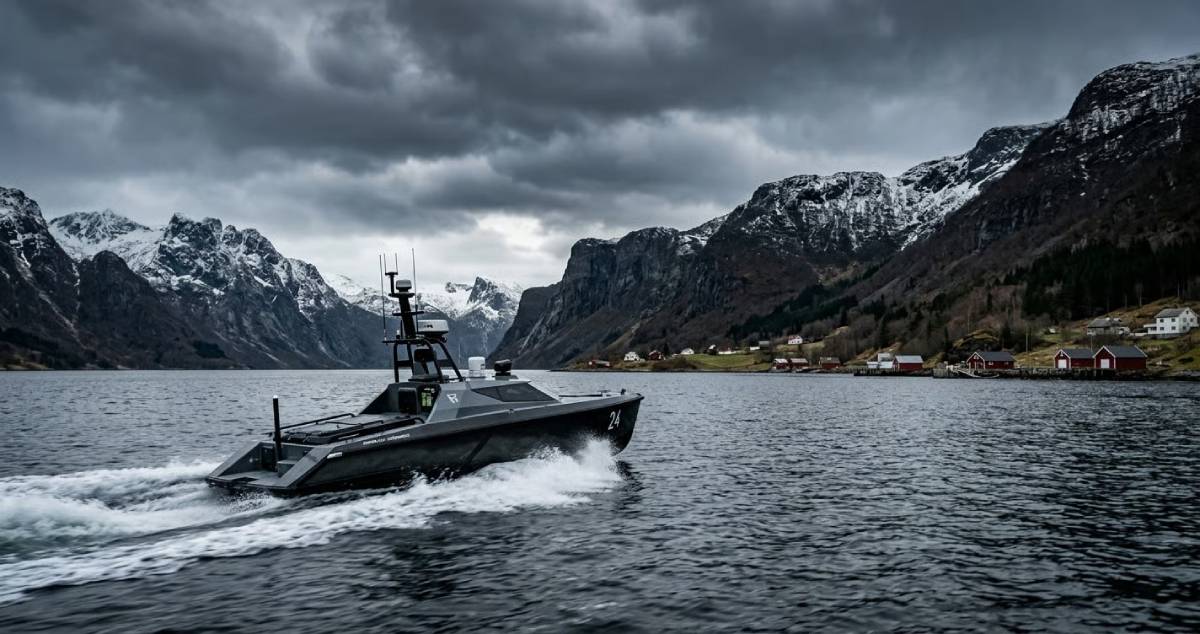
Image Source: Nordic Tech News

A significant funding milestone has been achieved by Maritime Robotics, which has raised €28 million to accelerate the deployment of autonomous surface vessels. The development signals a shift toward unmanned maritime operations, with implications for global shipping efficiency, defense applications, and ocean data infrastructure.

Maritime Robotics has secured €28 million in fresh capital to scale its autonomous vessel technology, aimed at expanding unmanned operations across commercial and defense maritime sectors. The funding round is expected to support product development, global expansion, and increased production capacity for autonomous surface vehicles.

The company, headquartered in Trondheim, Norway, focuses on remotely operated and fully autonomous vessels used for ocean monitoring, mapping, and offshore operations. Investors backing the round include strategic maritime and technology-focused funds.

The investment highlights growing confidence in autonomous maritime systems as viable solutions for reducing operational costs and improving safety in complex ocean environments.

The maritime industry is undergoing a structural transformation driven by automation, artificial intelligence, and remote sensing technologies. Autonomous surface vessels are increasingly being deployed for tasks such as environmental monitoring, offshore energy inspection, and defense reconnaissance.

Norway has emerged as a global leader in maritime autonomy due to its strong offshore energy sector and advanced marine engineering ecosystem. Companies like Maritime Robotics are benefiting from this ecosystem, which integrates research institutions, shipbuilders, and digital technology providers.

Globally, shipping and offshore industries are facing rising pressure to reduce emissions, improve safety, and cut operational costs. Autonomous vessels are seen as a key solution, particularly for high-risk or remote operations. The €28 million funding round reflects increasing investor interest in maritime autonomy as part of the broader shift toward unmanned industrial systems.

Industry analysts note that autonomous maritime systems represent one of the fastest-growing segments within the broader robotics and industrial automation market. Experts highlight that reducing human presence in offshore operations can significantly lower risk exposure and operational overhead.

A marine technology consultant observed that “autonomous vessels are moving from experimental deployments to scalable commercial infrastructure, particularly in data-heavy offshore environments.” While company leadership has emphasized global expansion and product scaling, analysts point to defense and energy sectors as primary growth drivers.

Policy and maritime safety experts also stress that regulatory frameworks will need to evolve to accommodate unmanned vessels operating in international waters. The convergence of robotics, AI navigation systems, and satellite connectivity is expected to accelerate adoption across both civilian and strategic maritime applications.

For shipping companies and offshore operators, autonomous vessels could significantly reduce labor costs, improve operational efficiency, and enhance safety in hazardous marine environments. This may accelerate adoption across offshore energy, environmental monitoring, and logistics sectors.

For investors, the funding round signals strong momentum in maritime robotics, positioning it as a high-growth segment within industrial automation. It may also attract further venture and strategic capital into adjacent technologies such as ocean AI and autonomous logistics.

From a policy perspective, governments and maritime authorities will need to address regulatory challenges around autonomous navigation, liability frameworks, and international maritime law compliance.

Looking ahead, Maritime Robotics is expected to expand its global footprint and increase deployment of autonomous vessels across commercial and defense applications. Key milestones include scaling production, securing long-term contracts, and advancing AI-driven navigation capabilities.

However, regulatory uncertainty and integration with existing maritime infrastructure remain key challenges. The next phase will determine whether autonomous vessels transition from niche deployments to mainstream maritime operations.

Source: Nordic Tech NewsDate: June 22, 2026

  • Featured tools
Upscayl AI
Free

Upscayl AI is a free, open-source AI-powered tool that enhances and upscales images to higher resolutions. It transforms blurry or low-quality visuals into sharp, detailed versions with ease.

#
Productivity
Learn more
WellSaid Ai
Free

WellSaid AI is an advanced text-to-speech platform that transforms written text into lifelike, human-quality voiceovers.

#
Text to Speech
Learn more

Learn more about future of AI

Join 80,000+ Ai enthusiast getting weekly updates on exciting AI tools.
Thank you! Your submission has been received!
Oops! Something went wrong while submitting the form.

Norwegian Maritime Robotics Secures Funding Boost

July 29, 2026

Maritime Robotics has secured €28 million in fresh capital to scale its autonomous vessel technology, aimed at expanding unmanned operations across commercial and defense maritime sectors.

Image Source: Nordic Tech News

A significant funding milestone has been achieved by Maritime Robotics, which has raised €28 million to accelerate the deployment of autonomous surface vessels. The development signals a shift toward unmanned maritime operations, with implications for global shipping efficiency, defense applications, and ocean data infrastructure.

Maritime Robotics has secured €28 million in fresh capital to scale its autonomous vessel technology, aimed at expanding unmanned operations across commercial and defense maritime sectors. The funding round is expected to support product development, global expansion, and increased production capacity for autonomous surface vehicles.

The company, headquartered in Trondheim, Norway, focuses on remotely operated and fully autonomous vessels used for ocean monitoring, mapping, and offshore operations. Investors backing the round include strategic maritime and technology-focused funds.

The investment highlights growing confidence in autonomous maritime systems as viable solutions for reducing operational costs and improving safety in complex ocean environments.

The maritime industry is undergoing a structural transformation driven by automation, artificial intelligence, and remote sensing technologies. Autonomous surface vessels are increasingly being deployed for tasks such as environmental monitoring, offshore energy inspection, and defense reconnaissance.

Norway has emerged as a global leader in maritime autonomy due to its strong offshore energy sector and advanced marine engineering ecosystem. Companies like Maritime Robotics are benefiting from this ecosystem, which integrates research institutions, shipbuilders, and digital technology providers.

Globally, shipping and offshore industries are facing rising pressure to reduce emissions, improve safety, and cut operational costs. Autonomous vessels are seen as a key solution, particularly for high-risk or remote operations. The €28 million funding round reflects increasing investor interest in maritime autonomy as part of the broader shift toward unmanned industrial systems.

Industry analysts note that autonomous maritime systems represent one of the fastest-growing segments within the broader robotics and industrial automation market. Experts highlight that reducing human presence in offshore operations can significantly lower risk exposure and operational overhead.

A marine technology consultant observed that “autonomous vessels are moving from experimental deployments to scalable commercial infrastructure, particularly in data-heavy offshore environments.” While company leadership has emphasized global expansion and product scaling, analysts point to defense and energy sectors as primary growth drivers.

Policy and maritime safety experts also stress that regulatory frameworks will need to evolve to accommodate unmanned vessels operating in international waters. The convergence of robotics, AI navigation systems, and satellite connectivity is expected to accelerate adoption across both civilian and strategic maritime applications.

For shipping companies and offshore operators, autonomous vessels could significantly reduce labor costs, improve operational efficiency, and enhance safety in hazardous marine environments. This may accelerate adoption across offshore energy, environmental monitoring, and logistics sectors.

For investors, the funding round signals strong momentum in maritime robotics, positioning it as a high-growth segment within industrial automation. It may also attract further venture and strategic capital into adjacent technologies such as ocean AI and autonomous logistics.

From a policy perspective, governments and maritime authorities will need to address regulatory challenges around autonomous navigation, liability frameworks, and international maritime law compliance.

Looking ahead, Maritime Robotics is expected to expand its global footprint and increase deployment of autonomous vessels across commercial and defense applications. Key milestones include scaling production, securing long-term contracts, and advancing AI-driven navigation capabilities.

However, regulatory uncertainty and integration with existing maritime infrastructure remain key challenges. The next phase will determine whether autonomous vessels transition from niche deployments to mainstream maritime operations.

Source: Nordic Tech NewsDate: June 22, 2026

Promote Your Tool

Copy Embed Code

Similar Blogs

July 29, 2026
|

EmulationStation Enhances Retro Gaming Experience

EmulationStation is a front-end interface designed to organize and present video game emulation libraries through a streamlined user experience.
Read more
July 29, 2026
|

Tomoson Expands Influencer Marketing Collaboration

Tomoson operates as an influencer marketing platform designed to help brands collaborate with content creators and manage promotional campaigns.
Read more
July 29, 2026
|

ZeroBin.net Advances Secure Data Sharing

ZeroBin.net operates as a privacy-oriented platform that allows users to share encrypted information through temporary digital channels.
Read more
July 29, 2026
|

Gaia Expands Digital Knowledge Access

Gaia operates within the broader category of digital platforms focused on information discovery, organization, and knowledge accessibility.
Read more
July 29, 2026
|

MailDrop Expands Privacy Email Solutions

MailDrop operates as a temporary email service designed to help users create disposable email addresses for online registrations and digital interactions.
Read more
July 29, 2026
|

MacX YouTube Downloader Enhances Video Management

MacX YouTube Downloader is a multimedia software solution designed to support video downloading, conversion, and management from online platforms.
Read more