
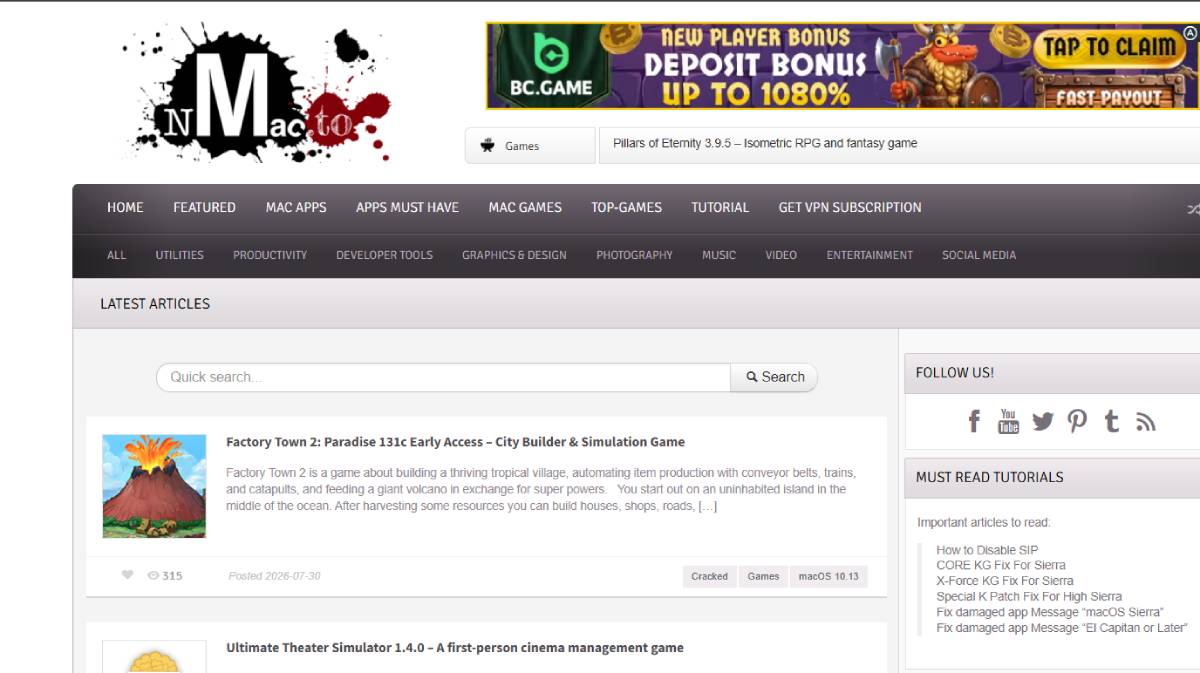
Nmac.to Expands Mac Software Distribution Alternatives

Nmac.to has emerged as a platform associated with Mac application discovery and distribution, attracting users looking for alternatives to traditional software acquisition methods.

July 30, 2026
|

A significant shift is underway in the digital software ecosystem as alternative platforms for discovering and accessing Mac applications continue gaining attention. Nmac.to represents part of a broader movement toward independent software distribution channels, reflecting changing user expectations around accessibility, convenience, and flexible technology solutions within the global Mac community.

Nmac.to has emerged as a platform associated with Mac application discovery and distribution, attracting users looking for alternatives to traditional software acquisition methods. The platform operates within a wider ecosystem of third-party software resources serving Apple device users.

Key stakeholders include Mac users, independent developers, software publishers, and digital distribution platforms. The growing interest in alternative software sources highlights continued demand for broader access, specialized applications, and simplified installation experiences.

As Apple’s ecosystem expands globally, software availability, security standards, and trusted distribution models remain critical considerations for businesses and consumers navigating the modern application landscape.

The software distribution industry has experienced major transformation over the past decade, with official application marketplaces becoming the preferred route for many users. However, alternative platforms continue to exist because of demand for specialized tools, older applications, regional availability, and greater flexibility.

The rise of platforms like Nmac.to reflects broader trends across the technology sector, where users increasingly seek customized digital experiences beyond traditional ecosystems. Similar movements have appeared across operating systems, including open-source software communities and independent application marketplaces.

For enterprise leaders and technology decision-makers, the development highlights the ongoing balance between accessibility, cybersecurity, software compliance, and user freedom. As digital workplaces become more dependent on diverse software solutions, trusted application management will remain a strategic priority.

Technology analysts suggest that alternative software platforms demonstrate a continuing gap between consumer demand and centralized application ecosystems. Experts note that users often seek greater choice, especially when official marketplaces do not provide access to niche or specialized applications.

Cybersecurity professionals emphasize that software sourcing remains a critical issue, recommending that organizations evaluate application authenticity, developer reputation, and security practices before deployment. Industry observers believe future software distribution models will likely combine convenience with stronger verification systems.

While platforms supporting broader software access can encourage innovation, analysts highlight the importance of maintaining responsible digital practices. The future of application distribution will depend on how effectively platforms balance user flexibility with security, privacy, and regulatory expectations.

For businesses, the growth of alternative Mac software platforms reinforces the importance of software governance and digital risk management. Organizations using Apple devices may need stronger policies for evaluating third-party applications while maintaining employee productivity.

Investors and technology companies may view the trend as evidence of continued opportunities in software marketplaces, application management, and cybersecurity solutions.

From a policy perspective, regulators and industry leaders face the challenge of encouraging innovation while protecting users from malicious software and unauthorized distribution channels. Companies developing future software ecosystems will need to prioritize trust, transparency, and secure access models.

The evolution of Mac software distribution will likely continue as users demand greater choice and developers explore new ways to reach audiences. Decision-makers should monitor cybersecurity developments, platform regulations, and changing user behaviors. The next phase of digital software ecosystems will depend on creating a balance between open access, reliable performance, and secure technology management.

Source: AlternativeTo
Date: July 30, 2026

  • Featured tools
Beautiful AI
Free

Beautiful AI is an AI-powered presentation platform that automates slide design and formatting, enabling users to create polished, on-brand presentations quickly.

#
Presentation
Learn more
Writesonic AI
Free

Writesonic AI is a versatile AI writing platform designed for marketers, entrepreneurs, and content creators. It helps users create blog posts, ad copies, product descriptions, social media posts, and more with ease. With advanced AI models and user-friendly tools, Writesonic streamlines content production and saves time for busy professionals.

#
Copywriting
Learn more

Learn more about future of AI

Join 80,000+ Ai enthusiast getting weekly updates on exciting AI tools.
Thank you! Your submission has been received!
Oops! Something went wrong while submitting the form.

Nmac.to Expands Mac Software Distribution Alternatives

July 30, 2026

Nmac.to has emerged as a platform associated with Mac application discovery and distribution, attracting users looking for alternatives to traditional software acquisition methods.

A significant shift is underway in the digital software ecosystem as alternative platforms for discovering and accessing Mac applications continue gaining attention. Nmac.to represents part of a broader movement toward independent software distribution channels, reflecting changing user expectations around accessibility, convenience, and flexible technology solutions within the global Mac community.

Nmac.to has emerged as a platform associated with Mac application discovery and distribution, attracting users looking for alternatives to traditional software acquisition methods. The platform operates within a wider ecosystem of third-party software resources serving Apple device users.

Key stakeholders include Mac users, independent developers, software publishers, and digital distribution platforms. The growing interest in alternative software sources highlights continued demand for broader access, specialized applications, and simplified installation experiences.

As Apple’s ecosystem expands globally, software availability, security standards, and trusted distribution models remain critical considerations for businesses and consumers navigating the modern application landscape.

The software distribution industry has experienced major transformation over the past decade, with official application marketplaces becoming the preferred route for many users. However, alternative platforms continue to exist because of demand for specialized tools, older applications, regional availability, and greater flexibility.

The rise of platforms like Nmac.to reflects broader trends across the technology sector, where users increasingly seek customized digital experiences beyond traditional ecosystems. Similar movements have appeared across operating systems, including open-source software communities and independent application marketplaces.

For enterprise leaders and technology decision-makers, the development highlights the ongoing balance between accessibility, cybersecurity, software compliance, and user freedom. As digital workplaces become more dependent on diverse software solutions, trusted application management will remain a strategic priority.

Technology analysts suggest that alternative software platforms demonstrate a continuing gap between consumer demand and centralized application ecosystems. Experts note that users often seek greater choice, especially when official marketplaces do not provide access to niche or specialized applications.

Cybersecurity professionals emphasize that software sourcing remains a critical issue, recommending that organizations evaluate application authenticity, developer reputation, and security practices before deployment. Industry observers believe future software distribution models will likely combine convenience with stronger verification systems.

While platforms supporting broader software access can encourage innovation, analysts highlight the importance of maintaining responsible digital practices. The future of application distribution will depend on how effectively platforms balance user flexibility with security, privacy, and regulatory expectations.

For businesses, the growth of alternative Mac software platforms reinforces the importance of software governance and digital risk management. Organizations using Apple devices may need stronger policies for evaluating third-party applications while maintaining employee productivity.

Investors and technology companies may view the trend as evidence of continued opportunities in software marketplaces, application management, and cybersecurity solutions.

From a policy perspective, regulators and industry leaders face the challenge of encouraging innovation while protecting users from malicious software and unauthorized distribution channels. Companies developing future software ecosystems will need to prioritize trust, transparency, and secure access models.

The evolution of Mac software distribution will likely continue as users demand greater choice and developers explore new ways to reach audiences. Decision-makers should monitor cybersecurity developments, platform regulations, and changing user behaviors. The next phase of digital software ecosystems will depend on creating a balance between open access, reliable performance, and secure technology management.

Source: AlternativeTo
Date: July 30, 2026

Promote Your Tool

Copy Embed Code

Similar Blogs

August 14, 2026
|

Benefitfocus Expands Digital Benefits Administration

Benefitfocus provides cloud-based technology covering benefits enrollment, administration, communications, billing, payments and data exchange.
Read more
August 14, 2026
|

Travel Agent Revenue Models Evolve Digitally

Travel agencies can earn commissions when customers book hotels, cruises, tours, vacation packages and other travel products through them. Suppliers may pay agents for generating bookings, making commissions a traditional component of agency revenue.
Read more
August 14, 2026
|

Sofon Advances Guided Selling CPQ Automation

Sofon's platform combines guided selling, product configuration, pricing, quotation and sales-management capabilities. Guided questionnaires help sales teams identify customer requirements and translate them into suitable product configurations.
Read more
August 14, 2026
|

WellRyde Advances Medical Transportation Management

WellRyde provides technology for managing non-emergency medical transportation operations, including trip scheduling, dispatch coordination, transportation-provider management and reporting.
Read more
August 14, 2026
|

Review WAVE Advances Digital Patient Engagement

Review WAVE provides healthcare practices with tools for online appointment scheduling, two-way texting, automated appointment reminders, digital forms, web chat, marketing campaigns and online review generation.
Read more
August 14, 2026
|

Edgenuity Expands Digital Virtual Education

Edgenuity provides digital curriculum and learning solutions covering core academic subjects, electives, Advanced Placement and career-oriented education.
Read more