
NationStates Expands Strategy Simulation Gaming

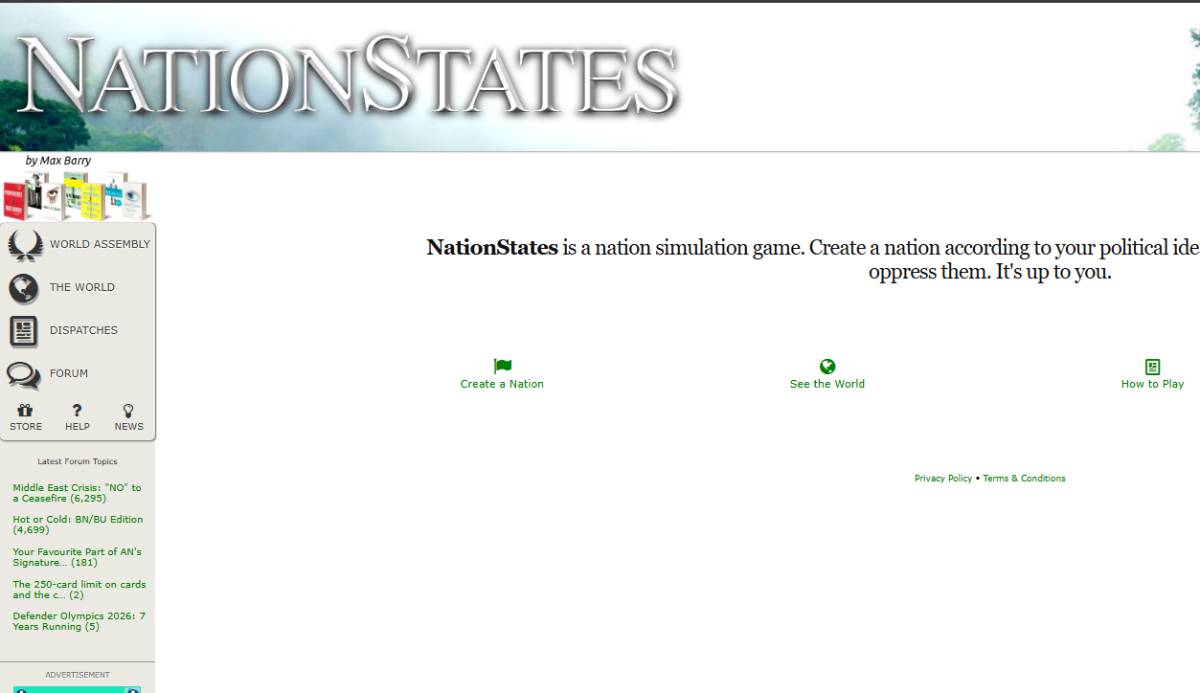
NationStates enables players to create virtual countries and shape their political, economic, and social systems through a series of policy decisions.

July 21, 2026
|

NationStates continues to attract users with its unique browser-based political simulation, allowing players to build and govern fictional nations through policy decisions and diplomacy. The platform highlights the growing appeal of educational strategy games that combine entertainment with civic engagement, political experimentation, and community-driven world-building.

NationStates enables players to create virtual countries and shape their political, economic, and social systems through a series of policy decisions. The game features evolving national statistics, international diplomacy, regional alliances, elections, and community governance.

Unlike traditional strategy games focused on military conquest, NationStates emphasizes decision-making, governance, and public policy. Its browser-based accessibility has helped sustain a dedicated global community over many years. The platform also encourages role-playing, collaborative governance, and user-generated content, making it a distinctive example of simulation gaming that blends education, politics, and online community participation.

Simulation games have become increasingly important as tools for education, leadership development, and systems thinking. Beyond entertainment, strategy-based simulations help users understand the complexities of governance, economics, diplomacy, and public administration by allowing them to experiment with policy choices in risk-free virtual environments.

As digital education expands, gamification has become a recognized method for improving engagement and critical thinking across academic and professional settings. NationStates represents one of the earliest large-scale browser-based nation simulators, demonstrating how online communities can sustain long-term participation through collaborative storytelling and governance. The broader gaming industry has also seen increasing demand for sandbox experiences where player decisions shape evolving narratives, reinforcing the value of interactive simulations for civic education, leadership training, and strategic decision-making.

Education and gaming analysts note that political simulation platforms encourage systems thinking by exposing users to the interconnected nature of public policy, economics, and international relations. Experts argue that decision-based simulations can strengthen problem-solving skills by requiring players to balance competing priorities and evaluate long-term consequences.

Digital learning specialists also recognize the growing role of gamified environments in teaching governance, negotiation, and leadership concepts. Industry observers believe browser-based simulation games continue to maintain niche but loyal audiences because they emphasize creativity and community interaction rather than graphical complexity. As artificial intelligence enhances dynamic storytelling and adaptive gameplay, experts expect policy simulation platforms to become increasingly sophisticated and educationally valuable.

For businesses operating in educational technology and digital learning, simulation platforms demonstrate growing opportunities in interactive training and gamified instruction. Universities, leadership programs, and corporate learning providers may increasingly integrate simulation-based experiences into curricula to strengthen strategic thinking and decision-making capabilities.

Investors continue to monitor educational gaming as a segment benefiting from digital transformation and lifelong learning trends. Policymakers and educators may also view governance simulations as valuable tools for improving civic literacy, encouraging public engagement, and fostering a deeper understanding of democratic institutions through interactive digital experiences.

As educational gaming continues to evolve, platforms like NationStates are likely to benefit from advances in artificial intelligence, collaborative online communities, and personalized simulation experiences. Future development may further integrate dynamic policy modeling, real-world economic scenarios, and enhanced educational applications. Decision-makers across education, technology, and digital learning should monitor how simulation platforms increasingly contribute to leadership development and civic engagement worldwide.

Source: AlternativeTo
Date: July 21, 2026

  • Featured tools
Outplay AI
Free

Outplay AI is a dynamic sales engagement platform combining AI-powered outreach, multi-channel automation, and performance tracking to help teams optimize conversion and pipeline generation.

#
Sales
Learn more
Twistly AI
Paid

Twistly AI is a PowerPoint add-in that allows users to generate full slide decks, improve existing presentations, and convert various content types into polished slides directly within Microsoft PowerPoint.It streamlines presentation creation using AI-powered text analysis, image generation and content conversion.

#
Presentation
Learn more

Learn more about future of AI

Join 80,000+ Ai enthusiast getting weekly updates on exciting AI tools.
Thank you! Your submission has been received!
Oops! Something went wrong while submitting the form.

NationStates Expands Strategy Simulation Gaming

July 21, 2026

NationStates enables players to create virtual countries and shape their political, economic, and social systems through a series of policy decisions.

NationStates continues to attract users with its unique browser-based political simulation, allowing players to build and govern fictional nations through policy decisions and diplomacy. The platform highlights the growing appeal of educational strategy games that combine entertainment with civic engagement, political experimentation, and community-driven world-building.

NationStates enables players to create virtual countries and shape their political, economic, and social systems through a series of policy decisions. The game features evolving national statistics, international diplomacy, regional alliances, elections, and community governance.

Unlike traditional strategy games focused on military conquest, NationStates emphasizes decision-making, governance, and public policy. Its browser-based accessibility has helped sustain a dedicated global community over many years. The platform also encourages role-playing, collaborative governance, and user-generated content, making it a distinctive example of simulation gaming that blends education, politics, and online community participation.

Simulation games have become increasingly important as tools for education, leadership development, and systems thinking. Beyond entertainment, strategy-based simulations help users understand the complexities of governance, economics, diplomacy, and public administration by allowing them to experiment with policy choices in risk-free virtual environments.

As digital education expands, gamification has become a recognized method for improving engagement and critical thinking across academic and professional settings. NationStates represents one of the earliest large-scale browser-based nation simulators, demonstrating how online communities can sustain long-term participation through collaborative storytelling and governance. The broader gaming industry has also seen increasing demand for sandbox experiences where player decisions shape evolving narratives, reinforcing the value of interactive simulations for civic education, leadership training, and strategic decision-making.

Education and gaming analysts note that political simulation platforms encourage systems thinking by exposing users to the interconnected nature of public policy, economics, and international relations. Experts argue that decision-based simulations can strengthen problem-solving skills by requiring players to balance competing priorities and evaluate long-term consequences.

Digital learning specialists also recognize the growing role of gamified environments in teaching governance, negotiation, and leadership concepts. Industry observers believe browser-based simulation games continue to maintain niche but loyal audiences because they emphasize creativity and community interaction rather than graphical complexity. As artificial intelligence enhances dynamic storytelling and adaptive gameplay, experts expect policy simulation platforms to become increasingly sophisticated and educationally valuable.

For businesses operating in educational technology and digital learning, simulation platforms demonstrate growing opportunities in interactive training and gamified instruction. Universities, leadership programs, and corporate learning providers may increasingly integrate simulation-based experiences into curricula to strengthen strategic thinking and decision-making capabilities.

Investors continue to monitor educational gaming as a segment benefiting from digital transformation and lifelong learning trends. Policymakers and educators may also view governance simulations as valuable tools for improving civic literacy, encouraging public engagement, and fostering a deeper understanding of democratic institutions through interactive digital experiences.

As educational gaming continues to evolve, platforms like NationStates are likely to benefit from advances in artificial intelligence, collaborative online communities, and personalized simulation experiences. Future development may further integrate dynamic policy modeling, real-world economic scenarios, and enhanced educational applications. Decision-makers across education, technology, and digital learning should monitor how simulation platforms increasingly contribute to leadership development and civic engagement worldwide.

Source: AlternativeTo
Date: July 21, 2026

Promote Your Tool

Copy Embed Code

Similar Blogs

July 21, 2026
|

Coolors Revolutionizes Digital Color Design

Coolors has emerged as a widely used color-generation and design support platform, offering tools that help users create, explore, and manage color palettes efficiently.
Read more
July 21, 2026
|

Font Squirrel Advances Open-Source Typography

Font Squirrel has become a recognized resource for designers looking for free fonts suitable for personal and commercial projects.
Read more
July 21, 2026
|

Tumlook Evolves Visual Content Sharing

Tumlook emerged as a platform associated with visual content sharing and blogging experiences, offering users a way to organize, publish, and explore creative posts.
Read more
July 21, 2026
|

Weavesilk Showcases Generative Digital Creativity

Weavesilk became known as an interactive digital art platform that allows users to create symmetrical, flowing artwork through intuitive drawing movements.
Read more
July 21, 2026
|

SpotiDown Expands Digital Music Management

SpotiDown gained attention as a tool associated with downloading or managing music content from streaming platforms, reflecting user interest in offline access and personalized media experiences.
Read more
July 21, 2026
|

Ryubing Sparks Gaming Emulation Debate

Ryubing emerged as an alternative project connected to the wider Nintendo Switch emulation ecosystem, following increased interest in open-source gaming technologies.
Read more