
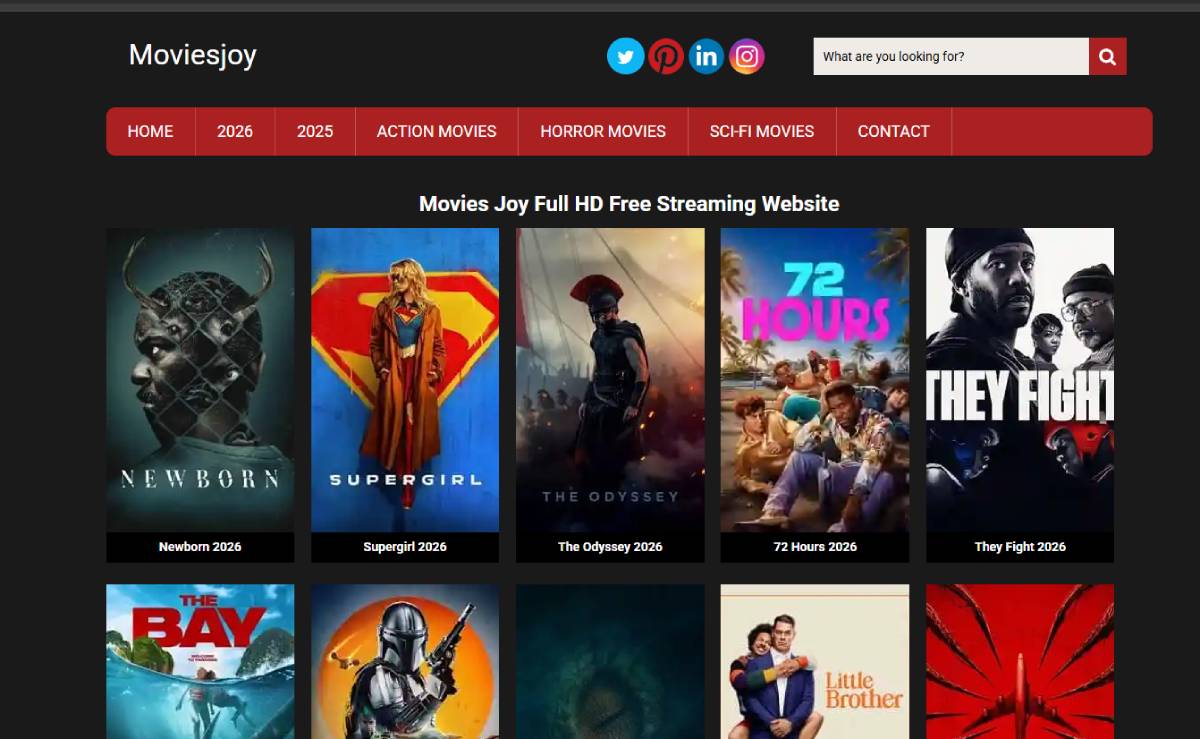
Moviejoy Drives Digital Entertainment Growth

The continued expansion of digital entertainment platforms reflects changing consumer viewing habits and accelerating investment in streaming technologies.

July 31, 2026
|

The global entertainment sector continues to evolve as consumers increasingly favor digital streaming over traditional broadcast and physical media. This trend highlights rising demand for accessible online viewing experiences while reinforcing the industry's focus on licensed content distribution, intellectual property protection, and sustainable digital business models.

The continued expansion of digital entertainment platforms reflects changing consumer viewing habits and accelerating investment in streaming technologies. Audiences increasingly expect instant access to movies and television content across multiple devices, encouraging media companies to enhance cloud-based delivery, recommendation systems, and personalized viewing experiences.

Key stakeholders include streaming service providers, film studios, broadcasters, telecommunications companies, cloud infrastructure vendors, advertisers, regulators, and consumers. At the same time, rights holders continue strengthening copyright enforcement and licensing agreements to protect intellectual property while expanding legitimate digital distribution channels that support long-term industry growth and content monetization.

The global media industry has experienced a significant transformation over the past decade as streaming platforms have become the dominant method of content consumption. Consumers increasingly value convenience, mobility, and on-demand access, prompting entertainment companies to invest heavily in digital infrastructure and exclusive programming.

This development aligns with a broader trend across international markets where cloud computing, artificial intelligence, and data analytics are reshaping media distribution. Personalized recommendations, multilingual content libraries, and cross-platform accessibility have become competitive differentiators for streaming providers.

Meanwhile, governments and industry organizations continue strengthening copyright protection and digital governance frameworks to combat unauthorized content distribution. These measures aim to support creative industries, protect intellectual property, and encourage continued investment in original content production and digital innovation.

Industry analysts believe the long-term success of digital entertainment depends on balancing consumer accessibility with strong intellectual property protection. Licensed distribution models provide predictable revenue streams that enable continued investment in premium programming and technological innovation.

Technology experts emphasize that artificial intelligence is increasingly improving content discovery, personalization, network optimization, and customer engagement across streaming ecosystems. These capabilities enhance user satisfaction while increasing operational efficiency for platform operators.

Media policy specialists also highlight the growing importance of international cooperation on copyright enforcement and cross-border licensing. As entertainment becomes increasingly global, regulatory consistency and industry collaboration will remain essential for supporting sustainable digital markets while protecting creators and investors alike.

For businesses, continued growth in digital entertainment creates opportunities across cloud services, content production, advertising technology, cybersecurity, payment platforms, and telecommunications infrastructure. Companies investing in licensed digital ecosystems are better positioned to strengthen consumer trust and generate recurring subscription revenues.

Investors continue monitoring streaming platforms, media technology firms, and digital infrastructure providers as entertainment consumption shifts further online. Policymakers are expected to strengthen digital copyright enforcement, consumer protection standards, and international licensing frameworks.

For executives, integrating compliance, technology innovation, and customer-centric digital experiences will remain critical competitive priorities. The streaming economy is expected to continue expanding through advances in artificial intelligence, cloud-native content delivery, and international licensing partnerships. Decision-makers should monitor evolving copyright regulations, digital infrastructure investments, and changing consumer behavior. Organizations that successfully combine technological innovation with responsible intellectual property governance will be well positioned to lead the next generation of global digital entertainment.

Source: AlternativeTo
Date: July 31, 2026

  • Featured tools
Outplay AI
Free

Outplay AI is a dynamic sales engagement platform combining AI-powered outreach, multi-channel automation, and performance tracking to help teams optimize conversion and pipeline generation.

#
Sales
Learn more
Hostinger Horizons
Freemium

Hostinger Horizons is an AI-powered platform that allows users to build and deploy custom web applications without writing code. It packs hosting, domain management and backend integration into a unified tool for rapid app creation.

#
Startup Tools
#
Coding
#
Project Management
Learn more

Learn more about future of AI

Join 80,000+ Ai enthusiast getting weekly updates on exciting AI tools.
Thank you! Your submission has been received!
Oops! Something went wrong while submitting the form.

Moviejoy Drives Digital Entertainment Growth

July 31, 2026

The continued expansion of digital entertainment platforms reflects changing consumer viewing habits and accelerating investment in streaming technologies.

The global entertainment sector continues to evolve as consumers increasingly favor digital streaming over traditional broadcast and physical media. This trend highlights rising demand for accessible online viewing experiences while reinforcing the industry's focus on licensed content distribution, intellectual property protection, and sustainable digital business models.

The continued expansion of digital entertainment platforms reflects changing consumer viewing habits and accelerating investment in streaming technologies. Audiences increasingly expect instant access to movies and television content across multiple devices, encouraging media companies to enhance cloud-based delivery, recommendation systems, and personalized viewing experiences.

Key stakeholders include streaming service providers, film studios, broadcasters, telecommunications companies, cloud infrastructure vendors, advertisers, regulators, and consumers. At the same time, rights holders continue strengthening copyright enforcement and licensing agreements to protect intellectual property while expanding legitimate digital distribution channels that support long-term industry growth and content monetization.

The global media industry has experienced a significant transformation over the past decade as streaming platforms have become the dominant method of content consumption. Consumers increasingly value convenience, mobility, and on-demand access, prompting entertainment companies to invest heavily in digital infrastructure and exclusive programming.

This development aligns with a broader trend across international markets where cloud computing, artificial intelligence, and data analytics are reshaping media distribution. Personalized recommendations, multilingual content libraries, and cross-platform accessibility have become competitive differentiators for streaming providers.

Meanwhile, governments and industry organizations continue strengthening copyright protection and digital governance frameworks to combat unauthorized content distribution. These measures aim to support creative industries, protect intellectual property, and encourage continued investment in original content production and digital innovation.

Industry analysts believe the long-term success of digital entertainment depends on balancing consumer accessibility with strong intellectual property protection. Licensed distribution models provide predictable revenue streams that enable continued investment in premium programming and technological innovation.

Technology experts emphasize that artificial intelligence is increasingly improving content discovery, personalization, network optimization, and customer engagement across streaming ecosystems. These capabilities enhance user satisfaction while increasing operational efficiency for platform operators.

Media policy specialists also highlight the growing importance of international cooperation on copyright enforcement and cross-border licensing. As entertainment becomes increasingly global, regulatory consistency and industry collaboration will remain essential for supporting sustainable digital markets while protecting creators and investors alike.

For businesses, continued growth in digital entertainment creates opportunities across cloud services, content production, advertising technology, cybersecurity, payment platforms, and telecommunications infrastructure. Companies investing in licensed digital ecosystems are better positioned to strengthen consumer trust and generate recurring subscription revenues.

Investors continue monitoring streaming platforms, media technology firms, and digital infrastructure providers as entertainment consumption shifts further online. Policymakers are expected to strengthen digital copyright enforcement, consumer protection standards, and international licensing frameworks.

For executives, integrating compliance, technology innovation, and customer-centric digital experiences will remain critical competitive priorities. The streaming economy is expected to continue expanding through advances in artificial intelligence, cloud-native content delivery, and international licensing partnerships. Decision-makers should monitor evolving copyright regulations, digital infrastructure investments, and changing consumer behavior. Organizations that successfully combine technological innovation with responsible intellectual property governance will be well positioned to lead the next generation of global digital entertainment.

Source: AlternativeTo
Date: July 31, 2026

Promote Your Tool

Copy Embed Code

Similar Blogs

July 31, 2026
|

Deep Realms Advances Immersive Digital Experiences

Deep Realms is positioned within the category of immersive digital experiences, offering users a platform focused on exploration, creativity, and interactive engagement.
Read more
July 31, 2026
|

Starbackpage Evolves Digital Marketplace Platforms

Starbackpage is part of the online classified marketplace category, where users can create listings, discover services, and interact through digital platforms.
Read more
July 31, 2026
|

Calyx VPN Strengthens Digital Privacy Security

Calyx VPN is a privacy-focused virtual private network solution designed to provide users with secure internet connections and enhanced online privacy.
Read more
July 31, 2026
|

NoodleTools Enhances Digital Research Productivity

NoodleTools is a research and citation management platform designed to help students and educators organize information, evaluate sources, and create properly formatted citations.
Read more
July 31, 2026
|

Symantec Virtualization Transformed Software Delivery

Symantec Endpoint Virtualization Suite, formerly associated with Altiris Software Virtualization Solution (SVS), was designed to enable organizations to virtualize applications and separate software environments from traditional operating system dependencies.
Read more
July 31, 2026
|

RevPDF Simplifies Secure Document Management

RevPDF is a PDF-focused software solution designed to support document management and processing tasks.
Read more