
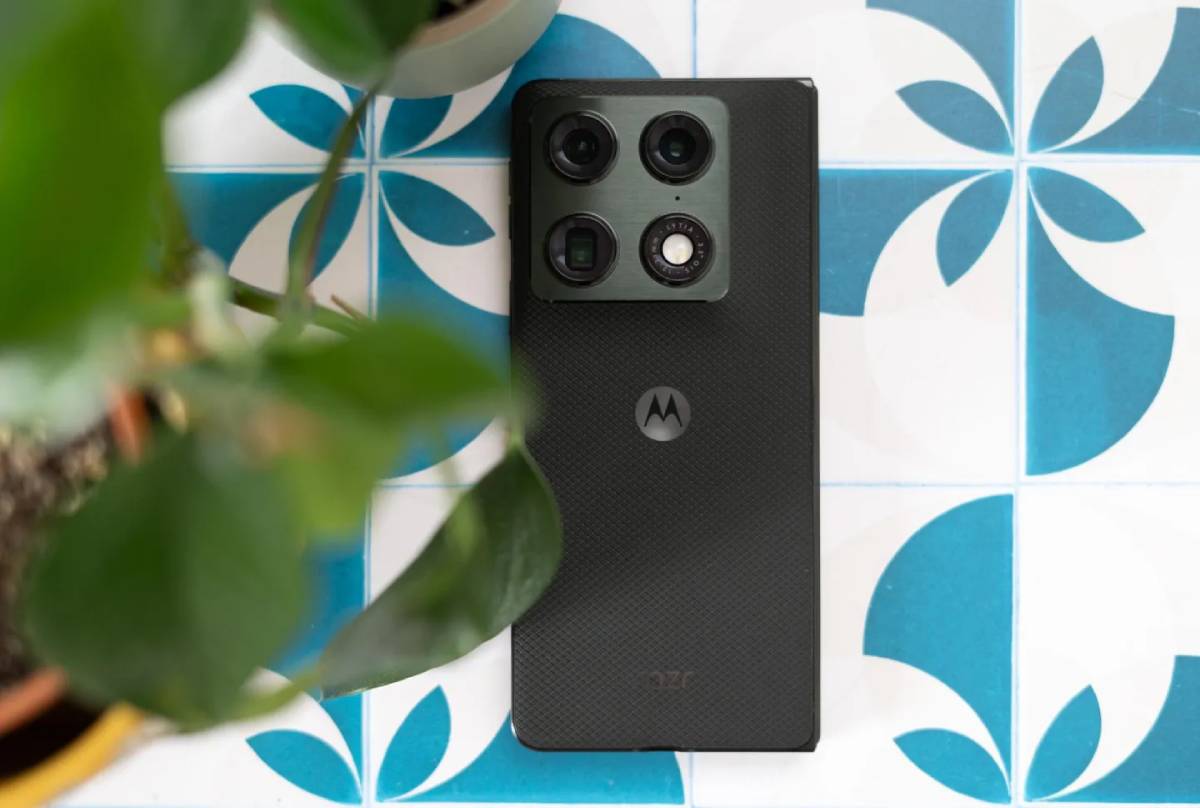
Motorola Fold Strategy Faces Mid-Market Pressure

Motorola’s Razr Fold has drawn attention for its positioning challenges, with reviewers noting that the device struggles to clearly define whether it is a flagship foldable or a mid-range alternative.

May 15, 2026
|
Image Source: The Verge

A notable development in the foldable smartphone segment has emerged as Motorola faces scrutiny over its Razr Fold device, which appears to be caught between premium aspirations and mid-tier performance expectations. The situation highlights intensifying competition in the foldable smartphone market, where manufacturers are still struggling to balance innovation, usability, battery efficiency, and pricing at scale.

Motorola’s Razr Fold has drawn attention for its positioning challenges, with reviewers noting that the device struggles to clearly define whether it is a flagship foldable or a mid-range alternative.

Key concerns include battery performance limitations, trade-offs in hardware optimization, and inconsistencies in delivering a fully premium foldable experience. While the device continues Motorola’s legacy in the clamshell foldable segment, it faces increasing pressure from competitors that have refined foldable designs across multiple generations.

The foldable smartphone market is currently dominated by companies such as Samsung Electronics, which has established a strong ecosystem with its Galaxy Z series, alongside emerging competition from Chinese manufacturers rapidly iterating on hinge technology, display durability, and pricing strategies.

The development aligns with a broader evolution in the global smartphone industry, where foldable devices are being positioned as the next major form factor innovation following the saturation of traditional slab smartphones.

Over the past five years, manufacturers have invested heavily in foldable display technology, flexible OLED panels, and advanced hinge mechanisms. However, widespread consumer adoption has remained limited due to concerns around durability, high pricing, and inconsistent battery performance compared to conventional smartphones.

Samsung Electronics has played a leading role in defining the foldable category, but competition is intensifying as brands attempt to refine form factors and expand price accessibility. Motorola, historically known for its iconic Razr brand, has attempted to leverage nostalgia while adapting to modern foldable expectations.

The broader industry context is shaped by slowing smartphone replacement cycles and a shift toward incremental innovation. As a result, foldables are increasingly viewed as a strategic growth category, particularly in premium segments where manufacturers seek higher margins and differentiation.

Industry analysts suggest that Motorola’s challenge reflects a broader identity crisis in the foldable segment, where manufacturers are still determining whether foldables should prioritize ultra-premium performance or mainstream affordability.

Experts note that battery performance remains one of the most critical constraints in foldable devices, as dual-screen architectures and flexible displays demand greater energy efficiency than traditional smartphones. This creates trade-offs that directly affect user experience and product positioning.

Technology observers also argue that while foldables generate strong consumer interest, they have yet to achieve the reliability and cost efficiency needed for mass-market adoption. Analysts believe that sustained improvements in hinge durability, software optimization, and power management will be essential for long-term success.

Market strategists highlight that Samsung’s continued dominance places additional pressure on competitors like Motorola to differentiate through design or pricing rather than raw technical superiority. However, without clear category leadership, mid-positioned devices risk losing visibility in an increasingly competitive ecosystem.

For businesses, Motorola’s positioning challenges underscore the difficulty of competing in a maturing foldable smartphone market where innovation cycles are expensive and consumer expectations remain high. Companies may need to reassess whether foldables should serve as flagship halo products or mass-market expansion devices.

Investors are likely to evaluate foldable strategies based on long-term scalability, production efficiency, and consumer adoption rates. Firms with stronger supply-chain integration and display technology partnerships may be better positioned to capture future growth.

For policymakers, the foldable segment does not present direct regulatory concerns but highlights broader issues in global electronics manufacturing competitiveness, supply chain resilience, and intellectual property protection in advanced display technologies.

The foldable smartphone market is expected to continue evolving as manufacturers refine designs and attempt to balance performance with affordability. Decision-makers will closely watch whether Motorola can clarify its product positioning or whether Samsung and Chinese competitors continue to define the category’s direction. The long-term trajectory of foldables will depend on whether the form factor can transition from novelty innovation to mainstream consumer necessity.

Source: The Verge
Date: May 15, 2026

  • Featured tools
Surfer AI
Free

Surfer AI is an AI-powered content creation assistant built into the Surfer SEO platform, designed to generate SEO-optimized articles from prompts, leveraging data from search results to inform tone, structure, and relevance.

#
SEO
Learn more
Copy Ai
Free

Copy AI is one of the most popular AI writing tools designed to help professionals create high-quality content quickly. Whether you are a product manager drafting feature descriptions or a marketer creating ad copy, Copy AI can save hours of work while maintaining creativity and tone.

#
Copywriting
Learn more

Learn more about future of AI

Join 80,000+ Ai enthusiast getting weekly updates on exciting AI tools.
Thank you! Your submission has been received!
Oops! Something went wrong while submitting the form.

Motorola Fold Strategy Faces Mid-Market Pressure

May 15, 2026

Motorola’s Razr Fold has drawn attention for its positioning challenges, with reviewers noting that the device struggles to clearly define whether it is a flagship foldable or a mid-range alternative.

Image Source: The Verge

A notable development in the foldable smartphone segment has emerged as Motorola faces scrutiny over its Razr Fold device, which appears to be caught between premium aspirations and mid-tier performance expectations. The situation highlights intensifying competition in the foldable smartphone market, where manufacturers are still struggling to balance innovation, usability, battery efficiency, and pricing at scale.

Motorola’s Razr Fold has drawn attention for its positioning challenges, with reviewers noting that the device struggles to clearly define whether it is a flagship foldable or a mid-range alternative.

Key concerns include battery performance limitations, trade-offs in hardware optimization, and inconsistencies in delivering a fully premium foldable experience. While the device continues Motorola’s legacy in the clamshell foldable segment, it faces increasing pressure from competitors that have refined foldable designs across multiple generations.

The foldable smartphone market is currently dominated by companies such as Samsung Electronics, which has established a strong ecosystem with its Galaxy Z series, alongside emerging competition from Chinese manufacturers rapidly iterating on hinge technology, display durability, and pricing strategies.

The development aligns with a broader evolution in the global smartphone industry, where foldable devices are being positioned as the next major form factor innovation following the saturation of traditional slab smartphones.

Over the past five years, manufacturers have invested heavily in foldable display technology, flexible OLED panels, and advanced hinge mechanisms. However, widespread consumer adoption has remained limited due to concerns around durability, high pricing, and inconsistent battery performance compared to conventional smartphones.

Samsung Electronics has played a leading role in defining the foldable category, but competition is intensifying as brands attempt to refine form factors and expand price accessibility. Motorola, historically known for its iconic Razr brand, has attempted to leverage nostalgia while adapting to modern foldable expectations.

The broader industry context is shaped by slowing smartphone replacement cycles and a shift toward incremental innovation. As a result, foldables are increasingly viewed as a strategic growth category, particularly in premium segments where manufacturers seek higher margins and differentiation.

Industry analysts suggest that Motorola’s challenge reflects a broader identity crisis in the foldable segment, where manufacturers are still determining whether foldables should prioritize ultra-premium performance or mainstream affordability.

Experts note that battery performance remains one of the most critical constraints in foldable devices, as dual-screen architectures and flexible displays demand greater energy efficiency than traditional smartphones. This creates trade-offs that directly affect user experience and product positioning.

Technology observers also argue that while foldables generate strong consumer interest, they have yet to achieve the reliability and cost efficiency needed for mass-market adoption. Analysts believe that sustained improvements in hinge durability, software optimization, and power management will be essential for long-term success.

Market strategists highlight that Samsung’s continued dominance places additional pressure on competitors like Motorola to differentiate through design or pricing rather than raw technical superiority. However, without clear category leadership, mid-positioned devices risk losing visibility in an increasingly competitive ecosystem.

For businesses, Motorola’s positioning challenges underscore the difficulty of competing in a maturing foldable smartphone market where innovation cycles are expensive and consumer expectations remain high. Companies may need to reassess whether foldables should serve as flagship halo products or mass-market expansion devices.

Investors are likely to evaluate foldable strategies based on long-term scalability, production efficiency, and consumer adoption rates. Firms with stronger supply-chain integration and display technology partnerships may be better positioned to capture future growth.

For policymakers, the foldable segment does not present direct regulatory concerns but highlights broader issues in global electronics manufacturing competitiveness, supply chain resilience, and intellectual property protection in advanced display technologies.

The foldable smartphone market is expected to continue evolving as manufacturers refine designs and attempt to balance performance with affordability. Decision-makers will closely watch whether Motorola can clarify its product positioning or whether Samsung and Chinese competitors continue to define the category’s direction. The long-term trajectory of foldables will depend on whether the form factor can transition from novelty innovation to mainstream consumer necessity.

Source: The Verge
Date: May 15, 2026

Promote Your Tool

Copy Embed Code

Similar Blogs

June 10, 2026
|

Microsoft AI Claims Face Leadership Clarification

Microsoft AI executive Mustafa Suleyman has walked back previous remarks that implied AI systems could significantly reshape or replace large segments of white-collar employment in the near term.
Read more
June 10, 2026
|

Apple AI Overhaul Signals Smartphone Shift

Apple is restructuring its mobile software strategy around embedded artificial intelligence capabilities designed to operate across system functions rather than as standalone applications.
Read more
June 10, 2026
|

AI Chatbot Hack Exposes Instagram Accounts

Hackers reportedly exploited weaknesses in an AI-powered customer support chatbot linked to Instagram’s support infrastructure, tricking the system into facilitating unauthorized account access.
Read more
June 10, 2026
|

Apple’s Measured AI Strategy Pays Off

Apple’s AI strategy, showcased through recent WWDC updates and ongoing product integrations, emphasizes controlled deployment rather than rapid feature saturation.
Read more
June 10, 2026
|

GM Bets on Vehicle-to-Grid Energy Tech

General Motors is advancing plans to leverage its electric vehicle ecosystem as a distributed energy storage network through vehicle-to-grid technology.
Read more
June 10, 2026
|

Best Educational Consultants in the USA

The professionals and firms featured in this guide reflect the full breadth of what meaningful education consulting looks like in the United States today.
Read more