



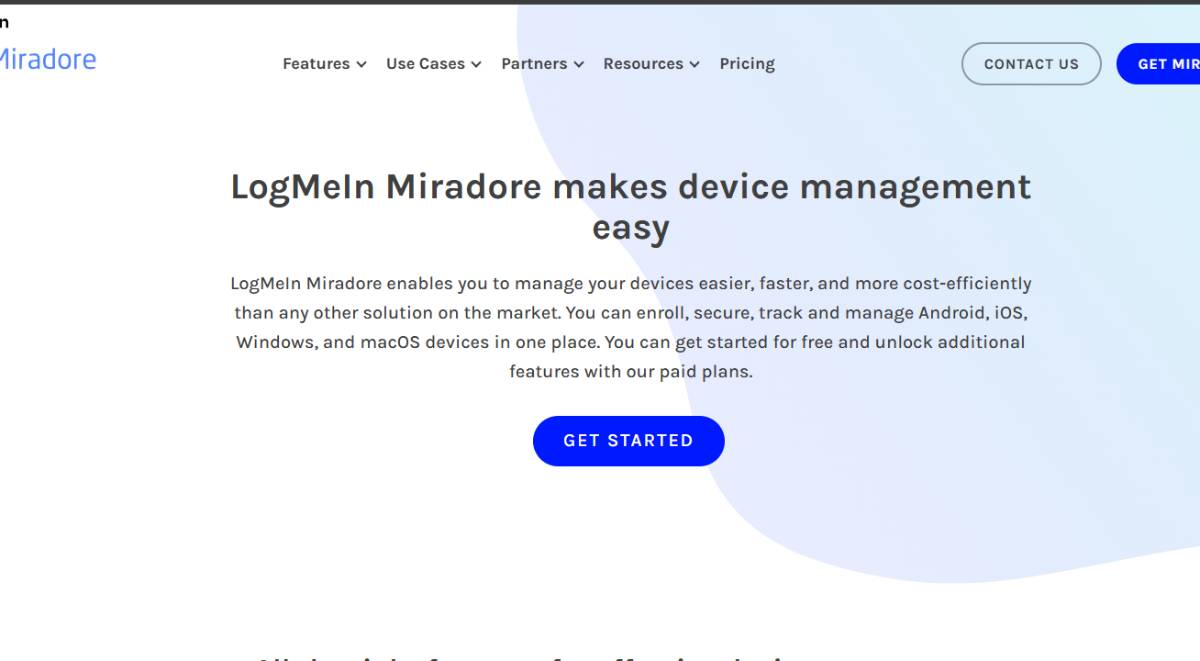
Miradore is strengthening its position in unified endpoint management with a cloud-based platform designed to help organizations manage, secure, and automate device fleets from a centralized environment. Its cross-platform capabilities address growing enterprise challenges around cybersecurity, device visibility, and IT efficiency as businesses navigate increasingly distributed and technology-dependent workforces.
Miradore provides centralized management for Android, iOS, iPadOS, macOS, and Windows devices. Its capabilities include device enrollment, configuration management, application deployment, security policies, patch management, inventory tracking, reporting, automation, and remote locking or wiping.
The platform is designed to simplify endpoint administration while helping IT teams maintain consistent policies across different operating systems. Miradore also targets small and midsize businesses and managed service providers seeking scalable device-management capabilities without the complexity of traditional enterprise deployments. Its broader approach combines mobile-device management with desktop and laptop management, positioning the platform within the expanding unified endpoint management market.
The development comes amid a wider transformation in enterprise IT, where organizations increasingly operate mixed fleets of smartphones, tablets, laptops, desktops, and connected devices. Hybrid work, distributed teams, and bring-your-own-device programs have made endpoint visibility and security more difficult to maintain through fragmented management tools.
Unified Endpoint Management has emerged as a strategic response, allowing organizations to centralize device administration, application control, configuration, and security enforcement. Miradore's platform supports multiple major operating systems, helping organizations establish standardized policies across heterogeneous technology environments.
The trend is particularly significant for SMBs, which often have smaller IT teams but face many of the same cybersecurity and compliance pressures as larger enterprises. Automation can reduce repetitive administrative tasks, while centralized controls can help IT leaders improve consistency, visibility, and response capabilities across geographically dispersed device fleets.
From an executive technology perspective, Miradore reflects the broader convergence between endpoint management and cybersecurity. Modern IT leaders are increasingly expected to protect corporate data while supporting employees across multiple devices, locations, and operating systems.
Miradore emphasizes centralized administration, automated configuration, security policies, application management, and remote-management capabilities. These functions can help organizations establish consistent controls without requiring administrators to manually configure every endpoint.
The company's positioning also focuses strongly on accessibility for SMBs and managed service providers. Its cross-platform approach allows organizations to manage different device categories through a unified environment, potentially reducing operational complexity and the need for multiple specialized management systems.
For CIOs and IT decision-makers, the wider market direction is significant: endpoint management is increasingly moving from a basic administrative function toward a core component of cybersecurity, compliance, and digital workplace strategy.
For businesses, centralized endpoint management can improve device visibility, strengthen security enforcement, simplify application deployment, and reduce manual IT workloads. Capabilities such as remote locking, wiping, configuration management, patching, and policy enforcement can become particularly important when employees operate outside traditional corporate networks.
For SMBs, the ability to manage multiple operating systems through one platform could also support more efficient technology operations as device fleets expand. Managed service providers can similarly benefit from centralized administration across multiple customer environments.
For policymakers and security leaders, endpoint governance increasingly intersects with data protection, employee privacy, access control, and regulatory compliance. Organizations will need to balance stronger security controls with responsible handling of employee and device data as digital workplaces become more distributed.
Miradore's future growth will depend on continued advances in automation, cybersecurity, integrations, and cross-platform management. Decision-makers should watch how the platform scales across larger device environments and responds to evolving security and compliance requirements. As organizations continue expanding hybrid and distributed operations, centralized endpoint governance is likely to become increasingly important. The broader UEM market is positioned to remain a critical part of enterprise IT and cybersecurity strategies.
Source: Crozdesk
Date: August 11, 2026


