



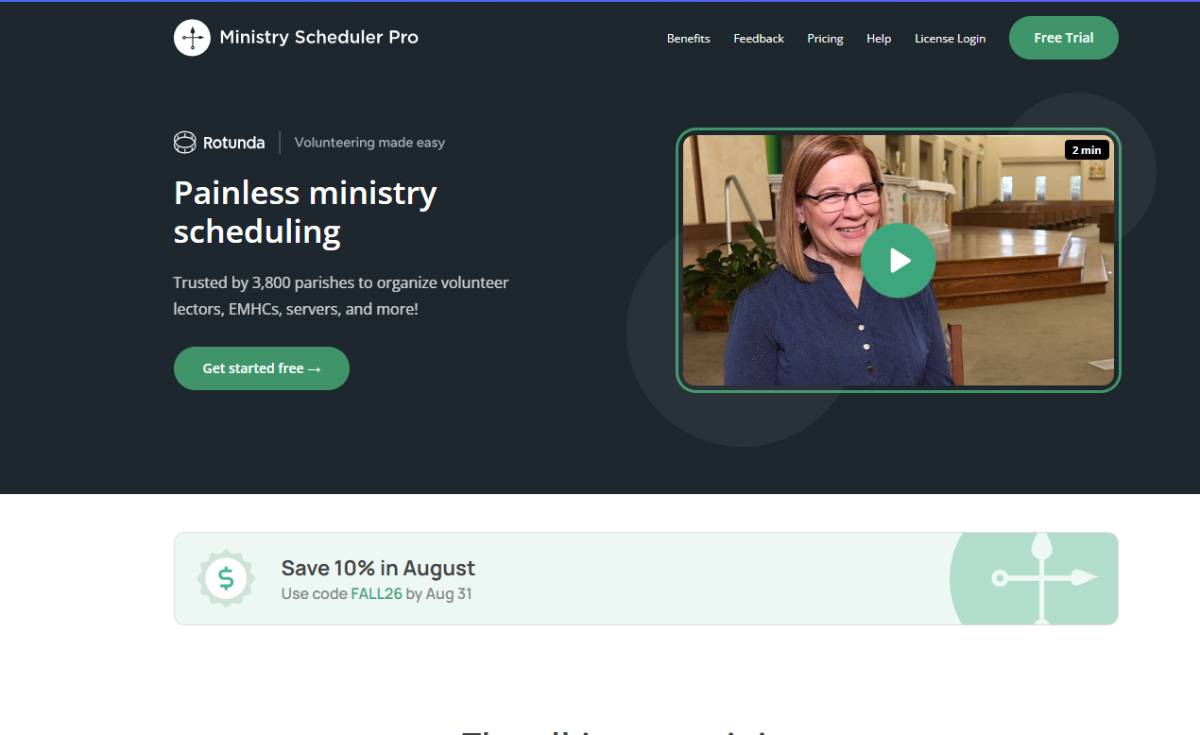
Ministry Scheduler Pro represents the growing shift toward specialized scheduling technology for organizations managing complex volunteer and staff operations. By bringing scheduling, communication, availability management and coordination into a centralized digital environment, the platform addresses a persistent operational challenge: ensuring the right people are assigned to the right responsibilities while reducing administrative workload.
Ministry Scheduler Pro is designed to support organizations that coordinate volunteers, employees and recurring assignments across multiple activities and locations. Its scheduling capabilities can help administrators manage availability, assignments, recurring events and personnel requirements from a centralized system.
The platform also emphasizes communication and coordination, enabling organizations to keep participants informed about schedules and responsibilities. Automated reminders and digital access can reduce dependence on manual calls, emails and spreadsheets.
Its relevance extends beyond religious organizations to other groups that depend heavily on volunteer coordination. As organizations seek greater operational efficiency, scheduling platforms are increasingly becoming part of broader workforce-management strategies, particularly where staffing requirements change frequently and participation depends on individual availability.
The growing demand for scheduling software reflects a broader transformation in workforce and volunteer management. Organizations across sectors are replacing paper-based rosters, spreadsheets and fragmented communication with centralized platforms capable of maintaining real-time information.
For ministries and community organizations, the challenge can be particularly complex. Volunteer participation may fluctuate, roles can require specific skills or qualifications, and recurring services or events often depend on coordinated staffing. Administrative teams therefore need visibility into availability, assignments and schedule changes without creating excessive overhead.
The trend also aligns with the wider rise of cloud-based collaboration tools. Digital scheduling can improve transparency by giving participants access to current information while allowing administrators to make changes more efficiently.
For executives and organizational leaders, the strategic value extends beyond scheduling. Better workforce coordination can improve resource utilization, reduce missed assignments and provide a more consistent operational experience.
Workforce-management specialists generally view scheduling automation as an important mechanism for reducing repetitive administrative tasks. The greatest potential value comes when organizations can combine scheduling, communication and availability information rather than managing each process independently.
For volunteer-driven organizations, this can be particularly significant. Administrative teams often operate with limited resources, making manual scheduling a disproportionate burden. Automated reminders and centralized schedules can allow coordinators to focus more attention on engagement, planning and organizational priorities.
From a management perspective, scheduling technology can also improve accountability. Clear assignments provide participants with greater visibility into their responsibilities, while administrators gain a more structured view of staffing coverage.
The broader software market is moving toward increasingly intelligent scheduling capabilities, including automated recommendations, mobile access and integration with communication systems. Organizations evaluating Ministry Scheduler Pro and comparable solutions will therefore need to consider not only current scheduling requirements
For organizations, digital scheduling can reduce administrative costs while improving workforce utilization and communication. Leaders can potentially gain better visibility into staffing gaps and recurring operational requirements.
For employees and volunteers, easier access to schedules and timely notifications can improve participation and reduce confusion surrounding assignments. The impact can be especially valuable for organizations managing large networks of part-time or volunteer participants.
From an investment perspective, the growing adoption of specialized scheduling platforms highlights continued demand for software that addresses specific operational challenges rather than attempting to serve every business function.
Policy and governance considerations also remain relevant. Organizations managing personnel information must ensure appropriate controls around access, privacy and data security. As scheduling systems become more integrated with broader organizational databases, responsible data management will become increasingly important.
Scheduling platforms are likely to evolve toward greater automation, mobile functionality, predictive staffing and artificial-intelligence-assisted coordination. Future systems may increasingly identify staffing gaps and recommend suitable replacements based on availability and role requirements. For organizational leaders, the priority will be selecting technology that improves coordination without adding complexity, while maintaining strong privacy, security and governance practices.
Source: Crozdesk
Date: August 10, 2026


