
Midjourney Drives AI Image Revolution

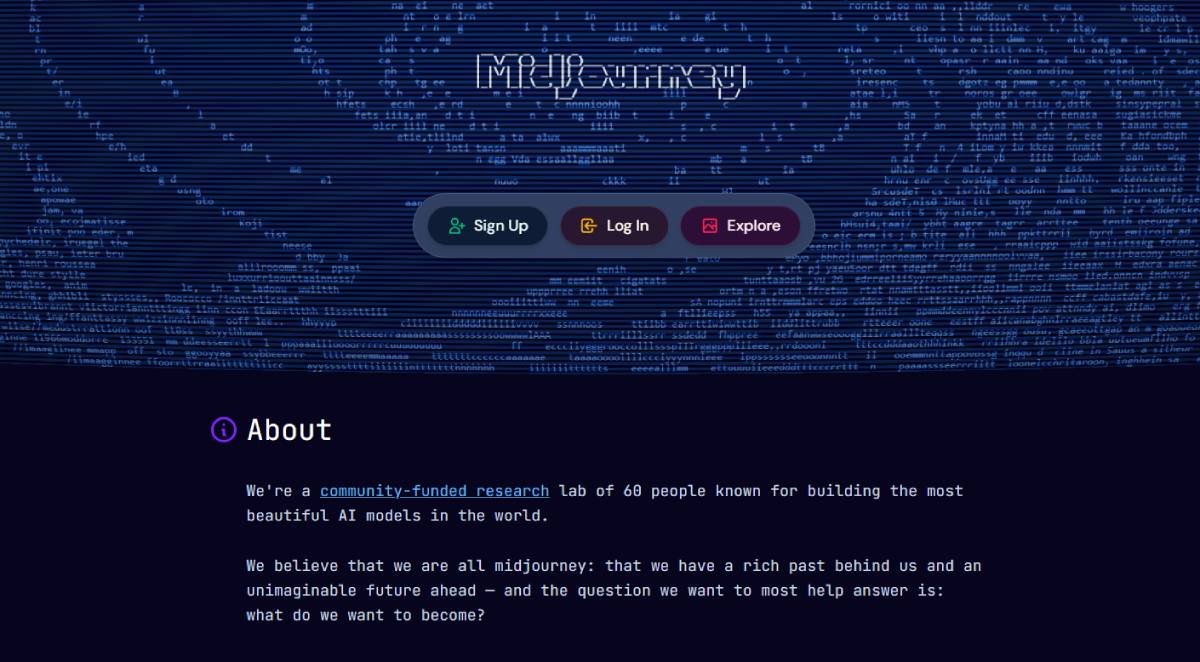
Midjourney operates as an independent research lab focused on developing advanced generative AI systems for image creation. The platform enables users to generate highly detailed and stylized visuals from natural language prompts.

April 10, 2026
|

A major shift in the global creative technology landscape is underway as Midjourney continues advancing its AI-powered image generation platform. The company’s research-driven approach is reshaping visual content creation, signaling profound implications for design industries, digital media ecosystems, and enterprise-level creative workflows worldwide.

Midjourney operates as an independent research lab focused on developing advanced generative AI systems for image creation. The platform enables users to generate highly detailed and stylized visuals from natural language prompts, significantly reducing reliance on traditional design tools and workflows.

The system has gained widespread adoption among designers, marketers, and digital creators due to its ability to rapidly produce high-quality concept art and visual assets. Its iterative model improvements have expanded capabilities in realism, composition, and artistic style control. Midjourney continues to operate within a competitive ecosystem of generative AI firms, all vying to define the future of visual content production and digital creativity infrastructure.

The emergence of Midjourney reflects a broader transformation in the global creative economy, where generative AI is fundamentally altering how visual content is conceptualized and produced. Traditionally, image creation required technical expertise in design software, illustration, or photography. However, AI-powered platforms are now enabling prompt-based visual generation at scale.

This shift is part of a wider evolution across creative industries, where AI tools are increasingly integrated into advertising, entertainment, gaming, and product design pipelines. Advances in diffusion models and transformer-based architectures have made it possible to generate highly coherent and aesthetically complex images in seconds.

Historically, technological shifts such as digital photography and graphic design software expanded creative accessibility. Generative AI represents the next stage of this evolution, where imagination itself becomes a programmable input, reshaping workflows and redefining creative labor structures globally.

Industry analysts describe Midjourney as a leader in the “visual intelligence” segment of generative AI, where systems are evaluated not only on accuracy but also on aesthetic coherence and stylistic depth. This positions the platform at the intersection of art, design, and machine learning research.

AI researchers highlight that image generation models are rapidly improving in their ability to understand spatial relationships, lighting, and artistic style transfer. These advancements are enabling more sophisticated applications across industries, including concept art development and rapid prototyping.

However, experts also caution that the rise of AI-generated imagery raises concerns around copyright ownership, dataset transparency, and the potential displacement of creative professionals. Policy observers emphasize the need for clear labeling standards and ethical frameworks to distinguish human-made and AI-generated content in commercial and media environments.

For businesses, Midjourney offers significant efficiency gains in visual content production, enabling faster campaign development, reduced design costs, and scalable creative experimentation. Marketing, gaming, and media industries are expected to be the primary adopters.

For investors, the generative image sector represents a foundational layer of the broader AI creative economy, with strong demand for tools that enhance productivity and reduce production timelines.

For policymakers, the rapid advancement of AI-generated imagery introduces challenges around intellectual property rights, misinformation risks, and content authenticity. Regulatory frameworks may need to evolve to address attribution, licensing, and synthetic media disclosure requirements.

The AI-generated visual content market is expected to expand further as models become more controllable and photorealistic. Midjourney is likely to continue focusing on refinement of artistic precision and user control. However, regulatory scrutiny and competitive pressure from major tech firms will shape its trajectory. The next phase of development will center on integration into enterprise creative pipelines and real-time generative design systems.

Source: Midjourney
Date: April 10, 2026

  • Featured tools
Twistly AI
Paid

Twistly AI is a PowerPoint add-in that allows users to generate full slide decks, improve existing presentations, and convert various content types into polished slides directly within Microsoft PowerPoint.It streamlines presentation creation using AI-powered text analysis, image generation and content conversion.

#
Presentation
Learn more
Hostinger Website Builder
Paid

Hostinger Website Builder is a drag-and-drop website creator bundled with hosting and AI-powered tools, designed for businesses, blogs and small shops with minimal technical effort.It makes launching a site fast and affordable, with templates, responsive design and built-in hosting all in one.

#
Productivity
#
Startup Tools
#
Ecommerce
Learn more

Learn more about future of AI

Join 80,000+ Ai enthusiast getting weekly updates on exciting AI tools.
Thank you! Your submission has been received!
Oops! Something went wrong while submitting the form.

Midjourney Drives AI Image Revolution

April 10, 2026

Midjourney operates as an independent research lab focused on developing advanced generative AI systems for image creation. The platform enables users to generate highly detailed and stylized visuals from natural language prompts.

A major shift in the global creative technology landscape is underway as Midjourney continues advancing its AI-powered image generation platform. The company’s research-driven approach is reshaping visual content creation, signaling profound implications for design industries, digital media ecosystems, and enterprise-level creative workflows worldwide.

Midjourney operates as an independent research lab focused on developing advanced generative AI systems for image creation. The platform enables users to generate highly detailed and stylized visuals from natural language prompts, significantly reducing reliance on traditional design tools and workflows.

The system has gained widespread adoption among designers, marketers, and digital creators due to its ability to rapidly produce high-quality concept art and visual assets. Its iterative model improvements have expanded capabilities in realism, composition, and artistic style control. Midjourney continues to operate within a competitive ecosystem of generative AI firms, all vying to define the future of visual content production and digital creativity infrastructure.

The emergence of Midjourney reflects a broader transformation in the global creative economy, where generative AI is fundamentally altering how visual content is conceptualized and produced. Traditionally, image creation required technical expertise in design software, illustration, or photography. However, AI-powered platforms are now enabling prompt-based visual generation at scale.

This shift is part of a wider evolution across creative industries, where AI tools are increasingly integrated into advertising, entertainment, gaming, and product design pipelines. Advances in diffusion models and transformer-based architectures have made it possible to generate highly coherent and aesthetically complex images in seconds.

Historically, technological shifts such as digital photography and graphic design software expanded creative accessibility. Generative AI represents the next stage of this evolution, where imagination itself becomes a programmable input, reshaping workflows and redefining creative labor structures globally.

Industry analysts describe Midjourney as a leader in the “visual intelligence” segment of generative AI, where systems are evaluated not only on accuracy but also on aesthetic coherence and stylistic depth. This positions the platform at the intersection of art, design, and machine learning research.

AI researchers highlight that image generation models are rapidly improving in their ability to understand spatial relationships, lighting, and artistic style transfer. These advancements are enabling more sophisticated applications across industries, including concept art development and rapid prototyping.

However, experts also caution that the rise of AI-generated imagery raises concerns around copyright ownership, dataset transparency, and the potential displacement of creative professionals. Policy observers emphasize the need for clear labeling standards and ethical frameworks to distinguish human-made and AI-generated content in commercial and media environments.

For businesses, Midjourney offers significant efficiency gains in visual content production, enabling faster campaign development, reduced design costs, and scalable creative experimentation. Marketing, gaming, and media industries are expected to be the primary adopters.

For investors, the generative image sector represents a foundational layer of the broader AI creative economy, with strong demand for tools that enhance productivity and reduce production timelines.

For policymakers, the rapid advancement of AI-generated imagery introduces challenges around intellectual property rights, misinformation risks, and content authenticity. Regulatory frameworks may need to evolve to address attribution, licensing, and synthetic media disclosure requirements.

The AI-generated visual content market is expected to expand further as models become more controllable and photorealistic. Midjourney is likely to continue focusing on refinement of artistic precision and user control. However, regulatory scrutiny and competitive pressure from major tech firms will shape its trajectory. The next phase of development will center on integration into enterprise creative pipelines and real-time generative design systems.

Source: Midjourney
Date: April 10, 2026

Promote Your Tool

Copy Embed Code

Similar Blogs

April 10, 2026
|

Sopra Steria Next Scales Enterprise GenAI Blueprint

Sopra Steria Next outlined a structured framework designed to help organizations move from pilot AI projects to enterprise-wide deployment. The blueprint emphasizes governance, data readiness, talent upskilling.
Read more
April 10, 2026
|

Cisco Boosts AI Governance with Galileo Deal

Cisco is set to acquire Galileo to enhance its capabilities in AI observability tools that monitor, evaluate, and improve the performance of AI models in production environments.
Read more
April 10, 2026
|

Google Intel Alliance Boosts AI Chip Push

Google has strengthened its collaboration with Intel to develop and deploy next-generation AI chips, aimed at enhancing performance for machine learning workloads across its cloud and internal platforms.
Read more
April 10, 2026
|

Microsoft Warns of Hidden AI Work Gap

Microsoft, through its WorkLab insights platform, identified a growing disconnect between how work is performed and how it is measured in AI-enabled workplaces.
Read more
April 10, 2026
|

Meta Lands $21B AI Cloud Deal

Meta Platforms has entered into a multi-year agreement valued at approximately $21 billion with CoreWeave, a specialized cloud provider focused on high-performance AI workloads.
Read more
April 10, 2026
|

Amazon Doubles Down on AI Bet

The company is directing capital toward infrastructure, including data centers and advanced chips, to support large-scale AI deployment. Jassy acknowledged that these investments may pressure short-term profitability but argued they are critical for long-term growth.
Read more