



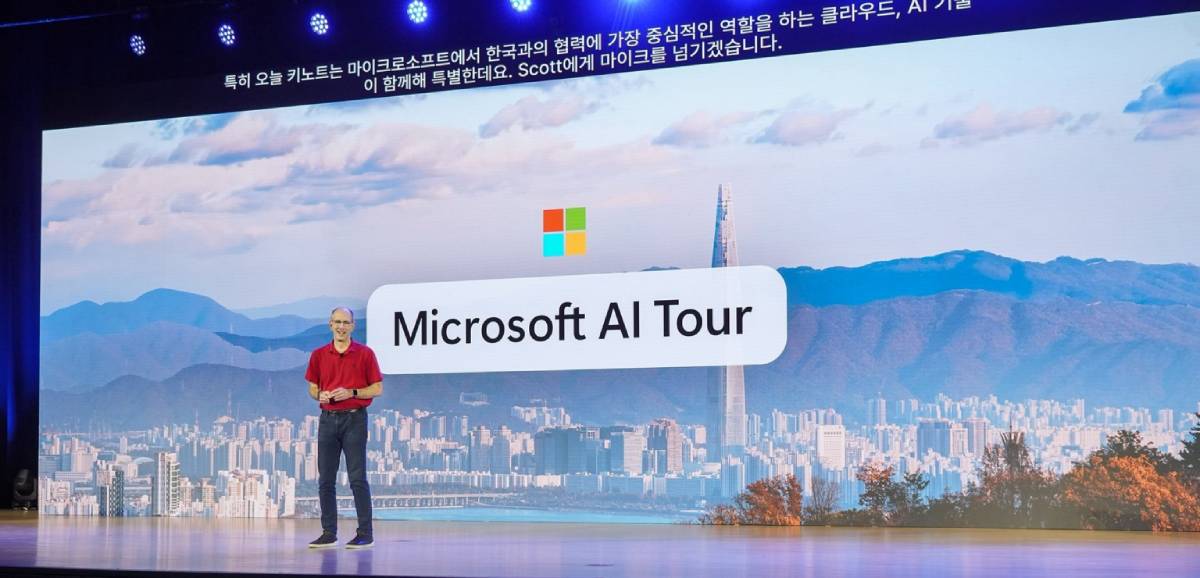
A major development unfolded as Microsoft positioned South Korea as a strategic global AI hub, signalling a shift from experimentation to full-scale deployment of AI tools and platforms. The move underscores intensifying global competition for AI leadership and its implications for enterprises, governments, and digital economies.
Microsoft announced a comprehensive initiative to scale AI adoption across South Korea, focusing on enterprise transformation, workforce enablement, and infrastructure expansion. The strategy emphasizes deploying advanced AI platforms across industries, including healthcare, manufacturing, and finance.
A key pillar is the promotion of AI-driven productivity tools and cloud-based solutions, enabling organizations to move beyond pilot programs into full operational integration. Microsoft is also investing in partnerships with local enterprises, startups, and public institutions to accelerate adoption.
The initiative aligns with broader economic goals to strengthen South Korea’s digital competitiveness. Stakeholders include government agencies, large conglomerates, SMEs, and technology providers, all contributing to a coordinated national push toward AI leadership.
The development aligns with a broader trend across global markets where nations are racing to establish themselves as AI innovation hubs. Countries such as the United States and China have led early advancements, while others, including South Korea, are leveraging strong digital infrastructure and industrial ecosystems to compete.
South Korea’s technology-driven economy, anchored by global leaders in electronics and manufacturing, provides a fertile environment for AI deployment. The government has actively supported AI initiatives through policy frameworks, funding, and education programs aimed at building a skilled workforce.
Globally, the shift from AI experimentation to enterprise-scale implementation marks a critical inflection point. Organizations are increasingly integrating AI into core business processes rather than treating it as a standalone innovation. Microsoft’s strategy reflects this transition, positioning AI as a foundational layer for economic growth and industrial transformation.
Industry analysts view Microsoft’s focus on South Korea as a calculated move to capitalize on a technologically advanced market with high adoption potential. Experts note that the country’s strong connectivity, digital literacy, and enterprise readiness make it an ideal testing ground for large-scale AI deployment.
Technology leaders emphasize that moving beyond experimentation requires robust infrastructure, skilled talent, and cross-sector collaboration. Microsoft’s approach, combining cloud capabilities with AI tools and platforms, is seen as a blueprint for accelerating digital transformation.
Policy experts highlight the importance of public-private partnerships in achieving national AI ambitions. By aligning corporate initiatives with government strategies, South Korea can strengthen its position in the global AI ecosystem.
Analysts also point to the competitive dimension, as global tech firms increasingly vie for influence in key regional markets. For businesses, the shift toward full-scale AI deployment presents opportunities to enhance productivity, optimize operations, and drive innovation. Companies operating in South Korea may gain a competitive edge by leveraging advanced AI platforms early.
Investors are likely to view the region as an attractive destination for AI-related investments, particularly in sectors undergoing digital transformation. The initiative could also stimulate growth in local startups and technology ecosystems.
From a policy perspective, governments may intensify efforts to attract AI investments and talent, while ensuring regulatory frameworks support innovation. Issues such as data governance, cybersecurity, and workforce reskilling will remain central as AI adoption accelerates.
Looking ahead, South Korea’s emergence as an AI hub will depend on sustained investment, talent development, and ecosystem collaboration. Decision-makers should monitor how effectively organizations transition from pilot projects to enterprise-wide AI integration.
As global competition intensifies, the success of initiatives like Microsoft’s will shape the next phase of AI-driven economic transformation, setting benchmarks for other nations seeking leadership in the AI era.
Source: Microsoft News
Date: March 26, 2026


