



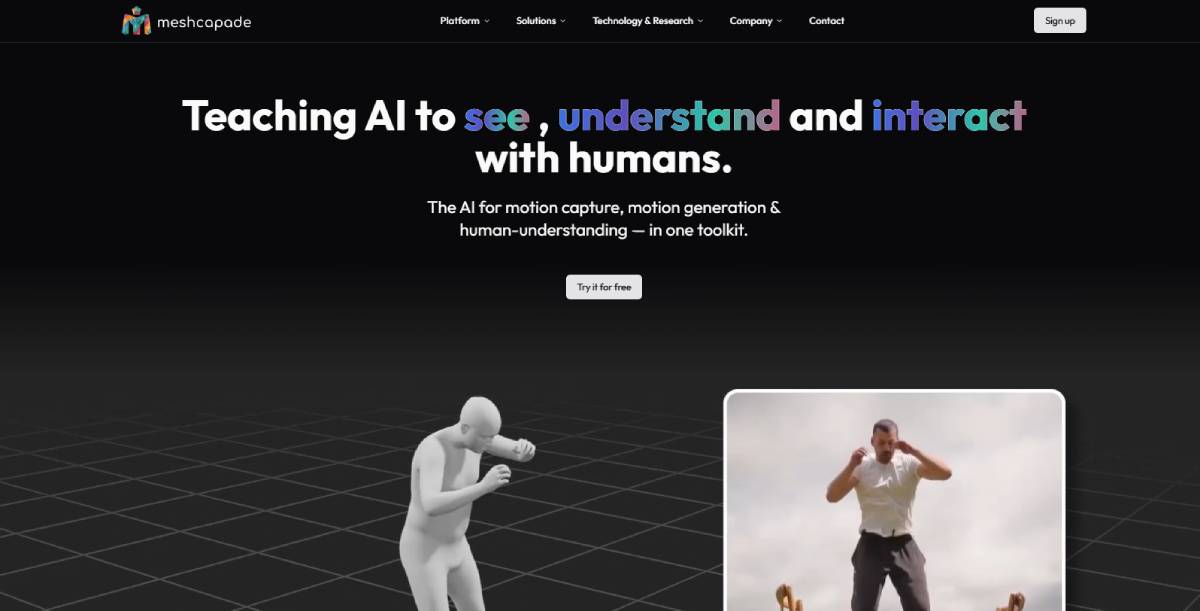
A significant shift is underway in digital human modeling as Meshcapade expands its markerless motion capture capabilities. The development underscores growing demand for scalable, camera-based body tracking across gaming, fashion, healthcare, and enterprise simulations signaling operational and commercial implications for global tech and creative industries.
Meshcapade specializes in markerless motion capture technology that converts standard video input into accurate 3D human body models. Unlike traditional motion capture systems that require physical markers and studio infrastructure, its approach enables scalable deployment using cameras and AI-driven modeling. The platform supports applications across gaming, virtual try-on, digital avatars, fitness analytics, and enterprise simulation.
By reducing hardware dependency and production costs, the solution lowers entry barriers for studios and brands. The technology also integrates with digital twin ecosystems, positioning Meshcapade within the broader spatial computing and metaverse infrastructure market.
The development aligns with a broader global transition toward immersive digital environments and AI-powered human modeling. Traditional motion capture long dominated by high-budget film and gaming studios has historically required expensive suits, sensors, and controlled environments. Markerless AI systems now democratize access by enabling motion tracking through computer vision and machine learning.
The rise of virtual commerce, digital fashion, and avatar-based social interaction has intensified demand for realistic human representation. Enterprises are also deploying digital humans in training simulations, ergonomic analysis, and remote collaboration.
At the same time, advances in generative AI and 3D reconstruction technologies are reshaping how digital identities are created and monetized. For executives, scalable motion capture is no longer niche it is becoming foundational infrastructure for next-generation digital engagement strategies.
Industry analysts suggest that markerless motion capture could significantly disrupt traditional studio-based production pipelines. Gaming executives note that reducing capture complexity accelerates development cycles and enhances creative flexibility. Retail and fashion strategists see strong potential in integrating accurate body modeling into virtual try-on platforms, improving personalization and reducing product return rates.
Technology ethicists, however, highlight the need for robust data governance frameworks, particularly where biometric data is involved. Digital transformation consultants argue that enterprises adopting scalable human modeling systems may gain competitive advantage in immersive training, marketing, and customer engagement.
Meshcapade’s positioning reflects the convergence of AI, spatial computing, and digital identity infrastructure. For businesses, markerless motion capture reduces production costs while expanding creative possibilities.
Studios and brands can deploy motion-based content without dedicated capture facilities, accelerating go-to-market timelines. Investors tracking spatial computing and AI driven 3D modeling may view such platforms as strategic enablers of the broader metaverse and digital twin economy. However, policymakers may intensify scrutiny around biometric data collection, privacy compliance, and digital likeness protections. For corporate leaders, the opportunity lies in balancing innovation with responsible data stewardship to build trust alongside scalability.
Decision-makers should monitor integration trends across gaming engines, e-commerce platforms, and enterprise simulation systems. As digital human applications expand, interoperability and regulatory clarity will shape adoption rates.
Meshcapade’s advancements signal a pivotal evolution: motion capture is transitioning from specialized studio technology to mainstream digital infrastructure powering the next wave of immersive economies.
Source: Meshcapade Official Website
Date: March 2, 2026


