
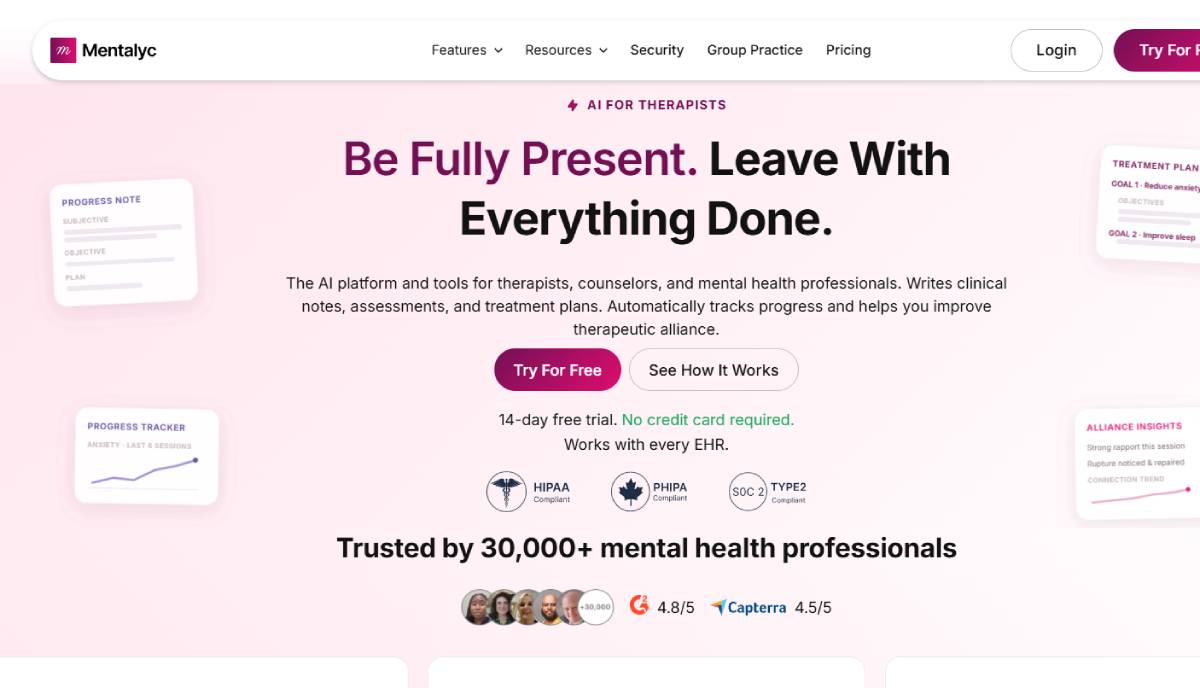
Mentalyc Advances AI Therapy Analytics

Mentalyc operates within the AI-powered mental healthcare technology sector, providing tools designed to support therapists and mental health professionals with documentation and workflow assistance.

July 29, 2026
|

Mentalyc represents the emerging role of artificial intelligence in transforming mental health support, therapy documentation, and clinical workflow management. The platform reflects a broader movement toward digital healthcare innovation, where AI-powered solutions are helping professionals improve efficiency, maintain accurate records, and enhance patient care, with implications for healthcare providers, technology companies, and policymakers.

Mentalyc operates within the AI-powered mental healthcare technology sector, providing tools designed to support therapists and mental health professionals with documentation and workflow assistance. Its development reflects increasing demand for digital solutions that reduce administrative burdens and allow clinicians to focus more on patient interactions.

Healthcare organizations are increasingly exploring artificial intelligence to improve operational efficiency, automate routine tasks, and enhance service delivery. The growth of platforms like Mentalyc highlights the expanding intersection between healthcare and technology, where secure data management, automation, and intelligent assistance are becoming important components of modern clinical environments.

The global healthcare industry is undergoing significant digital transformation as providers seek solutions that improve efficiency, accessibility, and quality of care. Mental health services, in particular, have experienced rising demand, creating challenges around provider capacity, administrative workloads, and timely patient support. This development aligns with a broader trend across global markets where artificial intelligence, cloud platforms, and healthcare automation are being adopted to address operational challenges.

AI-enabled healthcare tools are increasingly supporting areas such as documentation, patient engagement, clinical research, and decision support. At the same time, concerns around privacy, accuracy, ethical AI usage, and regulatory compliance remain central to adoption. As healthcare systems continue evolving, technology platforms that enhance professional capabilities while maintaining trust and security are expected to play a larger role.

Healthcare technology analysts believe artificial intelligence will become an increasingly important tool for improving mental healthcare workflows and expanding access to support services. Experts suggest that AI can help reduce administrative pressure on professionals, allowing more time for meaningful patient interactions and clinical decision-making.

While no specific official statements are directly associated with Mentalyc in this overview, industry observers emphasize that successful healthcare AI solutions must prioritize privacy protection, accuracy, transparency, and responsible implementation. Analysts expect future developments to include more advanced AI-assisted documentation, personalized care support, and integration with broader healthcare systems. Organizations that effectively combine technology innovation with ethical healthcare practices are expected to strengthen efficiency while maintaining patient trust.

For healthcare organizations, Mentalyc highlights the growing importance of AI-driven tools in improving operational efficiency and supporting mental health professionals. Businesses operating in healthcare technology may benefit from increasing demand for automation, analytics, and digital care solutions. Investors continue monitoring AI healthcare platforms as a major area of technology-driven growth.

Policymakers are focusing on healthcare data protection, AI governance, patient privacy, and clinical safety standards. Companies developing healthcare AI solutions will need to balance innovation with regulatory compliance and ethical considerations. The adoption of responsible AI technologies could significantly influence the future structure of healthcare delivery worldwide.

The future of AI-powered mental healthcare will likely be shaped by advanced automation, secure data systems, personalized care technologies, and stronger regulatory frameworks. Decision-makers should monitor AI governance, healthcare privacy standards, and improvements in clinical technology. Organizations that successfully integrate artificial intelligence while maintaining transparency, security, and human-centered care will be positioned to drive the next phase of digital healthcare transformation.

Source: AlternativeTo
Date: July 29, 2026

  • Featured tools
WellSaid Ai
Free

WellSaid AI is an advanced text-to-speech platform that transforms written text into lifelike, human-quality voiceovers.

#
Text to Speech
Learn more
Symphony Ayasdi AI
Free

SymphonyAI Sensa is an AI-powered surveillance and financial crime detection platform that surfaces hidden risk behavior through explainable, AI-driven analytics.

#
Finance
Learn more

Learn more about future of AI

Join 80,000+ Ai enthusiast getting weekly updates on exciting AI tools.
Thank you! Your submission has been received!
Oops! Something went wrong while submitting the form.

Mentalyc Advances AI Therapy Analytics

July 29, 2026

Mentalyc operates within the AI-powered mental healthcare technology sector, providing tools designed to support therapists and mental health professionals with documentation and workflow assistance.

Mentalyc represents the emerging role of artificial intelligence in transforming mental health support, therapy documentation, and clinical workflow management. The platform reflects a broader movement toward digital healthcare innovation, where AI-powered solutions are helping professionals improve efficiency, maintain accurate records, and enhance patient care, with implications for healthcare providers, technology companies, and policymakers.

Mentalyc operates within the AI-powered mental healthcare technology sector, providing tools designed to support therapists and mental health professionals with documentation and workflow assistance. Its development reflects increasing demand for digital solutions that reduce administrative burdens and allow clinicians to focus more on patient interactions.

Healthcare organizations are increasingly exploring artificial intelligence to improve operational efficiency, automate routine tasks, and enhance service delivery. The growth of platforms like Mentalyc highlights the expanding intersection between healthcare and technology, where secure data management, automation, and intelligent assistance are becoming important components of modern clinical environments.

The global healthcare industry is undergoing significant digital transformation as providers seek solutions that improve efficiency, accessibility, and quality of care. Mental health services, in particular, have experienced rising demand, creating challenges around provider capacity, administrative workloads, and timely patient support. This development aligns with a broader trend across global markets where artificial intelligence, cloud platforms, and healthcare automation are being adopted to address operational challenges.

AI-enabled healthcare tools are increasingly supporting areas such as documentation, patient engagement, clinical research, and decision support. At the same time, concerns around privacy, accuracy, ethical AI usage, and regulatory compliance remain central to adoption. As healthcare systems continue evolving, technology platforms that enhance professional capabilities while maintaining trust and security are expected to play a larger role.

Healthcare technology analysts believe artificial intelligence will become an increasingly important tool for improving mental healthcare workflows and expanding access to support services. Experts suggest that AI can help reduce administrative pressure on professionals, allowing more time for meaningful patient interactions and clinical decision-making.

While no specific official statements are directly associated with Mentalyc in this overview, industry observers emphasize that successful healthcare AI solutions must prioritize privacy protection, accuracy, transparency, and responsible implementation. Analysts expect future developments to include more advanced AI-assisted documentation, personalized care support, and integration with broader healthcare systems. Organizations that effectively combine technology innovation with ethical healthcare practices are expected to strengthen efficiency while maintaining patient trust.

For healthcare organizations, Mentalyc highlights the growing importance of AI-driven tools in improving operational efficiency and supporting mental health professionals. Businesses operating in healthcare technology may benefit from increasing demand for automation, analytics, and digital care solutions. Investors continue monitoring AI healthcare platforms as a major area of technology-driven growth.

Policymakers are focusing on healthcare data protection, AI governance, patient privacy, and clinical safety standards. Companies developing healthcare AI solutions will need to balance innovation with regulatory compliance and ethical considerations. The adoption of responsible AI technologies could significantly influence the future structure of healthcare delivery worldwide.

The future of AI-powered mental healthcare will likely be shaped by advanced automation, secure data systems, personalized care technologies, and stronger regulatory frameworks. Decision-makers should monitor AI governance, healthcare privacy standards, and improvements in clinical technology. Organizations that successfully integrate artificial intelligence while maintaining transparency, security, and human-centered care will be positioned to drive the next phase of digital healthcare transformation.

Source: AlternativeTo
Date: July 29, 2026

Promote Your Tool

Copy Embed Code

Similar Blogs

July 29, 2026
|

Gaia Expands Digital Knowledge Access

Gaia operates within the broader category of digital platforms focused on information discovery, organization, and knowledge accessibility.
Read more
July 29, 2026
|

MailDrop Expands Privacy Email Solutions

MailDrop operates as a temporary email service designed to help users create disposable email addresses for online registrations and digital interactions.
Read more
July 29, 2026
|

MacX YouTube Downloader Enhances Video Management

MacX YouTube Downloader is a multimedia software solution designed to support video downloading, conversion, and management from online platforms.
Read more
July 29, 2026
|

VyManga Expands Digital Manga Discovery

VyManga operates within the growing digital manga and online reading ecosystem, offering users a platform focused on manga discovery and access.
Read more
July 29, 2026
|

CouchPotato Automates Digital Media Management

CouchPotato is a media management application designed to automate the process of discovering, organizing, and managing movie collections.
Read more
July 29, 2026
|

7chan Reflects Anonymous Community Evolution

7chan is an imageboard-style online community platform built around anonymous discussions and user-generated content.
Read more