
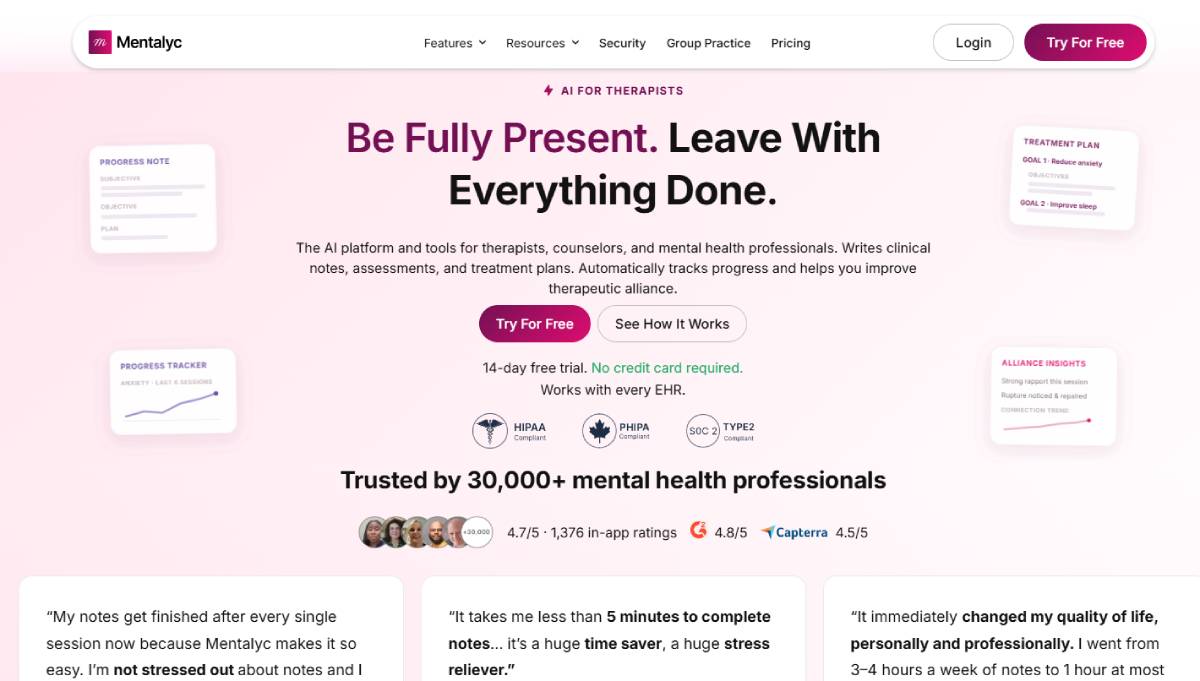
Mentalyc Advances AI Clinical Documentation

Mentalyc leverages artificial intelligence to automate psychotherapy documentation, helping clinicians generate structured clinical notes, treatment summaries, and session records with greater speed and consistency.

August 5, 2026
|

A significant advancement is transforming behavioral healthcare as Mentalyc expands the use of artificial intelligence for clinical documentation and therapy note automation. The platform addresses growing demand for efficient, compliant, and secure documentation, enabling mental health professionals to reduce administrative workloads while dedicating more time to patient care and clinical outcomes.

Mentalyc leverages artificial intelligence to automate psychotherapy documentation, helping clinicians generate structured clinical notes, treatment summaries, and session records with greater speed and consistency. The platform is designed to simplify documentation workflows while supporting secure handling of sensitive patient information.

Behavioral healthcare providers increasingly seek digital solutions that reduce paperwork, improve productivity, and minimize clinician burnout. AI-assisted documentation also supports standardized recordkeeping, enhances workflow efficiency, and enables therapists to spend more time delivering care instead of completing administrative tasks. Integration with existing healthcare systems further strengthens operational continuity across modern clinical environments.

Healthcare providers worldwide are accelerating digital transformation initiatives to improve operational efficiency while addressing workforce shortages and increasing demand for mental health services. Administrative documentation remains one of the largest time burdens for clinicians, often contributing to professional burnout and reduced patient engagement.

Artificial intelligence has emerged as a valuable tool for automating repetitive administrative processes without replacing clinical judgment. Healthcare organizations increasingly adopt AI-powered documentation platforms to improve record accuracy, streamline compliance, and reduce operational costs.

At the same time, governments and regulators continue strengthening healthcare privacy, cybersecurity, and electronic health record standards. As behavioral healthcare providers modernize their technology infrastructure, intelligent documentation solutions are becoming an essential component of broader digital health strategies focused on improving care quality and organizational efficiency.

Healthcare technology analysts view AI-powered documentation as one of the fastest-growing segments within digital health. Experts note that reducing administrative burdens allows clinicians to devote more attention to therapeutic relationships while improving operational performance across healthcare organizations.

Clinical informatics specialists emphasize that AI documentation systems should function as decision-support tools rather than replacements for professional judgment. Human review, transparency, and regulatory compliance remain essential to maintaining high standards of patient care.

Industry observers also highlight interoperability, cybersecurity, patient privacy, and responsible AI governance as critical considerations for healthcare technology adoption. Organizations implementing AI documentation platforms are encouraged to establish clear oversight processes that balance efficiency with clinical accuracy, ethical standards, and regulatory compliance.

For healthcare organizations, AI-powered clinical documentation offers opportunities to improve operational efficiency, reduce clinician burnout, and enhance documentation consistency without compromising quality of care. Providers can optimize resource allocation while supporting growing patient demand.

Investors continue monitoring digital health and healthcare AI as high-growth technology sectors. Meanwhile, policymakers remain focused on protecting patient privacy, strengthening cybersecurity, and ensuring responsible deployment of artificial intelligence within healthcare settings. Organizations adopting AI-assisted documentation must maintain transparency, safeguard sensitive health information, and comply with evolving healthcare regulations while embracing innovation.

Demand for AI-powered clinical documentation platforms is expected to grow as healthcare providers pursue greater efficiency and improved patient outcomes. Decision-makers should monitor developments in generative AI, healthcare interoperability, regulatory guidance, and cybersecurity standards. Organizations that successfully integrate intelligent documentation into clinical workflows will be well positioned to improve care delivery, workforce productivity, and long-term operational resilience.

Source: Crozdesk
Date:
August 5, 2026

  • Featured tools
Twistly AI
Paid

Twistly AI is a PowerPoint add-in that allows users to generate full slide decks, improve existing presentations, and convert various content types into polished slides directly within Microsoft PowerPoint.It streamlines presentation creation using AI-powered text analysis, image generation and content conversion.

#
Presentation
Learn more
Figstack AI
Free

Figstack AI is an intelligent assistant for developers that explains code, generates docstrings, converts code between languages, and analyzes time complexity helping you work smarter, not harder.

#
Coding
Learn more

Learn more about future of AI

Join 80,000+ Ai enthusiast getting weekly updates on exciting AI tools.
Thank you! Your submission has been received!
Oops! Something went wrong while submitting the form.

Mentalyc Advances AI Clinical Documentation

August 5, 2026

Mentalyc leverages artificial intelligence to automate psychotherapy documentation, helping clinicians generate structured clinical notes, treatment summaries, and session records with greater speed and consistency.

A significant advancement is transforming behavioral healthcare as Mentalyc expands the use of artificial intelligence for clinical documentation and therapy note automation. The platform addresses growing demand for efficient, compliant, and secure documentation, enabling mental health professionals to reduce administrative workloads while dedicating more time to patient care and clinical outcomes.

Mentalyc leverages artificial intelligence to automate psychotherapy documentation, helping clinicians generate structured clinical notes, treatment summaries, and session records with greater speed and consistency. The platform is designed to simplify documentation workflows while supporting secure handling of sensitive patient information.

Behavioral healthcare providers increasingly seek digital solutions that reduce paperwork, improve productivity, and minimize clinician burnout. AI-assisted documentation also supports standardized recordkeeping, enhances workflow efficiency, and enables therapists to spend more time delivering care instead of completing administrative tasks. Integration with existing healthcare systems further strengthens operational continuity across modern clinical environments.

Healthcare providers worldwide are accelerating digital transformation initiatives to improve operational efficiency while addressing workforce shortages and increasing demand for mental health services. Administrative documentation remains one of the largest time burdens for clinicians, often contributing to professional burnout and reduced patient engagement.

Artificial intelligence has emerged as a valuable tool for automating repetitive administrative processes without replacing clinical judgment. Healthcare organizations increasingly adopt AI-powered documentation platforms to improve record accuracy, streamline compliance, and reduce operational costs.

At the same time, governments and regulators continue strengthening healthcare privacy, cybersecurity, and electronic health record standards. As behavioral healthcare providers modernize their technology infrastructure, intelligent documentation solutions are becoming an essential component of broader digital health strategies focused on improving care quality and organizational efficiency.

Healthcare technology analysts view AI-powered documentation as one of the fastest-growing segments within digital health. Experts note that reducing administrative burdens allows clinicians to devote more attention to therapeutic relationships while improving operational performance across healthcare organizations.

Clinical informatics specialists emphasize that AI documentation systems should function as decision-support tools rather than replacements for professional judgment. Human review, transparency, and regulatory compliance remain essential to maintaining high standards of patient care.

Industry observers also highlight interoperability, cybersecurity, patient privacy, and responsible AI governance as critical considerations for healthcare technology adoption. Organizations implementing AI documentation platforms are encouraged to establish clear oversight processes that balance efficiency with clinical accuracy, ethical standards, and regulatory compliance.

For healthcare organizations, AI-powered clinical documentation offers opportunities to improve operational efficiency, reduce clinician burnout, and enhance documentation consistency without compromising quality of care. Providers can optimize resource allocation while supporting growing patient demand.

Investors continue monitoring digital health and healthcare AI as high-growth technology sectors. Meanwhile, policymakers remain focused on protecting patient privacy, strengthening cybersecurity, and ensuring responsible deployment of artificial intelligence within healthcare settings. Organizations adopting AI-assisted documentation must maintain transparency, safeguard sensitive health information, and comply with evolving healthcare regulations while embracing innovation.

Demand for AI-powered clinical documentation platforms is expected to grow as healthcare providers pursue greater efficiency and improved patient outcomes. Decision-makers should monitor developments in generative AI, healthcare interoperability, regulatory guidance, and cybersecurity standards. Organizations that successfully integrate intelligent documentation into clinical workflows will be well positioned to improve care delivery, workforce productivity, and long-term operational resilience.

Source: Crozdesk
Date:
August 5, 2026

Promote Your Tool

Copy Embed Code

Similar Blogs

August 14, 2026
|

Benefitfocus Expands Digital Benefits Administration

Benefitfocus provides cloud-based technology covering benefits enrollment, administration, communications, billing, payments and data exchange.
Read more
August 14, 2026
|

Travel Agent Revenue Models Evolve Digitally

Travel agencies can earn commissions when customers book hotels, cruises, tours, vacation packages and other travel products through them. Suppliers may pay agents for generating bookings, making commissions a traditional component of agency revenue.
Read more
August 14, 2026
|

Sofon Advances Guided Selling CPQ Automation

Sofon's platform combines guided selling, product configuration, pricing, quotation and sales-management capabilities. Guided questionnaires help sales teams identify customer requirements and translate them into suitable product configurations.
Read more
August 14, 2026
|

WellRyde Advances Medical Transportation Management

WellRyde provides technology for managing non-emergency medical transportation operations, including trip scheduling, dispatch coordination, transportation-provider management and reporting.
Read more
August 14, 2026
|

Review WAVE Advances Digital Patient Engagement

Review WAVE provides healthcare practices with tools for online appointment scheduling, two-way texting, automated appointment reminders, digital forms, web chat, marketing campaigns and online review generation.
Read more
August 14, 2026
|

Edgenuity Expands Digital Virtual Education

Edgenuity provides digital curriculum and learning solutions covering core academic subjects, electives, Advanced Placement and career-oriented education.
Read more