
Luxembourg Summit Showcases AI Quality Engineering

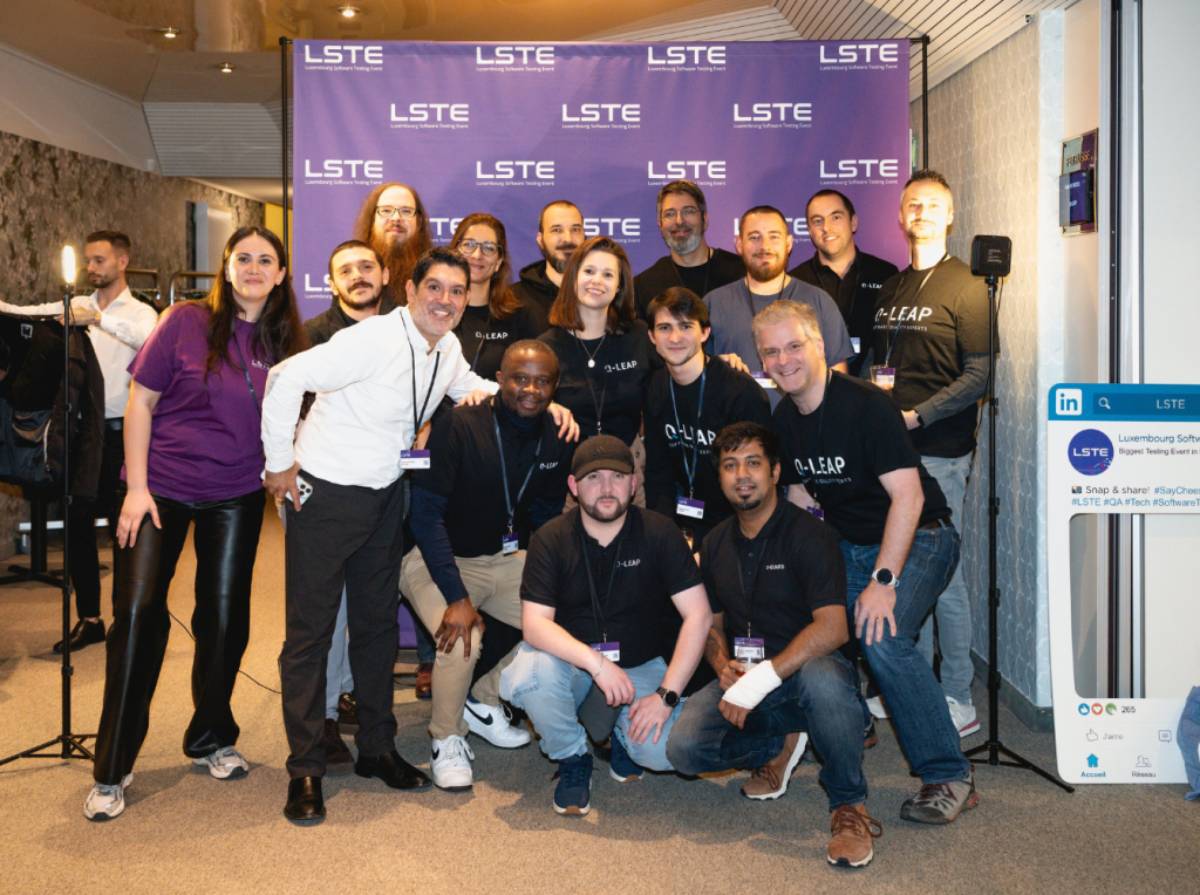
The Luxembourg Software Testing Event (LSTE) featured discussions on artificial intelligence, automation, DevOps, cybersecurity, agile development, and modern quality engineering practices.

July 10, 2026
|
Image Source: Silicon Luxembourg

Luxembourg's Software Testing Event (LSTE) brought together technology professionals, software engineers, quality assurance specialists, and business leaders to examine the future of software testing in an AI-driven digital economy. The conference highlighted how quality engineering is becoming a strategic business priority as organizations accelerate digital transformation and enterprise software adoption.

The Luxembourg Software Testing Event (LSTE) featured discussions on artificial intelligence, automation, DevOps, cybersecurity, agile development, and modern quality engineering practices. Industry experts explored how software testing is evolving from a technical function into a strategic business capability that improves reliability, customer experience, and operational resilience.

Speakers emphasized the growing importance of continuous testing, automated quality assurance, and AI-powered testing tools to support increasingly complex digital environments. Participants also examined collaboration between developers, testers, and business teams to improve software delivery while reducing operational risks and accelerating innovation across enterprise technology ecosystems.

As organizations continue investing in cloud computing, artificial intelligence, digital platforms, and connected services, software quality has become increasingly critical to business success. Enterprises now release applications more frequently than ever before, making traditional testing approaches insufficient for today's rapid development cycles.

Modern software engineering increasingly relies on automation, continuous integration, DevOps, and AI-assisted quality assurance to ensure security, performance, and reliability throughout the software lifecycle. At the same time, growing cybersecurity threats and stricter regulatory requirements have elevated software testing from a technical process to a board-level concern for many organizations.

Luxembourg's expanding technology ecosystem, combined with Europe's broader digital transformation agenda, has created growing demand for advanced software engineering capabilities. Events such as LSTE reflect the industry's commitment to strengthening digital resilience through improved quality assurance and innovation.

Industry experts at the conference stressed that software testing is no longer solely about identifying defects before release. Instead, quality engineering is becoming an integrated discipline that supports innovation, security, customer satisfaction, and long-term business performance.

Technology leaders highlighted artificial intelligence as a powerful tool for improving test automation, predictive analytics, and software reliability. However, they also emphasized that human expertise remains essential for validating complex systems, ensuring ethical AI deployment, and maintaining quality standards.

Analysts believe organizations adopting continuous testing strategies are better positioned to accelerate product development while minimizing operational disruptions. Speakers also underscored the importance of cross-functional collaboration, arguing that developers, testers, cybersecurity specialists, and business leaders must work together to deliver resilient digital products in increasingly competitive markets.

For businesses, the event reinforces that software quality is now a strategic competitive advantage rather than simply a technical requirement. Organizations investing in automation, AI-driven testing, and continuous quality engineering are likely to improve operational efficiency, reduce development costs, and strengthen customer trust.

Investors may increasingly favour technology companies demonstrating mature software development and cybersecurity capabilities. Policymakers are also expected to continue promoting secure software development standards as digital services become more deeply integrated into critical infrastructure, financial systems, healthcare, and public administration. For executives, software quality will remain a key driver of digital resilience and sustainable innovation.

Software testing is expected to become even more intelligent as artificial intelligence, automation, and predictive analytics reshape enterprise development practices. Organizations will increasingly prioritize quality engineering throughout the software lifecycle rather than treating testing as a final development stage. Businesses that successfully integrate AI with robust quality assurance frameworks will be better positioned to compete in an increasingly digital global economy.

Source: Silicon Luxembourg
Date: July 10, 2026

  • Featured tools
Outplay AI
Free

Outplay AI is a dynamic sales engagement platform combining AI-powered outreach, multi-channel automation, and performance tracking to help teams optimize conversion and pipeline generation.

#
Sales
Learn more
Writesonic AI
Free

Writesonic AI is a versatile AI writing platform designed for marketers, entrepreneurs, and content creators. It helps users create blog posts, ad copies, product descriptions, social media posts, and more with ease. With advanced AI models and user-friendly tools, Writesonic streamlines content production and saves time for busy professionals.

#
Copywriting
Learn more

Learn more about future of AI

Join 80,000+ Ai enthusiast getting weekly updates on exciting AI tools.
Thank you! Your submission has been received!
Oops! Something went wrong while submitting the form.

Luxembourg Summit Showcases AI Quality Engineering

July 10, 2026

The Luxembourg Software Testing Event (LSTE) featured discussions on artificial intelligence, automation, DevOps, cybersecurity, agile development, and modern quality engineering practices.

Image Source: Silicon Luxembourg

Luxembourg's Software Testing Event (LSTE) brought together technology professionals, software engineers, quality assurance specialists, and business leaders to examine the future of software testing in an AI-driven digital economy. The conference highlighted how quality engineering is becoming a strategic business priority as organizations accelerate digital transformation and enterprise software adoption.

The Luxembourg Software Testing Event (LSTE) featured discussions on artificial intelligence, automation, DevOps, cybersecurity, agile development, and modern quality engineering practices. Industry experts explored how software testing is evolving from a technical function into a strategic business capability that improves reliability, customer experience, and operational resilience.

Speakers emphasized the growing importance of continuous testing, automated quality assurance, and AI-powered testing tools to support increasingly complex digital environments. Participants also examined collaboration between developers, testers, and business teams to improve software delivery while reducing operational risks and accelerating innovation across enterprise technology ecosystems.

As organizations continue investing in cloud computing, artificial intelligence, digital platforms, and connected services, software quality has become increasingly critical to business success. Enterprises now release applications more frequently than ever before, making traditional testing approaches insufficient for today's rapid development cycles.

Modern software engineering increasingly relies on automation, continuous integration, DevOps, and AI-assisted quality assurance to ensure security, performance, and reliability throughout the software lifecycle. At the same time, growing cybersecurity threats and stricter regulatory requirements have elevated software testing from a technical process to a board-level concern for many organizations.

Luxembourg's expanding technology ecosystem, combined with Europe's broader digital transformation agenda, has created growing demand for advanced software engineering capabilities. Events such as LSTE reflect the industry's commitment to strengthening digital resilience through improved quality assurance and innovation.

Industry experts at the conference stressed that software testing is no longer solely about identifying defects before release. Instead, quality engineering is becoming an integrated discipline that supports innovation, security, customer satisfaction, and long-term business performance.

Technology leaders highlighted artificial intelligence as a powerful tool for improving test automation, predictive analytics, and software reliability. However, they also emphasized that human expertise remains essential for validating complex systems, ensuring ethical AI deployment, and maintaining quality standards.

Analysts believe organizations adopting continuous testing strategies are better positioned to accelerate product development while minimizing operational disruptions. Speakers also underscored the importance of cross-functional collaboration, arguing that developers, testers, cybersecurity specialists, and business leaders must work together to deliver resilient digital products in increasingly competitive markets.

For businesses, the event reinforces that software quality is now a strategic competitive advantage rather than simply a technical requirement. Organizations investing in automation, AI-driven testing, and continuous quality engineering are likely to improve operational efficiency, reduce development costs, and strengthen customer trust.

Investors may increasingly favour technology companies demonstrating mature software development and cybersecurity capabilities. Policymakers are also expected to continue promoting secure software development standards as digital services become more deeply integrated into critical infrastructure, financial systems, healthcare, and public administration. For executives, software quality will remain a key driver of digital resilience and sustainable innovation.

Software testing is expected to become even more intelligent as artificial intelligence, automation, and predictive analytics reshape enterprise development practices. Organizations will increasingly prioritize quality engineering throughout the software lifecycle rather than treating testing as a final development stage. Businesses that successfully integrate AI with robust quality assurance frameworks will be better positioned to compete in an increasingly digital global economy.

Source: Silicon Luxembourg
Date: July 10, 2026

Promote Your Tool

Copy Embed Code

Similar Blogs

July 10, 2026
|

SWEBAL Secures Ammunition Supply Funding

SWEBAL’s latest funding round represents a significant step toward scaling ammunition manufacturing capabilities within Europe.
Read more
July 10, 2026
|

reMarkable Reinvents Digital Productivity Hardware

reMarkable’s Paper Pure concept emphasizes simplicity, focused writing experiences, and reduced digital distractions as alternatives to conventional productivity devices.
Read more
July 10, 2026
|

ZeroPoint Drives Memory Innovation Leadership

ZeroPoint Technologies has appointed an experienced scaling executive to its board, adding operational expertise as the company develops its memory-compression technology platform.
Read more
July 10, 2026
|

EU Launches Cybersecurity AI Action Plan

The EU Action Plan on Cybersecurity and Artificial Intelligence outlines measures to improve the security of AI systems while ensuring that digital technologies remain trustworthy and resilient.
Read more
July 10, 2026
|

VC Growth Driven By Strategic Vision

The discussion around venture capital growth highlights the importance of investor mindset in identifying and supporting high-potential startups.
Read more
July 10, 2026
|

AI Transforms Hiring With Human Skills

The rapid adoption of artificial intelligence is influencing recruitment strategies and redefining the skills companies seek from future employees.
Read more