
Luxembourg Showcases Trusted AI Strategy

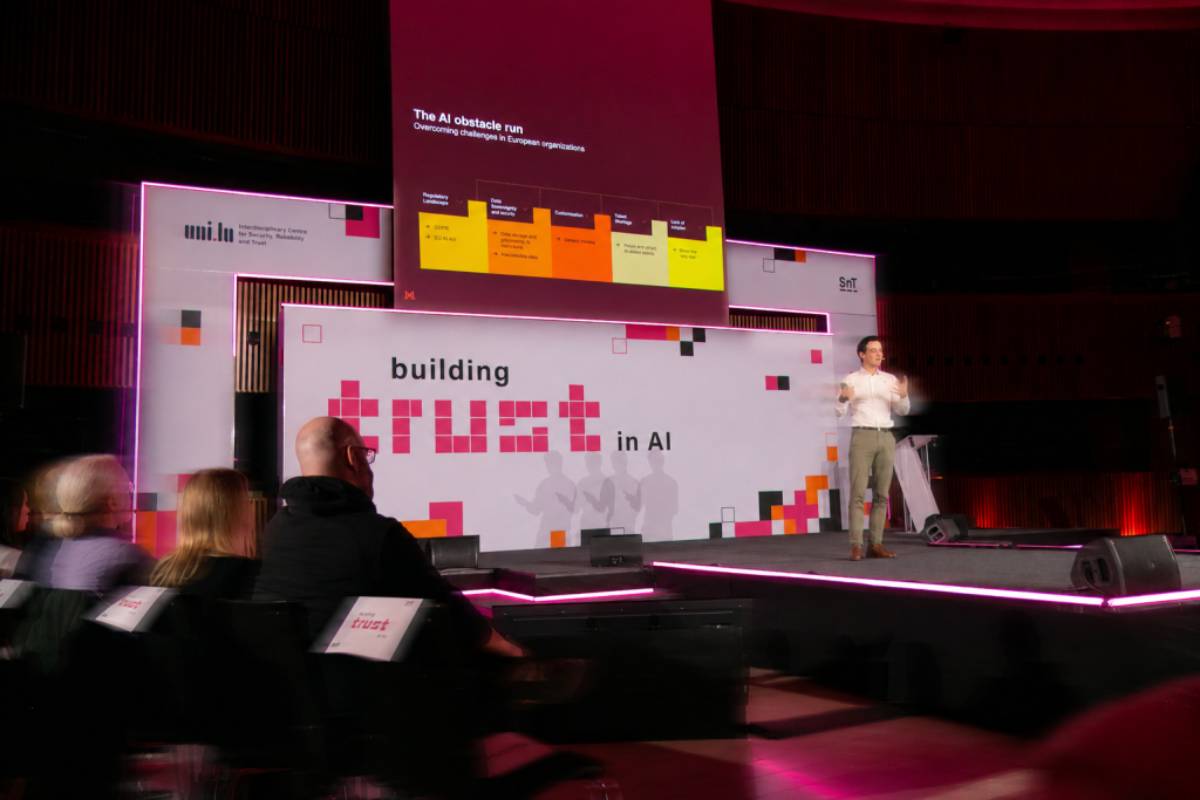
SnT Partnership Day 2026, organized by the Interdisciplinary Centre for Security, Reliability and Trust (SnT), showcased collaborative projects designed to translate AI research into practical business and societal outcomes.

July 29, 2026
|
Image Source: Silicon Luxembourg

A major development in Europe’s artificial intelligence landscape unfolded as SnT Partnership Day 2026 highlighted how trust, transparency, and practical applications are becoming central to AI adoption. The event brought together researchers, businesses, and policymakers to demonstrate real-world AI solutions, signalling a strategic shift from AI hype toward measurable impact, governance, and long-term economic value.

SnT Partnership Day 2026, organized by the Interdisciplinary Centre for Security, Reliability and Trust (SnT), showcased collaborative projects designed to translate AI research into practical business and societal outcomes. The event emphasized trustworthiness, accountability, and real-world deployment rather than theoretical capabilities alone.

Researchers, technology companies, startups, and public-sector stakeholders presented applications spanning cybersecurity, healthcare, finance, mobility, and digital infrastructure. Discussions focused on how AI systems can be developed responsibly while delivering measurable productivity and innovation gains.

A key message emerging from the gathering was that trust has become a competitive differentiator. Organizations are increasingly expected to demonstrate not only technical excellence but also transparency, security, and ethical governance in their AI initiatives.

The development aligns with a broader trend across global markets where organizations are reassessing how artificial intelligence is deployed and governed. While early waves of AI enthusiasm centered on technological potential, attention is increasingly shifting toward implementation challenges, risk management, and public trust.

Governments worldwide have accelerated efforts to establish AI governance frameworks, reflecting growing concerns around data privacy, algorithmic bias, security vulnerabilities, and accountability. The European Union has positioned itself as a leader in this area through regulatory initiatives designed to balance innovation with citizen protections.

Against this backdrop, institutions such as SnT have emerged as critical bridges between academic research and commercial deployment. Luxembourg has invested significantly in building a research ecosystem capable of supporting advanced technologies while maintaining strong standards for trust and reliability.

The conversation around trustworthy AI has become particularly important as organizations move from pilot projects to large-scale deployments. Business leaders increasingly recognize that successful AI adoption requires stakeholder confidence as much as technical performance. The ability to demonstrate responsible use is now viewed as a prerequisite for sustainable innovation.

Technology experts increasingly argue that trust represents the next major frontier in artificial intelligence. While organizations have made substantial progress in developing AI capabilities, many continue to face challenges around explainability, governance, and public acceptance.

Industry analysts note that enterprises are becoming more selective in evaluating AI investments. Rather than pursuing technology for its own sake, decision-makers are seeking solutions that demonstrate clear business outcomes, regulatory compliance, and operational reliability.

Researchers involved in AI development frequently emphasize that collaboration between academia and industry is essential for accelerating responsible innovation. Academic institutions contribute scientific rigor, while businesses provide practical use cases and commercialization pathways.

Policy experts also highlight the growing importance of transparent AI frameworks. Trustworthy systems are increasingly viewed as critical infrastructure for future digital economies, particularly in sectors such as healthcare, finance, transportation, and public services where reliability and accountability are paramount.

The discussions at SnT Partnership Day reinforced the notion that trust is no longer a secondary consideration. Instead, it has become a central component of AI strategy, influencing investment decisions, regulatory approaches, and market adoption.5. Implications for Business & Policy

For business leaders, the event underscores a growing reality: successful AI implementation requires more than advanced algorithms. Companies must invest in governance frameworks, transparency measures, and risk management practices that build stakeholder confidence.

Investors may increasingly favor organizations that demonstrate responsible AI deployment alongside technological innovation. Trustworthiness is emerging as a factor that can influence valuation, customer adoption, and long-term competitiveness.

For policymakers, the discussions provide evidence that innovation and regulation need not be opposing forces. Well-designed governance frameworks can support AI adoption while mitigating risks associated with misuse or unintended consequences.

Consumers stand to benefit from greater transparency and accountability, particularly as AI becomes more deeply integrated into everyday products and services. Trust-driven innovation could accelerate acceptance while reducing resistance to emerging technologies.

The next phase of AI adoption will likely focus on scaling trusted systems across industries while ensuring compliance with evolving regulatory standards. Decision-makers will closely monitor how organizations balance innovation speed with governance requirements.

As artificial intelligence becomes embedded within critical economic sectors, trust may prove to be the defining factor separating successful deployments from failed initiatives. Luxembourg’s emphasis on real-world impact and responsible innovation positions it to play an increasingly influential role in Europe's evolving AI ecosystem.

Source: Silicon Luxembourg
Date:
June 24, 2026

  • Featured tools
Writesonic AI
Free

Writesonic AI is a versatile AI writing platform designed for marketers, entrepreneurs, and content creators. It helps users create blog posts, ad copies, product descriptions, social media posts, and more with ease. With advanced AI models and user-friendly tools, Writesonic streamlines content production and saves time for busy professionals.

#
Copywriting
Learn more
Figstack AI
Free

Figstack AI is an intelligent assistant for developers that explains code, generates docstrings, converts code between languages, and analyzes time complexity helping you work smarter, not harder.

#
Coding
Learn more

Learn more about future of AI

Join 80,000+ Ai enthusiast getting weekly updates on exciting AI tools.
Thank you! Your submission has been received!
Oops! Something went wrong while submitting the form.

Luxembourg Showcases Trusted AI Strategy

July 29, 2026

SnT Partnership Day 2026, organized by the Interdisciplinary Centre for Security, Reliability and Trust (SnT), showcased collaborative projects designed to translate AI research into practical business and societal outcomes.

Image Source: Silicon Luxembourg

A major development in Europe’s artificial intelligence landscape unfolded as SnT Partnership Day 2026 highlighted how trust, transparency, and practical applications are becoming central to AI adoption. The event brought together researchers, businesses, and policymakers to demonstrate real-world AI solutions, signalling a strategic shift from AI hype toward measurable impact, governance, and long-term economic value.

SnT Partnership Day 2026, organized by the Interdisciplinary Centre for Security, Reliability and Trust (SnT), showcased collaborative projects designed to translate AI research into practical business and societal outcomes. The event emphasized trustworthiness, accountability, and real-world deployment rather than theoretical capabilities alone.

Researchers, technology companies, startups, and public-sector stakeholders presented applications spanning cybersecurity, healthcare, finance, mobility, and digital infrastructure. Discussions focused on how AI systems can be developed responsibly while delivering measurable productivity and innovation gains.

A key message emerging from the gathering was that trust has become a competitive differentiator. Organizations are increasingly expected to demonstrate not only technical excellence but also transparency, security, and ethical governance in their AI initiatives.

The development aligns with a broader trend across global markets where organizations are reassessing how artificial intelligence is deployed and governed. While early waves of AI enthusiasm centered on technological potential, attention is increasingly shifting toward implementation challenges, risk management, and public trust.

Governments worldwide have accelerated efforts to establish AI governance frameworks, reflecting growing concerns around data privacy, algorithmic bias, security vulnerabilities, and accountability. The European Union has positioned itself as a leader in this area through regulatory initiatives designed to balance innovation with citizen protections.

Against this backdrop, institutions such as SnT have emerged as critical bridges between academic research and commercial deployment. Luxembourg has invested significantly in building a research ecosystem capable of supporting advanced technologies while maintaining strong standards for trust and reliability.

The conversation around trustworthy AI has become particularly important as organizations move from pilot projects to large-scale deployments. Business leaders increasingly recognize that successful AI adoption requires stakeholder confidence as much as technical performance. The ability to demonstrate responsible use is now viewed as a prerequisite for sustainable innovation.

Technology experts increasingly argue that trust represents the next major frontier in artificial intelligence. While organizations have made substantial progress in developing AI capabilities, many continue to face challenges around explainability, governance, and public acceptance.

Industry analysts note that enterprises are becoming more selective in evaluating AI investments. Rather than pursuing technology for its own sake, decision-makers are seeking solutions that demonstrate clear business outcomes, regulatory compliance, and operational reliability.

Researchers involved in AI development frequently emphasize that collaboration between academia and industry is essential for accelerating responsible innovation. Academic institutions contribute scientific rigor, while businesses provide practical use cases and commercialization pathways.

Policy experts also highlight the growing importance of transparent AI frameworks. Trustworthy systems are increasingly viewed as critical infrastructure for future digital economies, particularly in sectors such as healthcare, finance, transportation, and public services where reliability and accountability are paramount.

The discussions at SnT Partnership Day reinforced the notion that trust is no longer a secondary consideration. Instead, it has become a central component of AI strategy, influencing investment decisions, regulatory approaches, and market adoption.5. Implications for Business & Policy

For business leaders, the event underscores a growing reality: successful AI implementation requires more than advanced algorithms. Companies must invest in governance frameworks, transparency measures, and risk management practices that build stakeholder confidence.

Investors may increasingly favor organizations that demonstrate responsible AI deployment alongside technological innovation. Trustworthiness is emerging as a factor that can influence valuation, customer adoption, and long-term competitiveness.

For policymakers, the discussions provide evidence that innovation and regulation need not be opposing forces. Well-designed governance frameworks can support AI adoption while mitigating risks associated with misuse or unintended consequences.

Consumers stand to benefit from greater transparency and accountability, particularly as AI becomes more deeply integrated into everyday products and services. Trust-driven innovation could accelerate acceptance while reducing resistance to emerging technologies.

The next phase of AI adoption will likely focus on scaling trusted systems across industries while ensuring compliance with evolving regulatory standards. Decision-makers will closely monitor how organizations balance innovation speed with governance requirements.

As artificial intelligence becomes embedded within critical economic sectors, trust may prove to be the defining factor separating successful deployments from failed initiatives. Luxembourg’s emphasis on real-world impact and responsible innovation positions it to play an increasingly influential role in Europe's evolving AI ecosystem.

Source: Silicon Luxembourg
Date:
June 24, 2026

Promote Your Tool

Copy Embed Code

Similar Blogs

July 29, 2026
|

EmulationStation Enhances Retro Gaming Experience

EmulationStation is a front-end interface designed to organize and present video game emulation libraries through a streamlined user experience.
Read more
July 29, 2026
|

Tomoson Expands Influencer Marketing Collaboration

Tomoson operates as an influencer marketing platform designed to help brands collaborate with content creators and manage promotional campaigns.
Read more
July 29, 2026
|

ZeroBin.net Advances Secure Data Sharing

ZeroBin.net operates as a privacy-oriented platform that allows users to share encrypted information through temporary digital channels.
Read more
July 29, 2026
|

Gaia Expands Digital Knowledge Access

Gaia operates within the broader category of digital platforms focused on information discovery, organization, and knowledge accessibility.
Read more
July 29, 2026
|

MailDrop Expands Privacy Email Solutions

MailDrop operates as a temporary email service designed to help users create disposable email addresses for online registrations and digital interactions.
Read more
July 29, 2026
|

MacX YouTube Downloader Enhances Video Management

MacX YouTube Downloader is a multimedia software solution designed to support video downloading, conversion, and management from online platforms.
Read more