
Luna AI Enters Low Cost Video Race

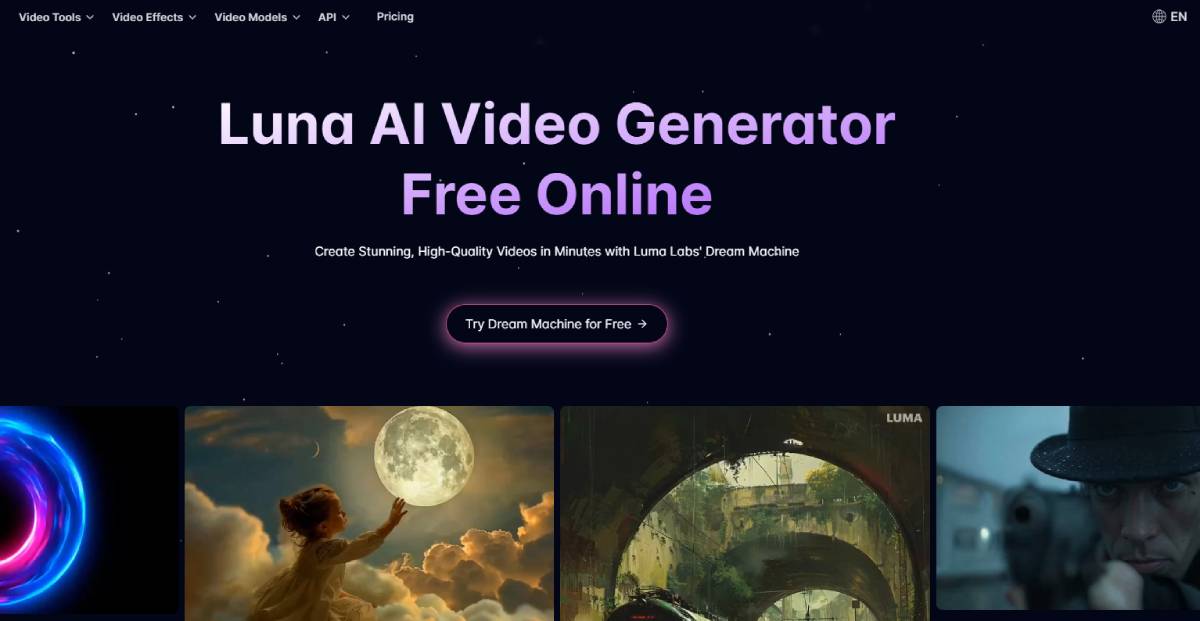
Luna AI offers users the ability to generate videos online without requiring advanced technical skills or expensive software. Powered by generative AI models, the platform enables text-to-video creation.

July 29, 2026
|

AI-powered video generation platforms are rapidly advancing, with Luna AI positioning itself as an accessible, browser-based solution for creating videos from text prompts. The development highlights a broader shift in content production, impacting creators, enterprises, and media industries while accelerating the democratization and disruption of digital storytelling.

Luna AI offers users the ability to generate videos online without requiring advanced technical skills or expensive software. Powered by generative AI models, the platform enables text-to-video creation, allowing users to produce visual content quickly for marketing, social media, and entertainment purposes.

The tool is positioned as a free or low-cost alternative, targeting independent creators, small businesses, and digital marketers. Its accessibility via web browsers lowers entry barriers compared to traditional video production workflows.

Stakeholders include AI developers, content creators, media companies, and advertisers. The rise of such tools reflects increasing competition in the generative video space, where speed, cost efficiency, and creative flexibility are becoming key differentiators.

The launch of platforms like Luna AI aligns with a broader trend across global markets where generative AI is reshaping content creation across text, image, audio, and video formats. Over the past two years, rapid advancements in diffusion models and multimodal AI systems have enabled the transition from static image generation to dynamic video production.

Historically, video creation has been resource-intensive, requiring specialized skills, software, and production teams. AI is now compressing these requirements into automated workflows, significantly reducing time and cost barriers.

This evolution is also unfolding amid heightened competition among major technology firms and startups racing to dominate the generative media ecosystem. As enterprises increasingly rely on video for communication, marketing, and training, scalable AI-driven solutions are becoming central to digital transformation strategies.

Industry analysts view the rise of AI video generators as a turning point for the media and advertising sectors. Experts note that tools like Luna AI can dramatically improve content velocity, enabling businesses to produce high volumes of personalized video content at scale.

However, concerns persist around quality consistency, intellectual property rights, and the potential misuse of synthetic media. Media professionals emphasize that while AI can streamline production, human creativity and editorial oversight remain critical for high-quality storytelling.

Policy experts are also raising questions about content authenticity, particularly as AI-generated videos become more realistic. There is growing consensus that regulatory frameworks may need to evolve to address deepfakes, misinformation, and disclosure standards in AI-generated media.

For businesses, Luna AI and similar platforms offer cost-effective solutions to scale video production, particularly in marketing, e-commerce, and corporate communications. Companies can leverage AI-generated video to enhance customer engagement, reduce production timelines, and optimize content strategies.

Investors are likely to focus on platforms that balance accessibility with enterprise-grade reliability and compliance features. From a policy perspective, regulators face increasing pressure to address the risks associated with synthetic media. Governments may introduce guidelines around transparency, labeling, and accountability to mitigate misuse while supporting innovation in the AI content ecosystem.

AI video generation is expected to evolve rapidly, with improvements in realism, customization, and real-time rendering. Decision-makers should monitor advancements in model capabilities, competitive dynamics, and regulatory developments. The central question remains whether platforms like Luna AI will complement traditional production or fundamentally redefine the economics of global media creation.

Source: Luna AI
Date: April 2026

  • Featured tools
Hostinger Horizons
Freemium

Hostinger Horizons is an AI-powered platform that allows users to build and deploy custom web applications without writing code. It packs hosting, domain management and backend integration into a unified tool for rapid app creation.

#
Startup Tools
#
Coding
#
Project Management
Learn more
Symphony Ayasdi AI
Free

SymphonyAI Sensa is an AI-powered surveillance and financial crime detection platform that surfaces hidden risk behavior through explainable, AI-driven analytics.

#
Finance
Learn more

Learn more about future of AI

Join 80,000+ Ai enthusiast getting weekly updates on exciting AI tools.
Thank you! Your submission has been received!
Oops! Something went wrong while submitting the form.

Luna AI Enters Low Cost Video Race

July 29, 2026

Luna AI offers users the ability to generate videos online without requiring advanced technical skills or expensive software. Powered by generative AI models, the platform enables text-to-video creation.

AI-powered video generation platforms are rapidly advancing, with Luna AI positioning itself as an accessible, browser-based solution for creating videos from text prompts. The development highlights a broader shift in content production, impacting creators, enterprises, and media industries while accelerating the democratization and disruption of digital storytelling.

Luna AI offers users the ability to generate videos online without requiring advanced technical skills or expensive software. Powered by generative AI models, the platform enables text-to-video creation, allowing users to produce visual content quickly for marketing, social media, and entertainment purposes.

The tool is positioned as a free or low-cost alternative, targeting independent creators, small businesses, and digital marketers. Its accessibility via web browsers lowers entry barriers compared to traditional video production workflows.

Stakeholders include AI developers, content creators, media companies, and advertisers. The rise of such tools reflects increasing competition in the generative video space, where speed, cost efficiency, and creative flexibility are becoming key differentiators.

The launch of platforms like Luna AI aligns with a broader trend across global markets where generative AI is reshaping content creation across text, image, audio, and video formats. Over the past two years, rapid advancements in diffusion models and multimodal AI systems have enabled the transition from static image generation to dynamic video production.

Historically, video creation has been resource-intensive, requiring specialized skills, software, and production teams. AI is now compressing these requirements into automated workflows, significantly reducing time and cost barriers.

This evolution is also unfolding amid heightened competition among major technology firms and startups racing to dominate the generative media ecosystem. As enterprises increasingly rely on video for communication, marketing, and training, scalable AI-driven solutions are becoming central to digital transformation strategies.

Industry analysts view the rise of AI video generators as a turning point for the media and advertising sectors. Experts note that tools like Luna AI can dramatically improve content velocity, enabling businesses to produce high volumes of personalized video content at scale.

However, concerns persist around quality consistency, intellectual property rights, and the potential misuse of synthetic media. Media professionals emphasize that while AI can streamline production, human creativity and editorial oversight remain critical for high-quality storytelling.

Policy experts are also raising questions about content authenticity, particularly as AI-generated videos become more realistic. There is growing consensus that regulatory frameworks may need to evolve to address deepfakes, misinformation, and disclosure standards in AI-generated media.

For businesses, Luna AI and similar platforms offer cost-effective solutions to scale video production, particularly in marketing, e-commerce, and corporate communications. Companies can leverage AI-generated video to enhance customer engagement, reduce production timelines, and optimize content strategies.

Investors are likely to focus on platforms that balance accessibility with enterprise-grade reliability and compliance features. From a policy perspective, regulators face increasing pressure to address the risks associated with synthetic media. Governments may introduce guidelines around transparency, labeling, and accountability to mitigate misuse while supporting innovation in the AI content ecosystem.

AI video generation is expected to evolve rapidly, with improvements in realism, customization, and real-time rendering. Decision-makers should monitor advancements in model capabilities, competitive dynamics, and regulatory developments. The central question remains whether platforms like Luna AI will complement traditional production or fundamentally redefine the economics of global media creation.

Source: Luna AI
Date: April 2026

Promote Your Tool

Copy Embed Code

Similar Blogs

August 14, 2026
|

Benefitfocus Expands Digital Benefits Administration

Benefitfocus provides cloud-based technology covering benefits enrollment, administration, communications, billing, payments and data exchange.
Read more
August 14, 2026
|

Travel Agent Revenue Models Evolve Digitally

Travel agencies can earn commissions when customers book hotels, cruises, tours, vacation packages and other travel products through them. Suppliers may pay agents for generating bookings, making commissions a traditional component of agency revenue.
Read more
August 14, 2026
|

Sofon Advances Guided Selling CPQ Automation

Sofon's platform combines guided selling, product configuration, pricing, quotation and sales-management capabilities. Guided questionnaires help sales teams identify customer requirements and translate them into suitable product configurations.
Read more
August 14, 2026
|

WellRyde Advances Medical Transportation Management

WellRyde provides technology for managing non-emergency medical transportation operations, including trip scheduling, dispatch coordination, transportation-provider management and reporting.
Read more
August 14, 2026
|

Review WAVE Advances Digital Patient Engagement

Review WAVE provides healthcare practices with tools for online appointment scheduling, two-way texting, automated appointment reminders, digital forms, web chat, marketing campaigns and online review generation.
Read more
August 14, 2026
|

Edgenuity Expands Digital Virtual Education

Edgenuity provides digital curriculum and learning solutions covering core academic subjects, electives, Advanced Placement and career-oriented education.
Read more