



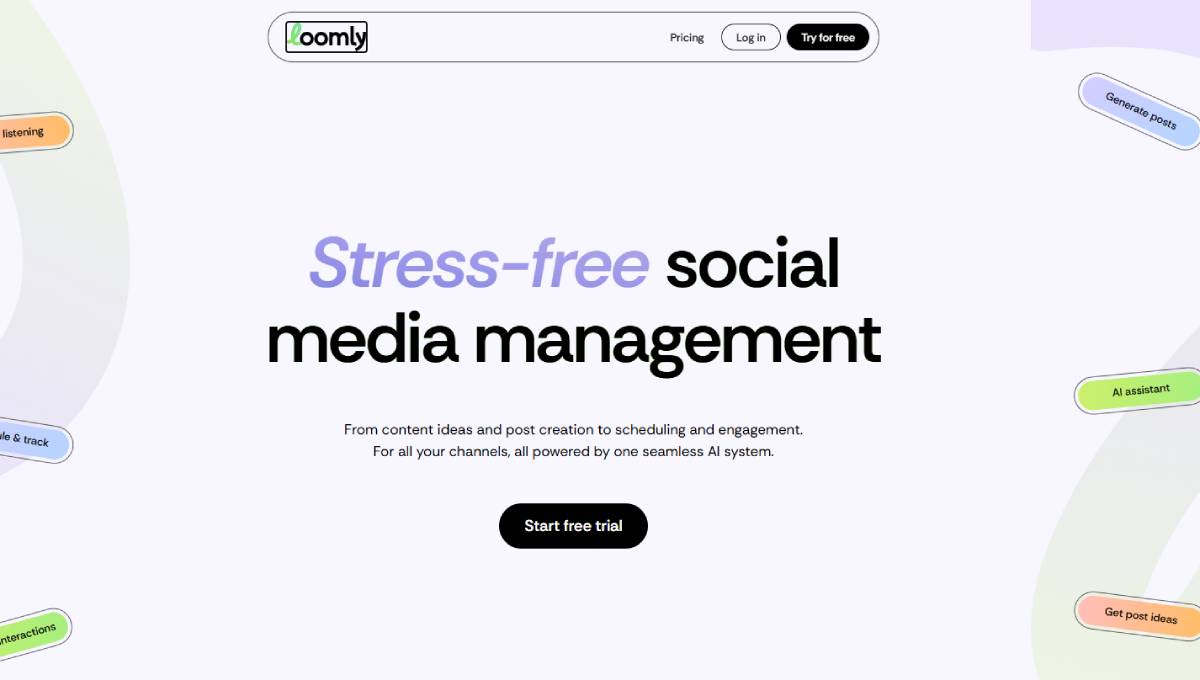
Loomly is advancing social media management with a centralized platform that helps businesses and marketing teams organize content planning, creation, collaboration, scheduling and publishing. The approach addresses growing operational complexity across digital channels, giving organizations a structured way to coordinate campaigns, maintain brand consistency and improve the efficiency of social media operations.
Loomly brings core social media activities into a unified workspace, covering content calendars, post creation, scheduling, collaboration and publishing. The platform is designed for businesses, agencies, freelancers and marketing teams managing multiple social channels.
Its workflow emphasizes planning before publication, allowing teams to develop campaigns, coordinate responsibilities and review content through collaborative processes. Scheduling and publishing capabilities further reduce repetitive manual work.
For marketing leaders, the strategic value lies in consolidating fragmented activities. Instead of relying on separate communication, planning and publishing tools, teams can manage significant portions of their social media workflow within one environment, potentially improving coordination and campaign execution.
Social media has evolved from a supplementary communication channel into a major component of modern marketing strategy. Businesses now need to manage multiple platforms, audiences, content formats and publishing schedules simultaneously. This has created new operational demands for marketing departments and agencies.
The development of social media management platforms reflects this shift. Companies increasingly require centralized systems that connect campaign planning with content production, approvals and distribution. The objective is not simply to publish more frequently but to create a repeatable process that supports consistent messaging and efficient execution.
This trend is particularly significant for organizations operating multiple brands or social accounts. Without structured workflows, marketing teams can encounter duplicated efforts, missed deadlines, inconsistent messaging and lengthy approval cycles.
Loomly's focus on centralized content operations therefore aligns with a wider transformation in marketing technology. Social media management is increasingly being treated as an organized business process requiring coordination, accountability and scalability.
From an executive marketing perspective, the importance of social media management increasingly extends beyond automated publishing. The ability to coordinate people, content and campaigns within a structured workflow can directly influence marketing efficiency.
For marketing teams, centralized planning can provide greater visibility into upcoming campaigns and publishing schedules. Collaboration tools can also reduce communication gaps between content creators, managers and decision-makers, particularly when multiple stakeholders are involved in approvals.
Agencies face an additional challenge because they must coordinate social campaigns across different clients, brands and teams. A consolidated workflow can potentially reduce administrative overhead while providing a more consistent process for campaign management.
Industry trends also indicate that social media software is moving toward broader marketing operations. As organizations invest more heavily in digital engagement, platforms that combine planning, collaboration and publishing can become important components of the wider marketing technology stack.
For businesses, centralized social media management can help marketing departments improve workflow visibility and campaign consistency. It may also enable teams to spend less time on repetitive coordination and more time on creative strategy, audience engagement and performance improvement.
For marketing executives, platform selection should extend beyond basic scheduling. Integration capabilities, collaboration, analytics, security, scalability and multi-account management are increasingly relevant when evaluating social media infrastructure.
Agencies may benefit from standardized processes that allow teams to manage more campaigns without creating equivalent increases in administrative work. Smaller companies can also use structured workflows to establish greater consistency without building large marketing operations teams.
At a broader level, the continued development of social media management technology highlights the growing connection between digital communication, brand reputation, customer relationships and commercial performance.
Loomly's trajectory will depend on how effectively it adapts to rapidly changing social platforms, content formats and marketing expectations. Businesses are likely to favor solutions that increasingly unify planning, collaboration, publishing and performance management. For decision-makers, the priority will be finding technology that improves operational efficiency while preserving creative flexibility, brand control and the ability to respond quickly to changing digital audiences.
Source: Crozdesk
Date: August 12, 2026


