



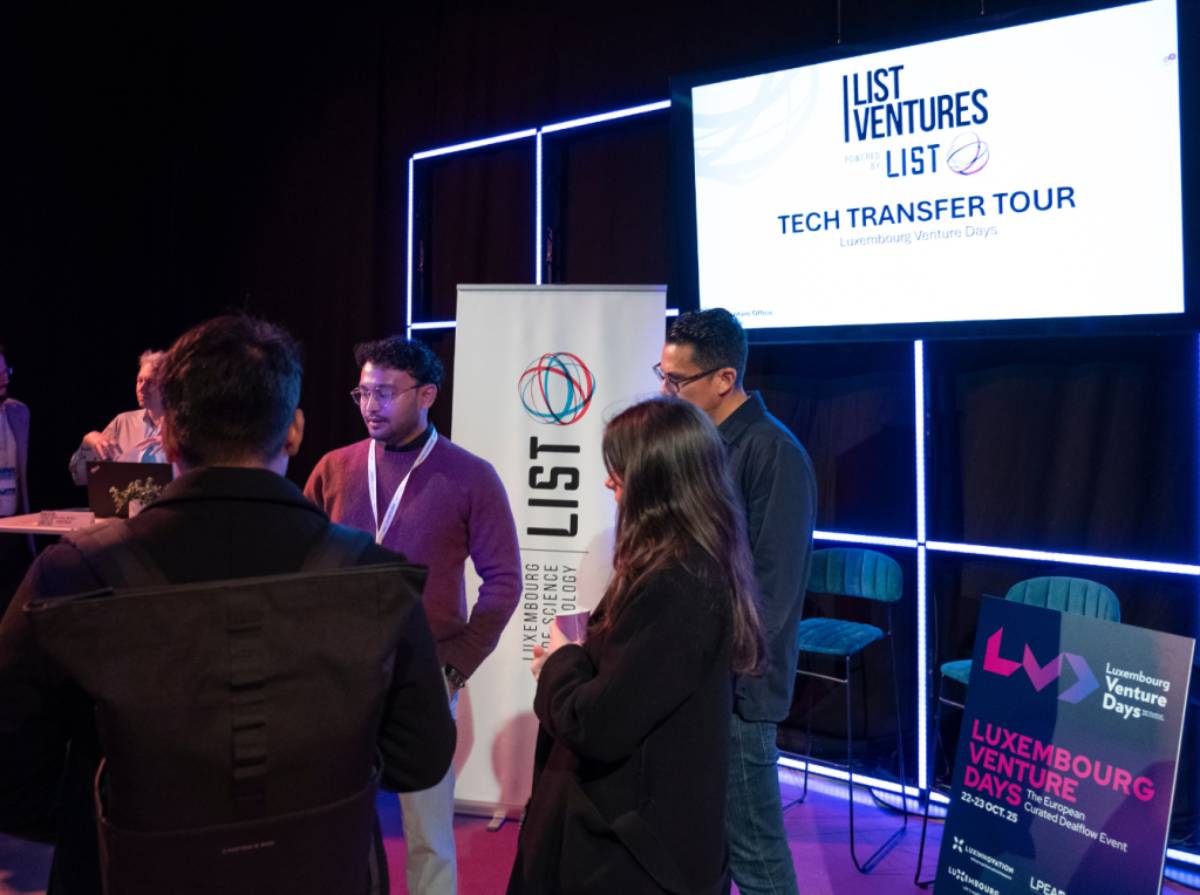
The Luxembourg Institute of Science and Technology (LIST) is calling on entrepreneurs to transform cutting-edge scientific research into commercially viable businesses. The initiative aims to bridge the gap between laboratory innovation and market adoption, reinforcing Luxembourg's strategy to strengthen its deep-tech ecosystem while creating new opportunities for founders, investors, and industry partners.
LIST has launched an open invitation for entrepreneurs interested in building startups based on advanced scientific research and proprietary technologies developed within the institute. Rather than starting from scratch, selected founders will have the opportunity to commercialize research innovations with support from scientists, technology experts, and the broader innovation ecosystem.
The initiative seeks entrepreneurs capable of identifying market opportunities and transforming research breakthroughs into scalable businesses. It reflects Luxembourg's growing emphasis on technology transfer, entrepreneurship, and commercialization across sectors including advanced materials, digital technologies, environmental innovation, healthcare, and industrial solutions. The program also strengthens collaboration between research institutions, startups, investors, and industry stakeholders.
Research commercialization has become a strategic priority for innovation-driven economies seeking to maximize the economic value of publicly funded scientific discoveries. Around the world, governments are encouraging stronger collaboration between research institutes, universities, entrepreneurs, and venture capital firms to accelerate technology transfer and create globally competitive startups.
Europe has increased investment in deep-tech entrepreneurship through initiatives supporting artificial intelligence, clean technologies, advanced manufacturing, biotechnology, cybersecurity, and sustainable innovation. Luxembourg has similarly expanded its innovation infrastructure by promoting public-private partnerships and strengthening commercialization pathways for scientific research.
The development aligns with a broader global trend where research organizations increasingly operate as engines of entrepreneurship rather than solely academic institutions. Successful commercialization enables scientific discoveries to generate economic growth, attract private investment, create skilled employment, and improve industrial competitiveness while addressing pressing societal and environmental challenges.
Innovation experts consistently identify technology transfer as one of the most effective mechanisms for transforming scientific excellence into economic value. However, they also note that successful commercialization depends as much on entrepreneurial leadership and market validation as on scientific breakthroughs.
LIST's initiative reflects this understanding by seeking entrepreneurs capable of combining business strategy with advanced technological innovation. Analysts argue that pairing researchers with experienced founders can significantly improve startup success rates by balancing technical expertise with commercial execution.
Industry observers also emphasize that deep-tech ventures often require long-term investment, multidisciplinary collaboration, and strong institutional support before reaching market maturity. Government-backed research organizations therefore play an increasingly important role in reducing commercialization risks while helping startups access funding, intellectual property, industry partnerships, and international markets.
For entrepreneurs, the initiative offers access to established research capabilities, proprietary technologies, and institutional support that could accelerate startup formation and reduce development costs. Investors may benefit from earlier access to high-potential deep-tech ventures emerging from validated scientific research.
Established companies could also leverage future collaborations with LIST spinouts to strengthen innovation pipelines and technology adoption. Policymakers are likely to continue supporting commercialization initiatives that convert public research investments into economic growth, high-value employment, and globally competitive industries.
For executives, the program illustrates how innovation ecosystems increasingly depend on strong partnerships between science, entrepreneurship, finance, and industry. As global competition for deep-tech leadership intensifies, initiatives linking scientific research with entrepreneurial talent are expected to become increasingly important. Decision-makers should monitor the startups emerging from LIST's commercialization efforts, subsequent investment activity, and international partnerships. Successful technology transfer programs could further strengthen Luxembourg's position as a European hub for research-driven innovation and high-growth entrepreneurship.
Source: Silicon Luxembourg
Date: July 14, 2026


