
LG Pushes Limits With 1000Hz Monitor

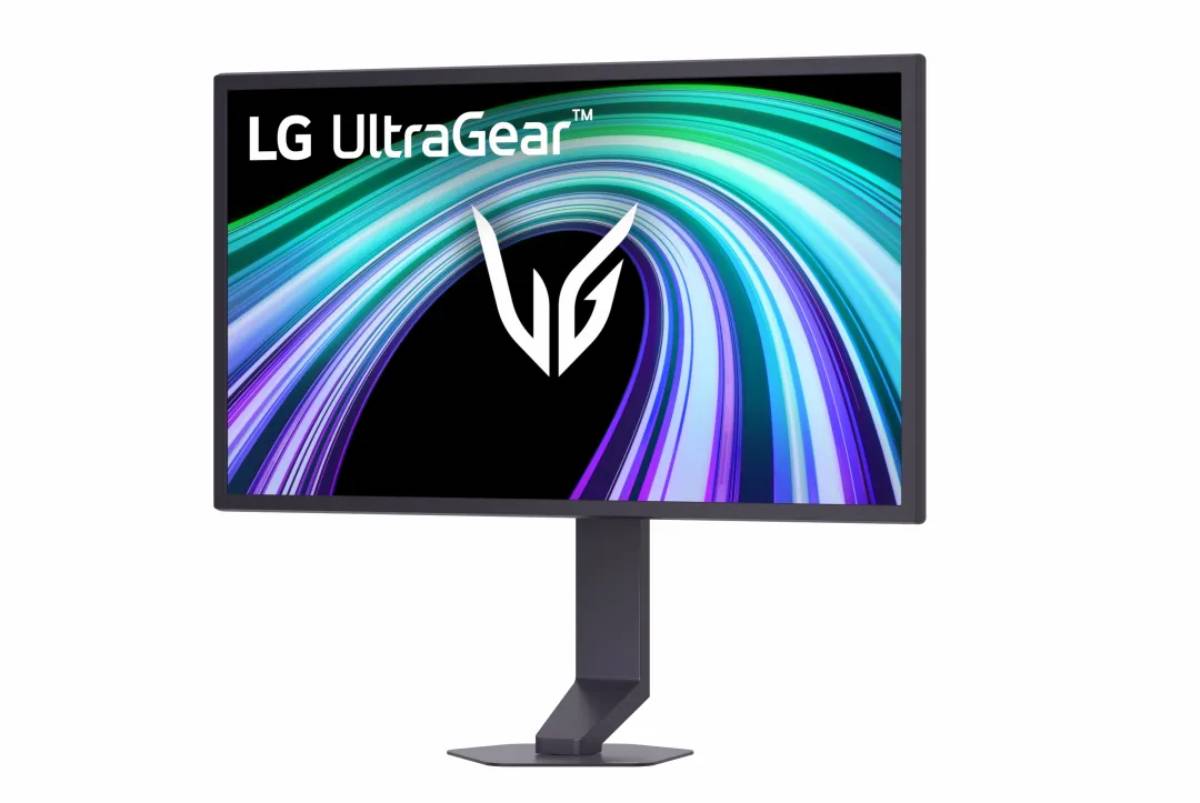
LG’s upcoming UltraGear model is expected to be the first commercially announced monitor reaching a 1000Hz refresh rate at Full HD resolution.

May 19, 2026
|
Image Source:  The Verge

A major development unfolded today as LG confirmed the launch of the world’s first 1000Hz 1080p gaming monitor, marking a radical leap in display technology. The move intensifies competition in the high-performance gaming hardware market and signals growing demand for ultra-low latency systems across esports, simulation, and AI-assisted gaming environments.

LG’s upcoming UltraGear model is expected to be the first commercially announced monitor reaching a 1000Hz refresh rate at Full HD resolution. The product targets competitive gamers and esports professionals where response time advantages are critical. The launch, scheduled for later this year, positions LG ahead of rivals such as ASUS, Acer, and Samsung in the high-refresh-rate segment.

The announcement highlights a broader industry shift toward extreme performance displays, driven by GPU advancements and competitive gaming ecosystems. While pricing details remain undisclosed, the monitor is expected to sit in the premium performance category, likely limiting initial adoption to professional and enthusiast markets.

The development comes as the gaming hardware industry enters a new phase of diminishing perceptual returns in resolution upgrades and instead focuses on refresh rate escalation and latency reduction. Over the past decade, displays have progressed from 60Hz to 144Hz, then 240Hz and 360Hz, with 500Hz panels already emerging in niche markets.

LG’s 1000Hz push reflects both engineering experimentation and competitive positioning in a market increasingly shaped by esports monetisation and AI-driven rendering optimisations. The broader industry is also being influenced by GPU makers and cloud gaming platforms seeking to reduce motion blur and input lag for real-time competitive environments.

Historically, such leaps in refresh rates have had limited mainstream demand but strong institutional and professional gaming uptake, particularly in Asia and North America. Display industry analysts suggest that 1000Hz technology represents the theoretical upper boundary of current LCD and OLED response capabilities, raising questions about perceptual benefit versus engineering marketing. Some engineers note that while human visual perception may not fully distinguish gains beyond 480–600Hz in most scenarios, latency reduction in system pipelines remains valuable in esports contexts.

Industry observers also point out that LG’s move may be strategically aligned with its panel manufacturing leadership, allowing it to define benchmarks for next-generation display standards. Competitive responses are expected from rivals such as Samsung Display and BOE, particularly in microLED and hybrid OLED segments.

Gaming ecosystem stakeholders argue that such advancements will increasingly depend on GPU synchronization, software optimisation, and AI-assisted frame generation rather than hardware alone. For global technology companies, LG’s announcement signals intensifying capital competition in high-performance display manufacturing, with implications for supply chains, semiconductor demand, and gaming hardware ecosystems. OEMs may need to reassess product segmentation strategies as premium esports devices become increasingly specialised.

For investors, the move reinforces display technology as a strategic battleground alongside AI chips and data centre infrastructure. Regulators are unlikely to intervene directly, but spectrum efficiency, energy consumption, and electronic waste considerations may gain attention as ultra-high-refresh displays scale.

For consumers, the innovation may widen the gap between mainstream and professional-grade gaming experiences, reinforcing a tiered hardware ecosystem. The rollout of LG’s 1000Hz monitor is likely to trigger competitive responses within the display industry over the next product cycle. Attention will now shift to real-world usability, GPU compatibility, and whether software ecosystems can meaningfully leverage such extreme refresh rates. The broader question remains whether this marks a long-term standard shift or a peak-performance niche product.

Source: The Verge
Date: May 2026

  • Featured tools
Kreateable AI
Free

Kreateable AI is a white-label, AI-driven design platform that enables logo generation, social media posts, ads, and more for businesses, agencies, and service providers.

#
Logo Generator
Learn more
WellSaid Ai
Free

WellSaid AI is an advanced text-to-speech platform that transforms written text into lifelike, human-quality voiceovers.

#
Text to Speech
Learn more

Learn more about future of AI

Join 80,000+ Ai enthusiast getting weekly updates on exciting AI tools.
Thank you! Your submission has been received!
Oops! Something went wrong while submitting the form.

LG Pushes Limits With 1000Hz Monitor

May 19, 2026

LG’s upcoming UltraGear model is expected to be the first commercially announced monitor reaching a 1000Hz refresh rate at Full HD resolution.

Image Source:  The Verge

A major development unfolded today as LG confirmed the launch of the world’s first 1000Hz 1080p gaming monitor, marking a radical leap in display technology. The move intensifies competition in the high-performance gaming hardware market and signals growing demand for ultra-low latency systems across esports, simulation, and AI-assisted gaming environments.

LG’s upcoming UltraGear model is expected to be the first commercially announced monitor reaching a 1000Hz refresh rate at Full HD resolution. The product targets competitive gamers and esports professionals where response time advantages are critical. The launch, scheduled for later this year, positions LG ahead of rivals such as ASUS, Acer, and Samsung in the high-refresh-rate segment.

The announcement highlights a broader industry shift toward extreme performance displays, driven by GPU advancements and competitive gaming ecosystems. While pricing details remain undisclosed, the monitor is expected to sit in the premium performance category, likely limiting initial adoption to professional and enthusiast markets.

The development comes as the gaming hardware industry enters a new phase of diminishing perceptual returns in resolution upgrades and instead focuses on refresh rate escalation and latency reduction. Over the past decade, displays have progressed from 60Hz to 144Hz, then 240Hz and 360Hz, with 500Hz panels already emerging in niche markets.

LG’s 1000Hz push reflects both engineering experimentation and competitive positioning in a market increasingly shaped by esports monetisation and AI-driven rendering optimisations. The broader industry is also being influenced by GPU makers and cloud gaming platforms seeking to reduce motion blur and input lag for real-time competitive environments.

Historically, such leaps in refresh rates have had limited mainstream demand but strong institutional and professional gaming uptake, particularly in Asia and North America. Display industry analysts suggest that 1000Hz technology represents the theoretical upper boundary of current LCD and OLED response capabilities, raising questions about perceptual benefit versus engineering marketing. Some engineers note that while human visual perception may not fully distinguish gains beyond 480–600Hz in most scenarios, latency reduction in system pipelines remains valuable in esports contexts.

Industry observers also point out that LG’s move may be strategically aligned with its panel manufacturing leadership, allowing it to define benchmarks for next-generation display standards. Competitive responses are expected from rivals such as Samsung Display and BOE, particularly in microLED and hybrid OLED segments.

Gaming ecosystem stakeholders argue that such advancements will increasingly depend on GPU synchronization, software optimisation, and AI-assisted frame generation rather than hardware alone. For global technology companies, LG’s announcement signals intensifying capital competition in high-performance display manufacturing, with implications for supply chains, semiconductor demand, and gaming hardware ecosystems. OEMs may need to reassess product segmentation strategies as premium esports devices become increasingly specialised.

For investors, the move reinforces display technology as a strategic battleground alongside AI chips and data centre infrastructure. Regulators are unlikely to intervene directly, but spectrum efficiency, energy consumption, and electronic waste considerations may gain attention as ultra-high-refresh displays scale.

For consumers, the innovation may widen the gap between mainstream and professional-grade gaming experiences, reinforcing a tiered hardware ecosystem. The rollout of LG’s 1000Hz monitor is likely to trigger competitive responses within the display industry over the next product cycle. Attention will now shift to real-world usability, GPU compatibility, and whether software ecosystems can meaningfully leverage such extreme refresh rates. The broader question remains whether this marks a long-term standard shift or a peak-performance niche product.

Source: The Verge
Date: May 2026

Promote Your Tool

Copy Embed Code

Similar Blogs

June 23, 2026
|

Sokin Secures European Payments License

Sokin has acquired Norwegian fintech firm Settle in a transaction that provides access to a valuable Electronic Money Institution (EMI) license.
Read more
June 23, 2026
|

Twin Prime Bets Defence AI

Twin Prime has secured $10 million in fresh funding to expand its defence-focused AI systems, which prioritize sensor fusion, detection, and real-time environmental interpretation over generative or chatbot-based models.
Read more
June 23, 2026
|

Northzone Backs Physical AI Shift

Northzone has appointed a new partner to lead its physical AI investment strategy, marking a deliberate shift toward embodied intelligence—systems that interact directly with physical environments.
Read more
June 23, 2026
|

Switzerland Hosts Iran US Technical Talks

The upcoming technical-level discussions between Iranian and US representatives will focus on procedural and issue-specific frameworks rather than high-level political agreements.
Read more
June 23, 2026
|

Switzerland Extends Ukrainian Protection Status

Swiss federal authorities are reviewing the possibility of extending S protection status, which grants temporary residence rights and access to essential services for Ukrainian nationals fleeing the war.
Read more
June 23, 2026
|

Swiss FM Engages Iran Diplomacy

Swiss Foreign Minister Ignazio Cassis held formal discussions with Iran’s foreign minister, focusing on bilateral relations and broader regional security dynamics.
Read more