



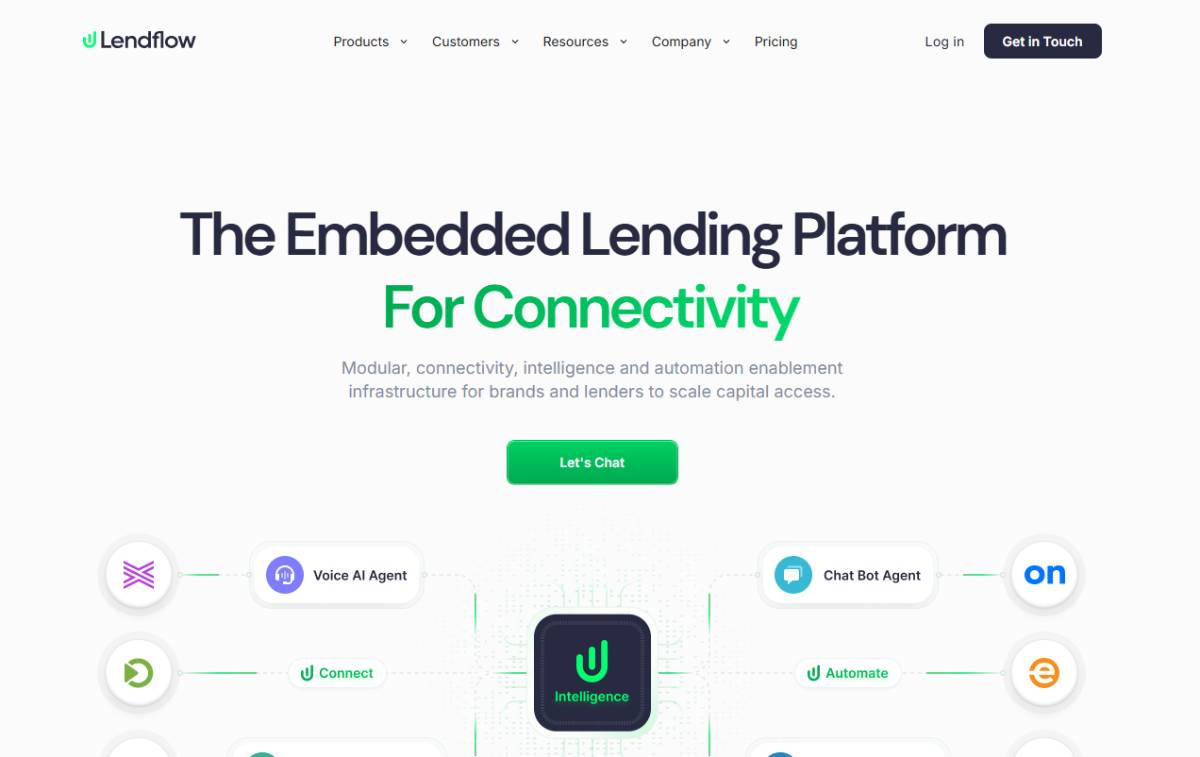
Lendflow is emerging as part of the broader shift toward embedded lending, giving digital businesses and financial providers technology to integrate financing into existing customer journeys. The model could reshape how small and midsize businesses access capital, while creating new opportunities for lenders, software platforms and financial technology providers.
Lendflow provides infrastructure designed to connect businesses with lending partners and financing products through digital platforms. Its capabilities span lender marketplaces, borrower experiences, APIs, credit decisioning, analytics and automated communications.
The platform is positioned around simplifying the technical complexity involved in embedding financial products into software and online customer experiences. This approach allows technology companies to introduce lending services without developing an entire financial infrastructure internally.
The development reflects growing demand for faster, digitally delivered financing. It also highlights the increasing role of technology platforms in connecting borrowers with multiple financing options while enabling lenders to expand their digital distribution networks.
The development aligns with a broader transformation across financial services, where lending is increasingly moving beyond traditional bank branches and standalone financial websites. Businesses now expect financial services to appear directly within the software platforms and digital ecosystems they already use.
Embedded finance has become particularly relevant for small and midsize businesses, which frequently require working capital, equipment financing or other forms of credit while managing day-to-day operations. Digital platforms can potentially identify financing needs closer to the moment they arise.
For technology companies, embedded lending can also create additional revenue opportunities and strengthen customer relationships. For lenders, partnerships with software platforms can provide access to new borrower segments and more contextual data.
However, the expansion of digital lending also increases scrutiny around credit decisions, data protection, transparency and responsible lending practices. Industry observers increasingly identify embedded finance as an important convergence between software and financial services. The underlying strategy is to integrate financing into customer workflows rather than requiring businesses to leave the platform they already use.
Lendflow's infrastructure-oriented approach illustrates this model by providing technology that can support lender connectivity, borrower journeys and automated lending processes. Its positioning is particularly relevant to companies seeking to add financing capabilities without building a complete lending operation from the ground up.
From an executive perspective, the value of embedded lending depends on more than access to capital. Platform reliability, underwriting quality, lender diversity, integration capabilities and customer experience can determine whether the model generates sustainable commercial value.
The wider industry is also likely to face increasing attention from regulators as technology platforms become more influential in financial decision-making. Responsible use of customer data and transparent credit processes will remain central to long-term adoption.
For businesses, embedded lending can create a more seamless route to financing while potentially improving customer retention and generating new revenue streams. Software companies can integrate lending into their platforms, while lenders can use digital ecosystems to reach prospective borrowers more efficiently.
Investors will likely assess whether embedded lending providers can scale while maintaining strong credit performance, compliance and operational efficiency. For customers, faster digital financing may improve access to working capital, but automated decisions also create concerns around fairness, explainability and data security.
Policymakers may therefore need to balance innovation with safeguards covering lending practices, privacy, consumer protection and financial accountability. Businesses entering the sector will need strong governance alongside technological capabilities.
Embedded lending is likely to become increasingly integrated with SaaS platforms, marketplaces and other digital business ecosystems. Future developments may center on AI-assisted underwriting, real-time business data, automated verification and broader lender networks. Decision-makers should watch credit performance, regulatory developments, adoption rates and customer outcomes. The long-term opportunity will depend on whether digital lending can combine convenience and speed with responsible, transparent financial decision-making.
Source: Crozdesk
Date: August 10, 2026


