
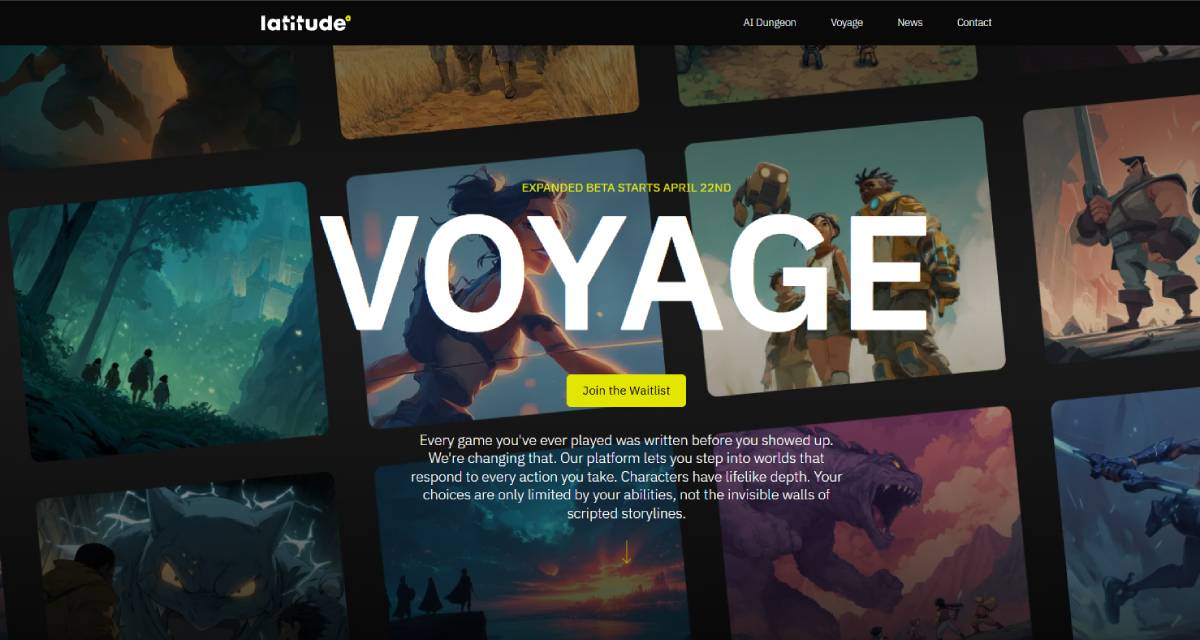
Latitude Launches AI RPG Platform Voyage

Latitude’s new platform, Voyage, introduces tools that allow users to create entire RPG worlds powered by generative AI, including adaptive storylines and non-player characters (NPCs) that respond in real time.

April 22, 2026
|

A major development in the gaming and AI sector has emerged as Latitude unveiled Voyage, an AI-driven platform for building custom role-playing games with dynamic, AI-generated characters and narratives. The launch signals a strategic shift toward user-generated, AI-powered gaming ecosystems with implications for developers, platforms, and digital economies.

Latitude’s new platform, Voyage, introduces tools that allow users to create entire RPG worlds powered by generative AI, including adaptive storylines and non-player characters (NPCs) that respond in real time.

The company, known for its earlier success with AI Dungeon, is positioning Voyage as a scalable platform for both hobbyists and professional developers.

The rollout reflects a broader timeline of rapid innovation in generative AI, particularly following advances in large language models. Stakeholders include independent game creators, studios, and AI infrastructure providers. Economically, the move hints at new monetization models in gaming, including creator-driven ecosystems and AI-assisted development pipelines.

The development aligns with a broader trend across global markets where generative AI is reshaping creative industries from gaming to film and publishing. Platforms are increasingly shifting from static content creation toward dynamic, user-driven experiences powered by AI.

Latitude’s move builds on the early traction of AI Dungeon, which demonstrated consumer appetite for open-ended, AI-generated storytelling. However, Voyage expands this concept into a full-fledged platform economy, enabling scalable game creation rather than isolated experiences.

This comes amid intensifying competition among tech firms and gaming studios to integrate AI into production pipelines. Companies such as Epic Games and Unity Technologies have already embedded AI tools into their ecosystems, while broader advancements in generative AI continue lowering barriers to entry for creators. The result is a structural shift in how games are designed, distributed, and monetized.

Industry analysts view Voyage as part of a transition toward “AI-native gaming,” where content is no longer pre-scripted but evolves dynamically through player interaction. This model could significantly extend engagement cycles and reduce development costs, particularly for smaller studios.

Executives at Latitude are expected to position Voyage as a democratizing force, enabling users without formal coding expertise to build complex RPG environments. Analysts suggest this could mirror the impact of platforms like Roblox, which unlocked user-generated gaming economies at scale.

However, experts also highlight challenges, including content moderation, narrative coherence, and intellectual property risks tied to AI-generated assets. As AI systems become more autonomous, maintaining quality and safety standards will be critical for platform credibility and long-term adoption.

For global executives, the shift toward AI-powered game creation platforms could redefine operational strategies across the gaming and entertainment sectors. Studios may need to reassess traditional development cycles as AI reduces time-to-market and production costs.

Investors are likely to monitor emerging monetization models, particularly those tied to creator economies and in-game AI services. Meanwhile, platform operators will face increasing scrutiny over content governance, data usage, and AI ethics.

From a policy perspective, regulators may need to address questions around authorship, liability, and digital ownership in AI-generated environments. The rise of such platforms could accelerate the need for updated frameworks governing generative AI in creative industries.

Looking ahead, Voyage’s success will depend on user adoption, platform scalability, and its ability to balance creative freedom with safety controls. Decision-makers should watch how quickly developers integrate AI-native tools into mainstream production and whether new revenue models gain traction.

As generative AI continues to mature, platforms like Voyage could redefine interactive entertainment—blurring the line between player, creator, and developer in a rapidly evolving digital economy.

Source: TechCrunch
Date: April 21, 2026

  • Featured tools
Hostinger Website Builder
Paid

Hostinger Website Builder is a drag-and-drop website creator bundled with hosting and AI-powered tools, designed for businesses, blogs and small shops with minimal technical effort.It makes launching a site fast and affordable, with templates, responsive design and built-in hosting all in one.

#
Productivity
#
Startup Tools
#
Ecommerce
Learn more
Surfer AI
Free

Surfer AI is an AI-powered content creation assistant built into the Surfer SEO platform, designed to generate SEO-optimized articles from prompts, leveraging data from search results to inform tone, structure, and relevance.

#
SEO
Learn more

Learn more about future of AI

Join 80,000+ Ai enthusiast getting weekly updates on exciting AI tools.
Thank you! Your submission has been received!
Oops! Something went wrong while submitting the form.

Latitude Launches AI RPG Platform Voyage

April 22, 2026

Latitude’s new platform, Voyage, introduces tools that allow users to create entire RPG worlds powered by generative AI, including adaptive storylines and non-player characters (NPCs) that respond in real time.

A major development in the gaming and AI sector has emerged as Latitude unveiled Voyage, an AI-driven platform for building custom role-playing games with dynamic, AI-generated characters and narratives. The launch signals a strategic shift toward user-generated, AI-powered gaming ecosystems with implications for developers, platforms, and digital economies.

Latitude’s new platform, Voyage, introduces tools that allow users to create entire RPG worlds powered by generative AI, including adaptive storylines and non-player characters (NPCs) that respond in real time.

The company, known for its earlier success with AI Dungeon, is positioning Voyage as a scalable platform for both hobbyists and professional developers.

The rollout reflects a broader timeline of rapid innovation in generative AI, particularly following advances in large language models. Stakeholders include independent game creators, studios, and AI infrastructure providers. Economically, the move hints at new monetization models in gaming, including creator-driven ecosystems and AI-assisted development pipelines.

The development aligns with a broader trend across global markets where generative AI is reshaping creative industries from gaming to film and publishing. Platforms are increasingly shifting from static content creation toward dynamic, user-driven experiences powered by AI.

Latitude’s move builds on the early traction of AI Dungeon, which demonstrated consumer appetite for open-ended, AI-generated storytelling. However, Voyage expands this concept into a full-fledged platform economy, enabling scalable game creation rather than isolated experiences.

This comes amid intensifying competition among tech firms and gaming studios to integrate AI into production pipelines. Companies such as Epic Games and Unity Technologies have already embedded AI tools into their ecosystems, while broader advancements in generative AI continue lowering barriers to entry for creators. The result is a structural shift in how games are designed, distributed, and monetized.

Industry analysts view Voyage as part of a transition toward “AI-native gaming,” where content is no longer pre-scripted but evolves dynamically through player interaction. This model could significantly extend engagement cycles and reduce development costs, particularly for smaller studios.

Executives at Latitude are expected to position Voyage as a democratizing force, enabling users without formal coding expertise to build complex RPG environments. Analysts suggest this could mirror the impact of platforms like Roblox, which unlocked user-generated gaming economies at scale.

However, experts also highlight challenges, including content moderation, narrative coherence, and intellectual property risks tied to AI-generated assets. As AI systems become more autonomous, maintaining quality and safety standards will be critical for platform credibility and long-term adoption.

For global executives, the shift toward AI-powered game creation platforms could redefine operational strategies across the gaming and entertainment sectors. Studios may need to reassess traditional development cycles as AI reduces time-to-market and production costs.

Investors are likely to monitor emerging monetization models, particularly those tied to creator economies and in-game AI services. Meanwhile, platform operators will face increasing scrutiny over content governance, data usage, and AI ethics.

From a policy perspective, regulators may need to address questions around authorship, liability, and digital ownership in AI-generated environments. The rise of such platforms could accelerate the need for updated frameworks governing generative AI in creative industries.

Looking ahead, Voyage’s success will depend on user adoption, platform scalability, and its ability to balance creative freedom with safety controls. Decision-makers should watch how quickly developers integrate AI-native tools into mainstream production and whether new revenue models gain traction.

As generative AI continues to mature, platforms like Voyage could redefine interactive entertainment—blurring the line between player, creator, and developer in a rapidly evolving digital economy.

Source: TechCrunch
Date: April 21, 2026

Promote Your Tool

Copy Embed Code

Similar Blogs

April 29, 2026
|

Dell XPS 16 Balances Performance Pricing Trade-Off

The Dell XPS 16 positions itself as a flagship large-screen laptop offering strong performance, premium design, and advanced display capabilities.
Read more
April 29, 2026
|

Logitech Redefines Gaming Hybrid Keyboard Innovation

The Logitech G512 X gaming keyboard integrates a hybrid switch architecture combining mechanical responsiveness with analog-level input control.
Read more
April 29, 2026
|

Acer Predator Deal Signals Gaming Hardware Shift

The Acer Predator Helios Neo 16 AI gaming laptop is currently available at a discount of approximately $560, positioning it as a competitively priced high-end device.
Read more
April 29, 2026
|

Elgato 4K Webcam Redefines Video Standards

The Elgato Facecam 4K webcam is currently being offered at approximately $160, positioning it competitively within the premium webcam segment.
Read more
April 29, 2026
|

Musk Altman Clash Exposes Global AI Faultlines

The opening day of the legal confrontation between Musk and Altman centered on disputes tied to the origins and direction of OpenAI.
Read more
April 29, 2026
|

Viture Beast Signals Breakthrough in AR Displays

The Viture Beast display glasses introduce a high-resolution virtual screen experience, enabling users to project large-format displays through lightweight wearable hardware.
Read more