
KRNL Executor Raises Gaming Security Risks

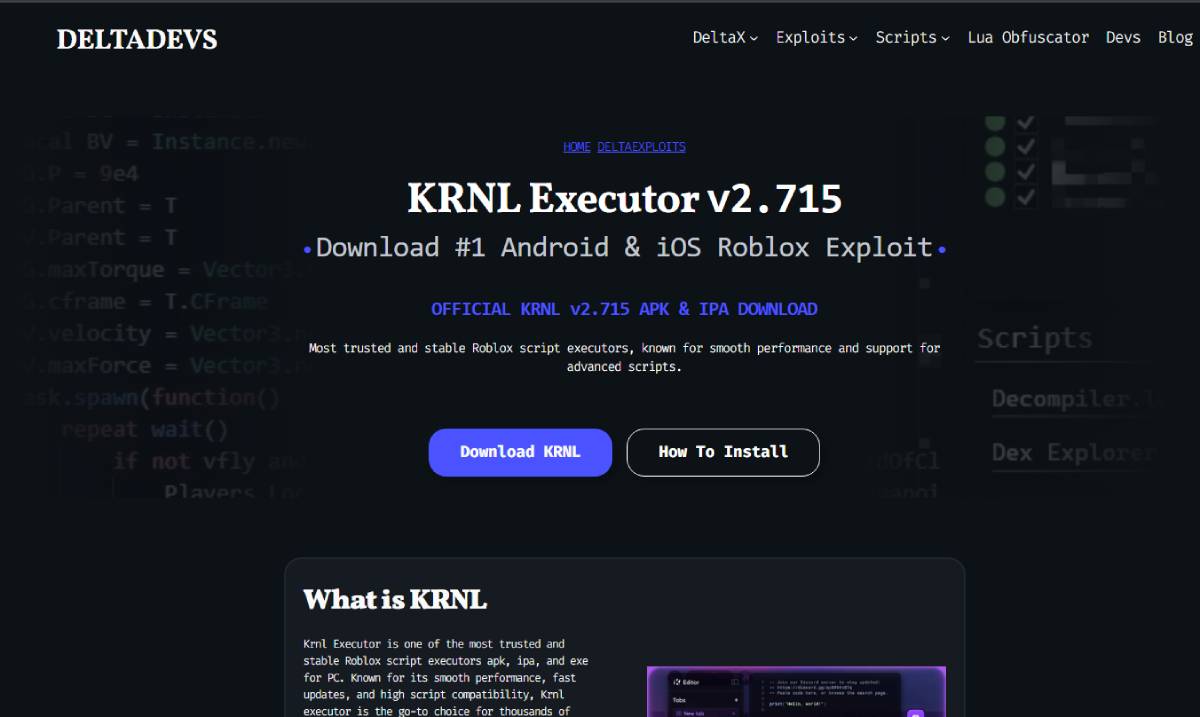
KRNL Executor gained recognition among segments of the Roblox community for enabling users to execute custom scripts within games.

July 29, 2026
|

Interest in KRNL Executor, a scripting utility associated with Roblox game modifications, continues to reflect broader debates around software security, platform integrity, and digital governance. As gaming ecosystems expand globally, tools that enable unauthorized code execution are drawing increased scrutiny from developers, cybersecurity experts, and platform operators seeking to protect users and intellectual property.

KRNL Executor gained recognition among segments of the Roblox community for enabling users to execute custom scripts within games. Such tools are commonly used to alter gameplay or automate in-game actions but typically violate platform terms of service. As a result, gaming platforms have strengthened anti-cheat systems, account enforcement policies, and software detection capabilities.

The broader discussion extends beyond gaming into cybersecurity, where unauthorized executors are viewed as potential attack vectors capable of exposing users to malware, credential theft, or compromised downloads. Platform operators continue investing in security infrastructure to reduce abuse while preserving fair gameplay for legitimate users.

The rapid growth of online gaming has transformed virtual worlds into billion-dollar digital economies supported by creators, advertisers, and subscription services. Maintaining platform integrity has therefore become a strategic priority for both technology companies and regulators.

Over the past several years, gaming platforms have increasingly deployed AI-driven moderation, behavioral analytics, and automated anti-cheat technologies to combat unauthorized modifications. Script executors such as KRNL emerged alongside communities interested in experimentation and customization, but they also introduced risks involving unfair competition, software exploitation, and cybersecurity threats.

The issue reflects a wider trend affecting digital ecosystems worldwide. Whether in gaming, enterprise software, or cloud infrastructure, organizations are prioritizing secure execution environments and stronger access controls. As online communities continue expanding, balancing innovation, user freedom, and platform security remains a central challenge for technology companies.

Cybersecurity professionals generally advise users to avoid downloading unofficial executors or software from unverified sources due to the elevated risk of malware infections, ransomware, or credential compromise. Industry analysts argue that unauthorized modification tools frequently become targets for malicious actors seeking to distribute harmful code under the guise of popular utilities.

Gaming platform operators consistently emphasize that protecting user trust requires proactive enforcement against exploits, automation, and unauthorized software. Technology analysts also note that investments in AI-powered threat detection are becoming increasingly important as gaming platforms evolve into complex digital ecosystems supporting millions of concurrent users.

Experts further suggest that educating users about software authenticity and digital hygiene will remain just as important as technical enforcement, particularly among younger audiences who may be more likely to download unofficial applications.

For gaming companies, continued investment in cybersecurity, fraud detection, and anti-cheat technologies is becoming a competitive necessity. Stronger platform security protects creator revenues, improves player retention, and supports sustainable digital marketplaces.

Investors increasingly evaluate gaming firms based not only on user growth but also on their ability to safeguard digital assets and maintain platform integrity. Regulators are also placing greater emphasis on cybersecurity standards, consumer protection, and online safety, encouraging companies to strengthen governance frameworks around software distribution and user security.

Organizations operating digital platforms may need to continually reassess their risk management strategies as unauthorized software evolves. The contest between platform security and unauthorized modification tools is expected to intensify as AI-driven detection technologies become more sophisticated. Decision-makers should monitor advances in cybersecurity, evolving platform policies, and user education initiatives designed to reduce digital threats. Maintaining trust, protecting creators, and ensuring secure online environments will remain strategic priorities across the global gaming industry.

Source: AlternativeTo
Date: July 21, 2026

  • Featured tools
Figstack AI
Free

Figstack AI is an intelligent assistant for developers that explains code, generates docstrings, converts code between languages, and analyzes time complexity helping you work smarter, not harder.

#
Coding
Learn more
Copy Ai
Free

Copy AI is one of the most popular AI writing tools designed to help professionals create high-quality content quickly. Whether you are a product manager drafting feature descriptions or a marketer creating ad copy, Copy AI can save hours of work while maintaining creativity and tone.

#
Copywriting
Learn more

Learn more about future of AI

Join 80,000+ Ai enthusiast getting weekly updates on exciting AI tools.
Thank you! Your submission has been received!
Oops! Something went wrong while submitting the form.

KRNL Executor Raises Gaming Security Risks

July 29, 2026

KRNL Executor gained recognition among segments of the Roblox community for enabling users to execute custom scripts within games.

Interest in KRNL Executor, a scripting utility associated with Roblox game modifications, continues to reflect broader debates around software security, platform integrity, and digital governance. As gaming ecosystems expand globally, tools that enable unauthorized code execution are drawing increased scrutiny from developers, cybersecurity experts, and platform operators seeking to protect users and intellectual property.

KRNL Executor gained recognition among segments of the Roblox community for enabling users to execute custom scripts within games. Such tools are commonly used to alter gameplay or automate in-game actions but typically violate platform terms of service. As a result, gaming platforms have strengthened anti-cheat systems, account enforcement policies, and software detection capabilities.

The broader discussion extends beyond gaming into cybersecurity, where unauthorized executors are viewed as potential attack vectors capable of exposing users to malware, credential theft, or compromised downloads. Platform operators continue investing in security infrastructure to reduce abuse while preserving fair gameplay for legitimate users.

The rapid growth of online gaming has transformed virtual worlds into billion-dollar digital economies supported by creators, advertisers, and subscription services. Maintaining platform integrity has therefore become a strategic priority for both technology companies and regulators.

Over the past several years, gaming platforms have increasingly deployed AI-driven moderation, behavioral analytics, and automated anti-cheat technologies to combat unauthorized modifications. Script executors such as KRNL emerged alongside communities interested in experimentation and customization, but they also introduced risks involving unfair competition, software exploitation, and cybersecurity threats.

The issue reflects a wider trend affecting digital ecosystems worldwide. Whether in gaming, enterprise software, or cloud infrastructure, organizations are prioritizing secure execution environments and stronger access controls. As online communities continue expanding, balancing innovation, user freedom, and platform security remains a central challenge for technology companies.

Cybersecurity professionals generally advise users to avoid downloading unofficial executors or software from unverified sources due to the elevated risk of malware infections, ransomware, or credential compromise. Industry analysts argue that unauthorized modification tools frequently become targets for malicious actors seeking to distribute harmful code under the guise of popular utilities.

Gaming platform operators consistently emphasize that protecting user trust requires proactive enforcement against exploits, automation, and unauthorized software. Technology analysts also note that investments in AI-powered threat detection are becoming increasingly important as gaming platforms evolve into complex digital ecosystems supporting millions of concurrent users.

Experts further suggest that educating users about software authenticity and digital hygiene will remain just as important as technical enforcement, particularly among younger audiences who may be more likely to download unofficial applications.

For gaming companies, continued investment in cybersecurity, fraud detection, and anti-cheat technologies is becoming a competitive necessity. Stronger platform security protects creator revenues, improves player retention, and supports sustainable digital marketplaces.

Investors increasingly evaluate gaming firms based not only on user growth but also on their ability to safeguard digital assets and maintain platform integrity. Regulators are also placing greater emphasis on cybersecurity standards, consumer protection, and online safety, encouraging companies to strengthen governance frameworks around software distribution and user security.

Organizations operating digital platforms may need to continually reassess their risk management strategies as unauthorized software evolves. The contest between platform security and unauthorized modification tools is expected to intensify as AI-driven detection technologies become more sophisticated. Decision-makers should monitor advances in cybersecurity, evolving platform policies, and user education initiatives designed to reduce digital threats. Maintaining trust, protecting creators, and ensuring secure online environments will remain strategic priorities across the global gaming industry.

Source: AlternativeTo
Date: July 21, 2026

Promote Your Tool

Copy Embed Code

Similar Blogs

July 29, 2026
|

EmulationStation Enhances Retro Gaming Experience

EmulationStation is a front-end interface designed to organize and present video game emulation libraries through a streamlined user experience.
Read more
July 29, 2026
|

Tomoson Expands Influencer Marketing Collaboration

Tomoson operates as an influencer marketing platform designed to help brands collaborate with content creators and manage promotional campaigns.
Read more
July 29, 2026
|

ZeroBin.net Advances Secure Data Sharing

ZeroBin.net operates as a privacy-oriented platform that allows users to share encrypted information through temporary digital channels.
Read more
July 29, 2026
|

Gaia Expands Digital Knowledge Access

Gaia operates within the broader category of digital platforms focused on information discovery, organization, and knowledge accessibility.
Read more
July 29, 2026
|

MailDrop Expands Privacy Email Solutions

MailDrop operates as a temporary email service designed to help users create disposable email addresses for online registrations and digital interactions.
Read more
July 29, 2026
|

MacX YouTube Downloader Enhances Video Management

MacX YouTube Downloader is a multimedia software solution designed to support video downloading, conversion, and management from online platforms.
Read more