



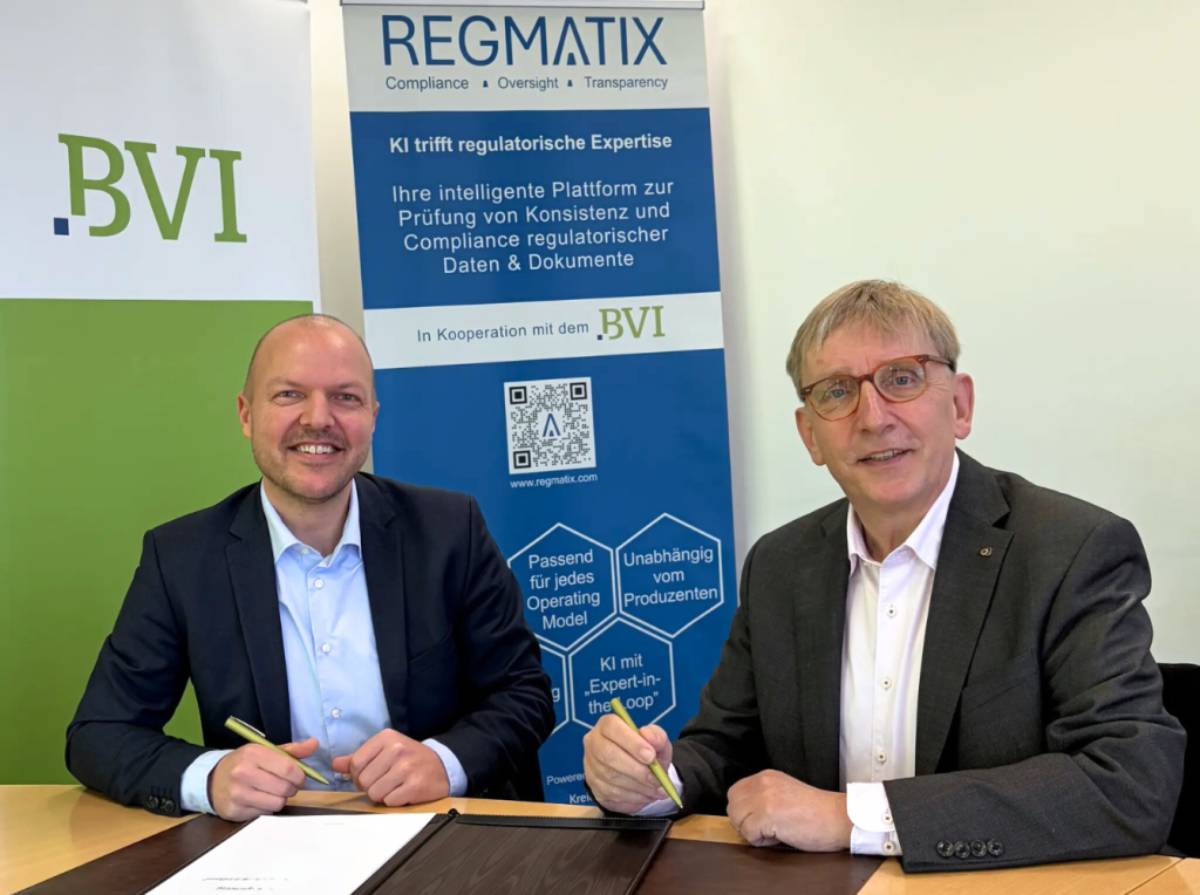
A strategic partnership is bringing artificial intelligence deeper into Europe’s financial services sector as Kreios and BVI collaborate to modernize compliance processes for German fund managers. The initiative reflects growing demand for AI-powered regulatory technology as financial institutions navigate increasingly complex compliance requirements.
Kreios has entered into a partnership with BVI to introduce AI-driven compliance capabilities for Germany's investment fund industry. The collaboration aims to help asset managers streamline regulatory monitoring, improve operational efficiency, and strengthen compliance with evolving financial regulations.
The initiative demonstrates how artificial intelligence is increasingly being integrated into regulatory technology (RegTech) solutions across financial services. By automating compliance workflows and enhancing regulatory oversight, the partnership seeks to reduce administrative burdens while improving risk management and reporting accuracy for investment firms operating in highly regulated markets.
Financial institutions worldwide are investing heavily in regulatory technology as compliance obligations become increasingly complex. Asset managers must navigate expanding reporting requirements, evolving European regulations, anti-money laundering standards, sustainability disclosures, and operational risk frameworks while maintaining cost efficiency.
Artificial intelligence has emerged as a key enabler of compliance modernization, allowing firms to automate document analysis, monitor regulatory updates, identify operational risks, and improve audit readiness. The adoption of AI-driven compliance tools is accelerating across banking, insurance, wealth management, and asset management as organizations seek to improve both accuracy and scalability.
Germany represents one of Europe's largest asset management markets, making technological innovation particularly significant for the broader European financial ecosystem. Partnerships between technology providers and industry associations increasingly serve as catalysts for sector-wide digital transformation and regulatory modernization.
Industry analysts view AI-powered compliance as one of the fastest-growing segments within financial technology. Experts argue that artificial intelligence can significantly reduce manual compliance workloads while improving the consistency and speed of regulatory monitoring.
RegTech specialists emphasize that AI solutions are particularly valuable in environments where regulations evolve frequently and institutions must process large volumes of documentation. Automation allows compliance professionals to focus more on strategic risk management rather than repetitive administrative tasks.
Although the announcement primarily highlights the collaboration between Kreios and BVI, market observers suggest the partnership reflects a broader shift toward AI-enabled governance across European financial services. Experts also note that successful implementation will require robust governance, transparency, cybersecurity protections, and human oversight to maintain regulatory confidence.
For financial institutions, AI-powered compliance solutions offer opportunities to improve operational efficiency, reduce compliance costs, and respond more rapidly to regulatory change. Asset managers adopting intelligent automation may strengthen both competitiveness and risk management capabilities.
For investors, continued growth in RegTech demonstrates expanding commercial opportunities at the intersection of artificial intelligence and financial services. For policymakers and regulators, increasing AI adoption reinforces the need for governance frameworks that encourage innovation while ensuring accountability, transparency, data security, and compliance with evolving European financial regulations. Effective oversight will be critical as AI assumes a greater role in regulatory decision-support processes.
Looking ahead, AI-driven compliance is expected to become an increasingly important component of Europe's financial infrastructure. Industry leaders will monitor adoption rates, regulatory acceptance, and measurable operational improvements resulting from intelligent automation.
As regulatory complexity continues to grow, collaborations between technology providers and financial industry organizations are likely to accelerate digital transformation across asset management and broader financial services.
Source: Silicon Luxembourg
Date: July 2, 2026


