
KONGSBERG Launches AI Sonar Operator

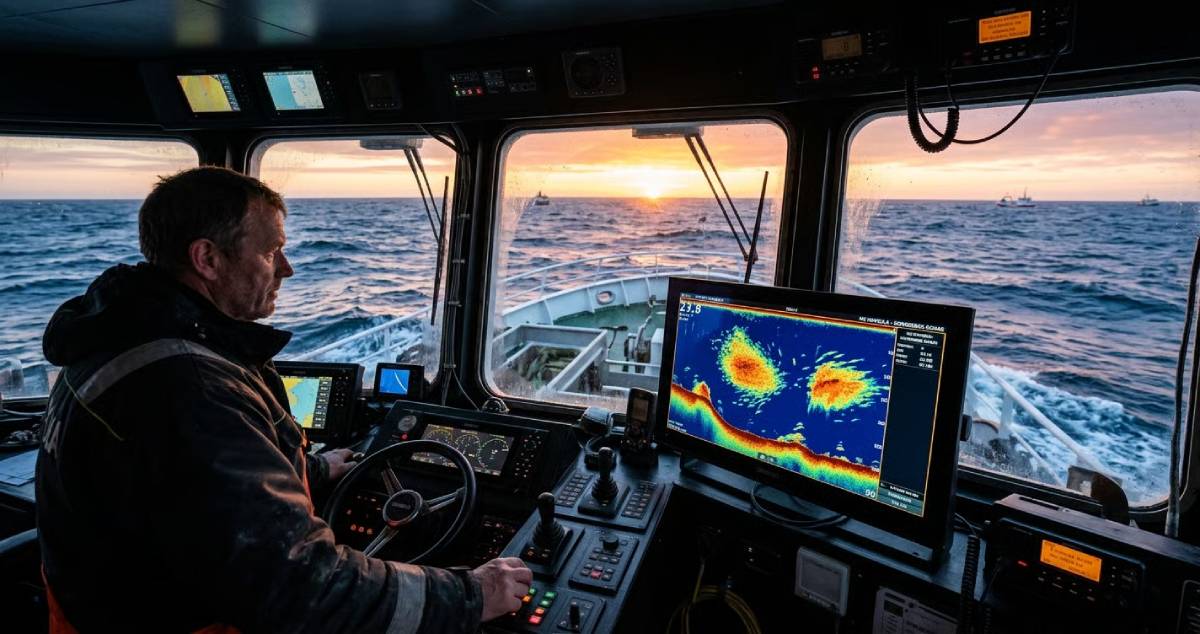
Norwegian technology leader KONGSBERG has developed an AI-powered sonar operator designed to automate and enhance sonar interpretation for maritime users.

June 25, 2026
|
Image Source: NordicTech News

A major advancement in maritime technology has emerged as KONGSBERG introduces what it describes as the world’s first AI-powered sonar operator. The innovation signals a strategic shift in how commercial fishing, marine exploration, and ocean-monitoring operations are conducted, combining artificial intelligence with advanced sonar systems to improve decision-making, operational efficiency, and resource management across global maritime industries.

Norwegian technology leader KONGSBERG has developed an AI-powered sonar operator designed to automate and enhance sonar interpretation for maritime users. The solution integrates artificial intelligence into the company’s sonar ecosystem, enabling real-time analysis of underwater data that traditionally required highly skilled human operators.

The technology is being deployed through KONGSBERG’s marine solutions portfolio and is aimed initially at commercial fishing applications. By processing sonar signals continuously, the AI system can identify patterns, detect fish schools, and provide actionable insights faster than conventional methods.

The development reflects growing investment in autonomous maritime systems and digital ocean technologies. It also demonstrates how AI is moving beyond office productivity and software applications into specialized industrial environments where real-time operational intelligence can create significant economic value.

The launch aligns with a broader trend across global markets where artificial intelligence is being embedded into industrial equipment, operational workflows, and critical infrastructure. Maritime industries, traditionally slower adopters of digital transformation compared with sectors such as finance or e-commerce, are increasingly embracing automation to improve productivity and address labor shortages.

Commercial fishing fleets face mounting pressure from rising fuel costs, sustainability regulations, and fluctuating fish stocks. Efficient resource detection and route optimization have become increasingly important for maintaining profitability while complying with environmental requirements.

At the same time, governments and international organizations are investing heavily in ocean intelligence capabilities, including marine conservation, offshore energy development, seabed mapping, and maritime security. AI-powered sensing technologies are emerging as key enablers of these initiatives.

KONGSBERG's latest innovation also reflects the growing convergence of robotics, machine learning, and advanced sensors. Similar developments are being observed in autonomous shipping, underwater drones, and smart port infrastructure, signaling a broader transformation of the global maritime economy.

Industry analysts view AI-enabled sonar interpretation as a significant milestone in maritime digitalization. Traditionally, sonar analysis has relied heavily on operator experience and judgment, creating variability in performance across vessels and crews. AI systems have the potential to standardize decision-making while reducing the learning curve for new operators.

Marine technology experts suggest that intelligent sonar systems could significantly improve operational efficiency by helping crews make faster and more informed decisions. The ability to process large volumes of acoustic data in real time may also improve safety and reduce resource waste.

Industry observers note that KONGSBERG’s move follows a wider trend toward autonomous maritime operations, where AI assists or eventually performs tasks that once required constant human supervision. Similar technologies are already transforming navigation, vessel maintenance, and route planning.

From an environmental perspective, experts believe more precise fish detection and tracking capabilities could support sustainable fishing practices by reducing unnecessary search time and limiting ecological disruption. As regulatory scrutiny increases worldwide, technologies that combine profitability with sustainability are expected to gain traction.

For businesses operating in maritime sectors, the introduction of AI sonar operators could reduce operational costs, improve catch efficiency, and enhance resource utilization. Fishing companies, offshore energy operators, and marine survey organizations may benefit from greater accuracy and faster decision-making.

Investors are likely to view the development as further evidence of the growing commercial potential of industrial AI applications. Maritime technology has become an increasingly attractive segment as governments and enterprises seek digital solutions to improve resilience and competitiveness.

From a policy perspective, regulators may need to consider standards governing AI-assisted maritime operations, including accountability, transparency, and safety certification. The integration of autonomous technologies into critical maritime infrastructure could also influence future regulatory frameworks for ocean industries.

For executives, the development underscores the importance of integrating AI directly into operational technology systems rather than limiting adoption to administrative functions.

The next phase will likely focus on broader deployment, real-world performance validation, and expansion into additional maritime applications beyond commercial fishing. Industry stakeholders will closely monitor how effectively AI systems perform in diverse ocean conditions and operational environments.

Decision-makers should watch for increased adoption of autonomous maritime technologies, greater investment in ocean intelligence platforms, and evolving regulatory frameworks. As AI continues to penetrate industrial sectors, maritime operations may become one of the most compelling frontiers for intelligent automation.

Source: NordicTech News
Date: June 25, 2026

  • Featured tools
Figstack AI
Free

Figstack AI is an intelligent assistant for developers that explains code, generates docstrings, converts code between languages, and analyzes time complexity helping you work smarter, not harder.

#
Coding
Learn more
Copy Ai
Free

Copy AI is one of the most popular AI writing tools designed to help professionals create high-quality content quickly. Whether you are a product manager drafting feature descriptions or a marketer creating ad copy, Copy AI can save hours of work while maintaining creativity and tone.

#
Copywriting
Learn more

Learn more about future of AI

Join 80,000+ Ai enthusiast getting weekly updates on exciting AI tools.
Thank you! Your submission has been received!
Oops! Something went wrong while submitting the form.

KONGSBERG Launches AI Sonar Operator

June 25, 2026

Norwegian technology leader KONGSBERG has developed an AI-powered sonar operator designed to automate and enhance sonar interpretation for maritime users.

Image Source: NordicTech News

A major advancement in maritime technology has emerged as KONGSBERG introduces what it describes as the world’s first AI-powered sonar operator. The innovation signals a strategic shift in how commercial fishing, marine exploration, and ocean-monitoring operations are conducted, combining artificial intelligence with advanced sonar systems to improve decision-making, operational efficiency, and resource management across global maritime industries.

Norwegian technology leader KONGSBERG has developed an AI-powered sonar operator designed to automate and enhance sonar interpretation for maritime users. The solution integrates artificial intelligence into the company’s sonar ecosystem, enabling real-time analysis of underwater data that traditionally required highly skilled human operators.

The technology is being deployed through KONGSBERG’s marine solutions portfolio and is aimed initially at commercial fishing applications. By processing sonar signals continuously, the AI system can identify patterns, detect fish schools, and provide actionable insights faster than conventional methods.

The development reflects growing investment in autonomous maritime systems and digital ocean technologies. It also demonstrates how AI is moving beyond office productivity and software applications into specialized industrial environments where real-time operational intelligence can create significant economic value.

The launch aligns with a broader trend across global markets where artificial intelligence is being embedded into industrial equipment, operational workflows, and critical infrastructure. Maritime industries, traditionally slower adopters of digital transformation compared with sectors such as finance or e-commerce, are increasingly embracing automation to improve productivity and address labor shortages.

Commercial fishing fleets face mounting pressure from rising fuel costs, sustainability regulations, and fluctuating fish stocks. Efficient resource detection and route optimization have become increasingly important for maintaining profitability while complying with environmental requirements.

At the same time, governments and international organizations are investing heavily in ocean intelligence capabilities, including marine conservation, offshore energy development, seabed mapping, and maritime security. AI-powered sensing technologies are emerging as key enablers of these initiatives.

KONGSBERG's latest innovation also reflects the growing convergence of robotics, machine learning, and advanced sensors. Similar developments are being observed in autonomous shipping, underwater drones, and smart port infrastructure, signaling a broader transformation of the global maritime economy.

Industry analysts view AI-enabled sonar interpretation as a significant milestone in maritime digitalization. Traditionally, sonar analysis has relied heavily on operator experience and judgment, creating variability in performance across vessels and crews. AI systems have the potential to standardize decision-making while reducing the learning curve for new operators.

Marine technology experts suggest that intelligent sonar systems could significantly improve operational efficiency by helping crews make faster and more informed decisions. The ability to process large volumes of acoustic data in real time may also improve safety and reduce resource waste.

Industry observers note that KONGSBERG’s move follows a wider trend toward autonomous maritime operations, where AI assists or eventually performs tasks that once required constant human supervision. Similar technologies are already transforming navigation, vessel maintenance, and route planning.

From an environmental perspective, experts believe more precise fish detection and tracking capabilities could support sustainable fishing practices by reducing unnecessary search time and limiting ecological disruption. As regulatory scrutiny increases worldwide, technologies that combine profitability with sustainability are expected to gain traction.

For businesses operating in maritime sectors, the introduction of AI sonar operators could reduce operational costs, improve catch efficiency, and enhance resource utilization. Fishing companies, offshore energy operators, and marine survey organizations may benefit from greater accuracy and faster decision-making.

Investors are likely to view the development as further evidence of the growing commercial potential of industrial AI applications. Maritime technology has become an increasingly attractive segment as governments and enterprises seek digital solutions to improve resilience and competitiveness.

From a policy perspective, regulators may need to consider standards governing AI-assisted maritime operations, including accountability, transparency, and safety certification. The integration of autonomous technologies into critical maritime infrastructure could also influence future regulatory frameworks for ocean industries.

For executives, the development underscores the importance of integrating AI directly into operational technology systems rather than limiting adoption to administrative functions.

The next phase will likely focus on broader deployment, real-world performance validation, and expansion into additional maritime applications beyond commercial fishing. Industry stakeholders will closely monitor how effectively AI systems perform in diverse ocean conditions and operational environments.

Decision-makers should watch for increased adoption of autonomous maritime technologies, greater investment in ocean intelligence platforms, and evolving regulatory frameworks. As AI continues to penetrate industrial sectors, maritime operations may become one of the most compelling frontiers for intelligent automation.

Source: NordicTech News
Date: June 25, 2026

Promote Your Tool

Copy Embed Code

Similar Blogs

June 25, 2026
|

Luxembourg Space Strategy Turns Decade

Over the past ten years, Luxembourg has systematically developed its space sector through targeted investments, policy frameworks, and partnerships with private space companies.
Read more
June 25, 2026
|

G7 Disrupts Geneva Trade Fair

The EPHJ trade fair, which brings together stakeholders from the watchmaking, microtechnology, and precision engineering sectors, experienced lower-than-expected attendance this year.
Read more
June 25, 2026
|

Swiss Steam Tram Gains Heritage Protection

The steam tram, located in Bern, has been formally listed as a protected monument following approval from heritage authorities.
Read more
June 25, 2026
|

Swiss Summit Ends With Strong Security

The Canton of Nidwalden and Swiss federal authorities have concluded that security arrangements during the Bürgenstock summit were highly effective.
Read more
June 25, 2026
|

AI Integration Proves More Complex

The study finds that despite widespread enthusiasm for artificial intelligence, many businesses struggle to move beyond pilot projects into full-scale deployment.
Read more
June 25, 2026
|

Swiss External Surplus Narrows

Recent data shows that Switzerland’s current account surplus has decreased compared to previous reporting periods, driven primarily by weaker net exports and changes in investment income flows.
Read more