
Kingdom Loathing Revives Browser Gaming

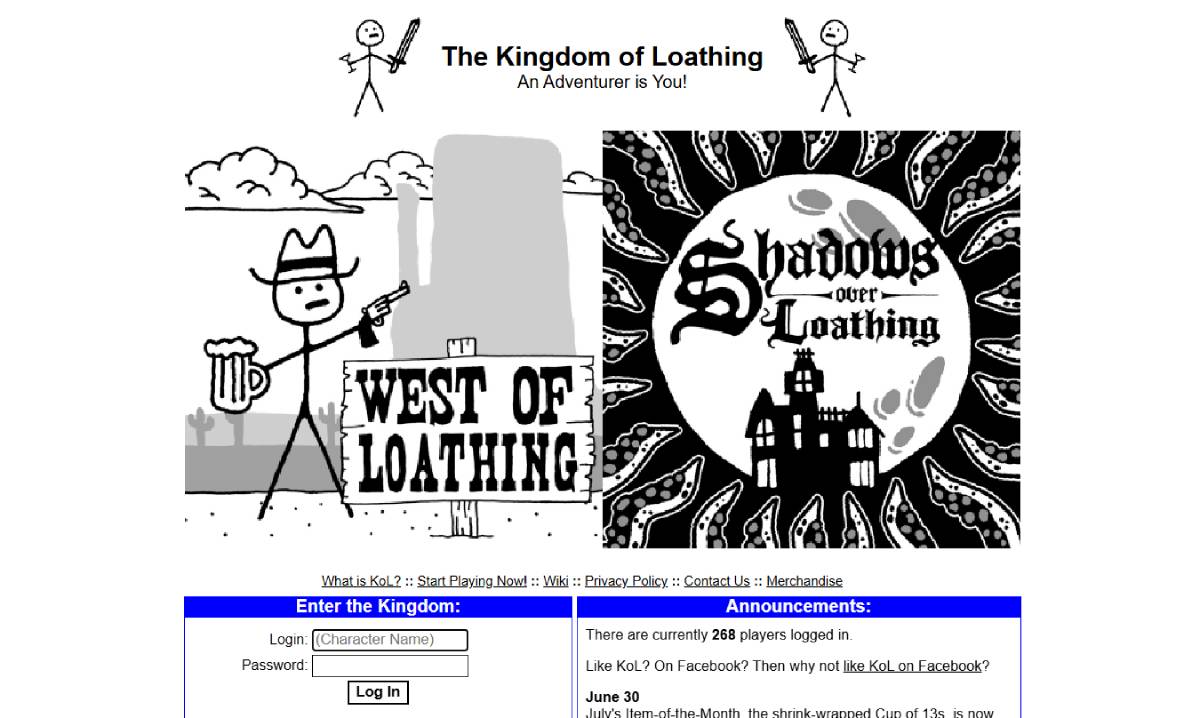
Kingdom of Loathing is a browser-based multiplayer RPG known for its text-driven gameplay, satirical humor, and turn-based mechanics.

July 29, 2026
|

Kingdom of Loathing continues to demonstrate the lasting appeal of browser-based role-playing games (RPGs) in an industry increasingly dominated by high-budget titles. Its longevity underscores how innovative storytelling, community engagement, and accessible gameplay remain valuable competitive advantages for developers targeting niche yet loyal global gaming audiences.

Kingdom of Loathing is a browser-based multiplayer RPG known for its text-driven gameplay, satirical humor, and turn-based mechanics. Unlike graphics-intensive games, it emphasizes creativity, exploration, and player interaction while remaining accessible through standard web browsers.

The game has maintained an active community over many years, illustrating how independent developers can sustain engagement without relying on cutting-edge graphics or expensive hardware. Its continued relevance reflects broader demand for lightweight online gaming experiences that prioritize content, accessibility, and community participation over technical complexity. Browser compatibility also lowers barriers for players across multiple devices and operating systems.

The online gaming industry has evolved dramatically over the past two decades, shifting from browser-based experiences to sophisticated cloud gaming platforms, mobile ecosystems, and high-performance multiplayer titles. Despite this transformation, browser games continue serving dedicated audiences seeking quick access, lower hardware requirements, and unique gameplay experiences.

Independent developers have increasingly demonstrated that creativity, strong communities, and engaging narratives can compete alongside technically advanced productions. Many long-running browser games have successfully adapted through regular content updates, seasonal events, and active player engagement rather than pursuing photorealistic graphics.

The broader industry also reflects growing interest in cross-platform accessibility and games-as-a-service models, where continuous engagement often matters more than initial sales. Kingdom of Loathing represents a successful example of sustainable niche gaming supported by community loyalty and consistent content development.

Gaming industry analysts frequently note that long-term success increasingly depends on player retention rather than short-term commercial launches. Titles with active communities, distinctive identities, and regular updates often achieve remarkable longevity despite operating in competitive markets.

Experts also observe that browser-based games continue serving valuable market segments by reducing hardware barriers and expanding accessibility. This approach aligns with broader trends emphasizing inclusivity and cross-device compatibility.

Business analysts suggest that niche communities can generate stable revenue through subscriptions, optional purchases, and loyal user engagement without requiring blockbuster-scale investments. Industry observers further emphasize that storytelling, originality, and consistent community interaction remain powerful competitive differentiators in an increasingly crowded global gaming landscape.

For game developers, Kingdom of Loathing demonstrates that sustainable growth can emerge from differentiated experiences rather than purely technical innovation. Independent studios may increasingly focus on community-driven development, live-service content, and browser accessibility to reach broader audiences.

Investors continue recognizing opportunities within niche gaming markets where loyal user bases support recurring revenue models. Meanwhile, policymakers remain focused on issues including consumer protection, digital accessibility, online moderation, and data privacy, encouraging developers to strengthen governance while maintaining engaging and inclusive gaming environments.

Browser-based gaming is expected to remain an important segment alongside cloud gaming, mobile platforms, and immersive digital experiences. Decision-makers should monitor advances in web technologies, community engagement strategies, and monetization models that support long-term sustainability. Developers capable of combining creativity, accessibility, and strong player communities are likely to maintain competitive advantages in the evolving global gaming industry.

Source: AlternativeTo
Date: July 21, 2026

  • Featured tools
WellSaid Ai
Free

WellSaid AI is an advanced text-to-speech platform that transforms written text into lifelike, human-quality voiceovers.

#
Text to Speech
Learn more
Upscayl AI
Free

Upscayl AI is a free, open-source AI-powered tool that enhances and upscales images to higher resolutions. It transforms blurry or low-quality visuals into sharp, detailed versions with ease.

#
Productivity
Learn more

Learn more about future of AI

Join 80,000+ Ai enthusiast getting weekly updates on exciting AI tools.
Thank you! Your submission has been received!
Oops! Something went wrong while submitting the form.

Kingdom Loathing Revives Browser Gaming

July 29, 2026

Kingdom of Loathing is a browser-based multiplayer RPG known for its text-driven gameplay, satirical humor, and turn-based mechanics.

Kingdom of Loathing continues to demonstrate the lasting appeal of browser-based role-playing games (RPGs) in an industry increasingly dominated by high-budget titles. Its longevity underscores how innovative storytelling, community engagement, and accessible gameplay remain valuable competitive advantages for developers targeting niche yet loyal global gaming audiences.

Kingdom of Loathing is a browser-based multiplayer RPG known for its text-driven gameplay, satirical humor, and turn-based mechanics. Unlike graphics-intensive games, it emphasizes creativity, exploration, and player interaction while remaining accessible through standard web browsers.

The game has maintained an active community over many years, illustrating how independent developers can sustain engagement without relying on cutting-edge graphics or expensive hardware. Its continued relevance reflects broader demand for lightweight online gaming experiences that prioritize content, accessibility, and community participation over technical complexity. Browser compatibility also lowers barriers for players across multiple devices and operating systems.

The online gaming industry has evolved dramatically over the past two decades, shifting from browser-based experiences to sophisticated cloud gaming platforms, mobile ecosystems, and high-performance multiplayer titles. Despite this transformation, browser games continue serving dedicated audiences seeking quick access, lower hardware requirements, and unique gameplay experiences.

Independent developers have increasingly demonstrated that creativity, strong communities, and engaging narratives can compete alongside technically advanced productions. Many long-running browser games have successfully adapted through regular content updates, seasonal events, and active player engagement rather than pursuing photorealistic graphics.

The broader industry also reflects growing interest in cross-platform accessibility and games-as-a-service models, where continuous engagement often matters more than initial sales. Kingdom of Loathing represents a successful example of sustainable niche gaming supported by community loyalty and consistent content development.

Gaming industry analysts frequently note that long-term success increasingly depends on player retention rather than short-term commercial launches. Titles with active communities, distinctive identities, and regular updates often achieve remarkable longevity despite operating in competitive markets.

Experts also observe that browser-based games continue serving valuable market segments by reducing hardware barriers and expanding accessibility. This approach aligns with broader trends emphasizing inclusivity and cross-device compatibility.

Business analysts suggest that niche communities can generate stable revenue through subscriptions, optional purchases, and loyal user engagement without requiring blockbuster-scale investments. Industry observers further emphasize that storytelling, originality, and consistent community interaction remain powerful competitive differentiators in an increasingly crowded global gaming landscape.

For game developers, Kingdom of Loathing demonstrates that sustainable growth can emerge from differentiated experiences rather than purely technical innovation. Independent studios may increasingly focus on community-driven development, live-service content, and browser accessibility to reach broader audiences.

Investors continue recognizing opportunities within niche gaming markets where loyal user bases support recurring revenue models. Meanwhile, policymakers remain focused on issues including consumer protection, digital accessibility, online moderation, and data privacy, encouraging developers to strengthen governance while maintaining engaging and inclusive gaming environments.

Browser-based gaming is expected to remain an important segment alongside cloud gaming, mobile platforms, and immersive digital experiences. Decision-makers should monitor advances in web technologies, community engagement strategies, and monetization models that support long-term sustainability. Developers capable of combining creativity, accessibility, and strong player communities are likely to maintain competitive advantages in the evolving global gaming industry.

Source: AlternativeTo
Date: July 21, 2026

Promote Your Tool

Copy Embed Code

Similar Blogs

July 29, 2026
|

EmulationStation Enhances Retro Gaming Experience

EmulationStation is a front-end interface designed to organize and present video game emulation libraries through a streamlined user experience.
Read more
July 29, 2026
|

Tomoson Expands Influencer Marketing Collaboration

Tomoson operates as an influencer marketing platform designed to help brands collaborate with content creators and manage promotional campaigns.
Read more
July 29, 2026
|

ZeroBin.net Advances Secure Data Sharing

ZeroBin.net operates as a privacy-oriented platform that allows users to share encrypted information through temporary digital channels.
Read more
July 29, 2026
|

Gaia Expands Digital Knowledge Access

Gaia operates within the broader category of digital platforms focused on information discovery, organization, and knowledge accessibility.
Read more
July 29, 2026
|

MailDrop Expands Privacy Email Solutions

MailDrop operates as a temporary email service designed to help users create disposable email addresses for online registrations and digital interactions.
Read more
July 29, 2026
|

MacX YouTube Downloader Enhances Video Management

MacX YouTube Downloader is a multimedia software solution designed to support video downloading, conversion, and management from online platforms.
Read more