



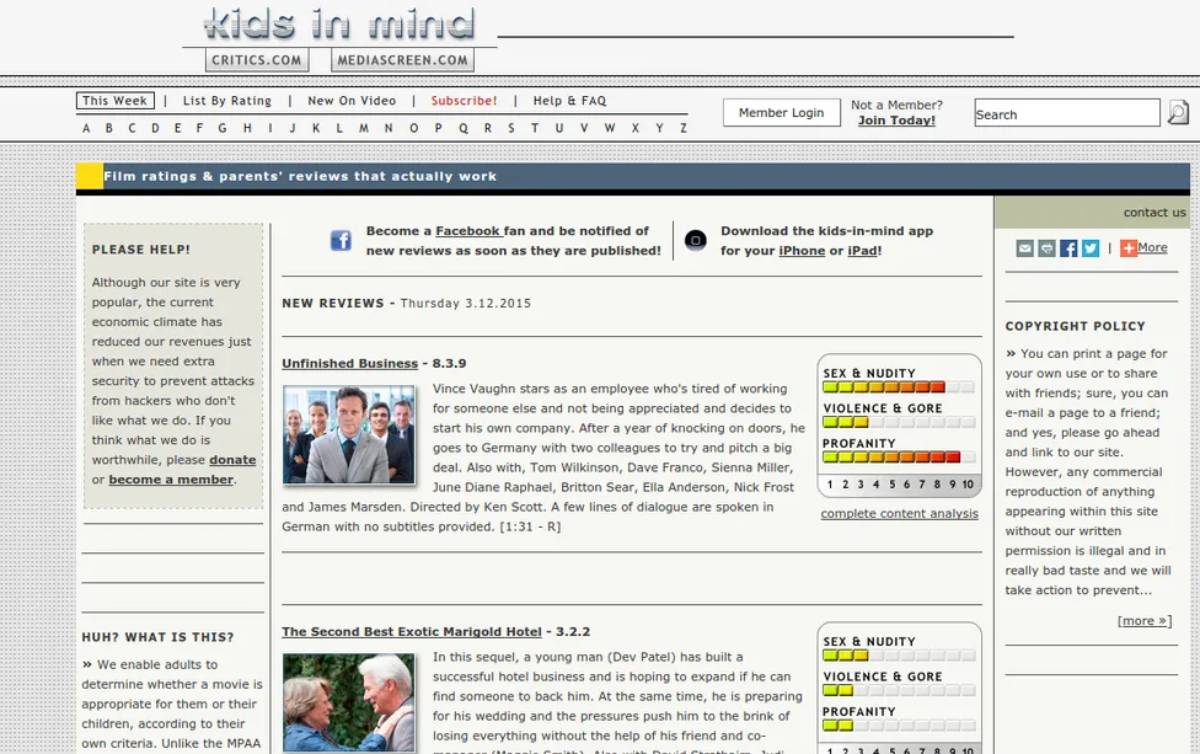
A renewed focus on family-friendly digital entertainment is reinforcing the relevance of Kids-In-Mind, a platform that provides detailed content ratings for movies and television. As streaming libraries expand globally, parents, educators, and media companies are increasingly seeking transparent guidance that goes beyond conventional age classifications, highlighting a broader shift toward informed viewing decisions.
Kids-In-Mind continues to gain attention as audiences demand greater transparency around entertainment content rather than relying solely on traditional age-based ratings. The platform evaluates films across categories including violence, sexual content, and profanity, giving families more detailed information before selecting media.
The growing popularity of on-demand streaming has intensified the need for independent content-review platforms that complement official rating systems. Parents, schools, and educational organizations increasingly rely on such resources to navigate expanding entertainment catalogs.
This trend reflects wider digital consumer expectations for accessible, data-driven decision support in everyday online choices. The rapid growth of streaming platforms has fundamentally transformed media consumption worldwide. Thousands of new films and television series are released annually across subscription, advertising-supported, and free streaming services, making content discovery increasingly complex for households.
Traditional age-rating systems often provide only broad classifications without explaining why specific content received a particular rating. Independent review platforms such as Kids-In-Mind address this information gap by offering category-specific assessments that help viewers make more personalized decisions.
The development aligns with broader digital transparency trends affecting multiple industries, including finance, healthcare, e-commerce, and education, where consumers increasingly expect detailed information before making decisions. For entertainment companies, this evolution underscores the importance of trust, user experience, and responsible content presentation. Enhanced transparency has become a competitive differentiator as audiences seek greater control over digital consumption.
Media analysts suggest that detailed content-rating platforms are becoming increasingly valuable as streaming services compete through larger and more diverse content libraries. Industry observers note that personalized viewing experiences depend not only on recommendation algorithms but also on trustworthy contextual information.
Child development specialists frequently emphasize that parents benefit from descriptive content guidance rather than relying exclusively on generalized age labels. Such information allows families to make decisions based on individual values and children's maturity levels.
Although no official corporate announcement accompanies this broader trend, experts view independent content-review services as complementary to existing regulatory frameworks rather than replacements. Analysts also expect advances in artificial intelligence and metadata analysis to improve the speed, consistency, and scalability of future content classification systems while maintaining human editorial oversight.
For media companies, transparent content information represents an opportunity to strengthen customer trust and improve user engagement. Streaming platforms may increasingly integrate richer metadata, parental controls, and customized filtering tools to enhance subscriber satisfaction.
Investors monitoring the digital entertainment sector may view content intelligence and audience personalization as growing areas of strategic value. Technology providers specializing in recommendation engines, AI classification, and digital safety solutions could also benefit from rising demand.
From a policy perspective, regulators may continue encouraging clearer consumer information while balancing parental choice, freedom of expression, and evolving global standards for digital media governance.
As streaming ecosystems continue expanding, demand for transparent, independent content evaluation is expected to increase. Decision-makers should monitor advances in AI-assisted media classification, evolving parental expectations, and potential regulatory developments surrounding digital content transparency. Organizations that successfully combine detailed content intelligence with intuitive user experiences are likely to strengthen consumer trust and remain well positioned in the increasingly competitive entertainment landscape.
Source: AlternativeTo – Kids-In-Mind
Date: July 30, 2026


