



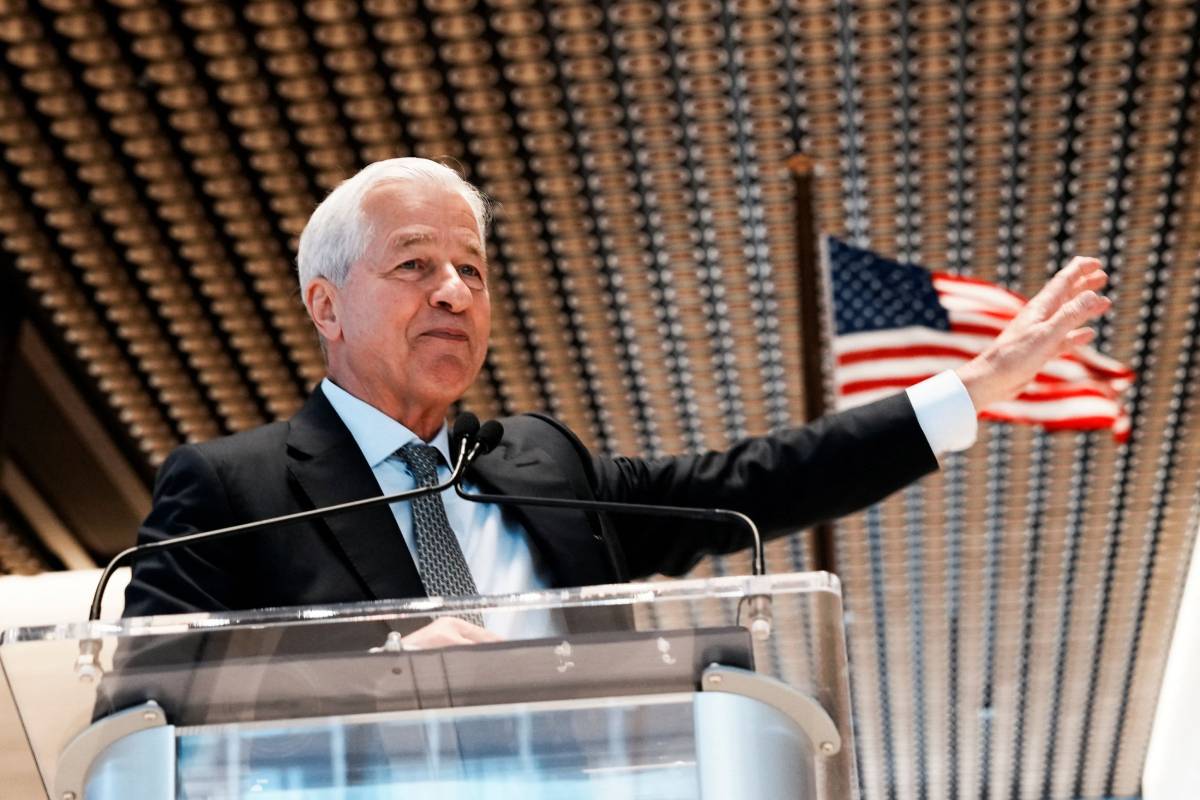
JPMorgan Chase CEO Jamie Dimon revealed that artificial intelligence is actively reshaping the bank’s workforce, prompting a “huge redeployment” of employees across functions. The announcement underscores AI’s transformative impact on finance, with implications for employment, operational efficiency, and strategic resource allocation across global banking markets.
Dimon emphasized that AI is accelerating automation of routine banking tasks, including data analysis, client reporting, and operational workflows. The bank plans large-scale redeployment of employees into high-value roles, such as advisory services, risk management, and AI supervision.
This initiative is part of JPMorgan’s broader digital transformation strategy, aiming to optimize operational costs while enhancing customer engagement. Analysts note that workforce reshaping is expected to influence global banking labor markets, especially in technology-driven hubs.
Investors are closely monitoring how these moves will affect productivity, cost structures, and profit margins. The bank is also investing in employee reskilling programs to mitigate disruption and retain institutional knowledge. The announcement aligns with a global trend in which financial institutions are rapidly adopting AI to drive efficiency and competitiveness.
Banks worldwide are leveraging generative AI, machine learning, and robotic process automation to streamline operations, reduce manual errors, and improve decision-making speed. In this context, JPMorgan’s workforce redeployment plan signals a strategic shift from purely task-based roles toward AI-enhanced, higher-value functions.
Historically, labor transformation in finance has sparked debates over employment security, regulatory compliance, and ethical AI deployment.
Geopolitically, banks in regions with high AI adoption are gaining competitive advantages in cost management and innovation, heightening pressure on global peers to modernize. For executives, the move illustrates the intersection of AI integration, workforce planning, and risk mitigation, emphasizing that successful adoption requires both technology and human capital alignment.
Industry analysts highlight Dimon’s remarks as a forward-looking acknowledgment of AI’s strategic role in banking. “JPMorgan is proactively aligning its workforce with AI capabilities, which could redefine job roles and operational efficiency across the sector,” said a senior banking analyst.
Employee unions have signaled interest in understanding redeployment and reskilling measures, while investor communities are evaluating potential impacts on earnings and productivity.
A JPMorgan spokesperson confirmed that AI deployment will be accompanied by comprehensive training programs, ensuring staff are prepared for new responsibilities. Technology leaders note that AI adoption in banking is increasingly linked to competitive differentiation, with early movers likely to benefit from lower costs and faster product innovation.
Market watchers view the bank’s approach as a model for balancing technological advancement with workforce transition and regulatory oversight. For global executives, JPMorgan’s strategy underscores the urgency of integrating AI into workforce planning.
Companies must anticipate job role evolution, invest in employee reskilling, and align AI deployment with ethical, operational, and regulatory standards. Investors may recalibrate expectations around cost efficiency, margin expansion, and long-term workforce stability.
Financial markets could experience ripple effects if peer banks adopt similar AI-driven redeployment strategies, influencing sector employment dynamics and wage structures. Policymakers and regulators will need to consider frameworks for AI adoption in financial services, focusing on transparency, fairness, and workforce protections.
Boards and C-suite leaders must balance innovation benefits with reputational, legal, and human capital risks to remain competitive.
JPMorgan’s next steps include executing the redeployment plan, monitoring AI integration effectiveness, and measuring workforce impact. Executives should watch reskilling program outcomes, operational performance improvements, and regulatory responses. Uncertainties remain around pace of adoption, employee adaptation, and potential industry-wide competitive shifts.
The initiative signals that banks successfully integrating AI with human capital strategy may gain significant strategic and operational advantages in global financial markets.
Source: CNBC
Date: February 24, 2026


