



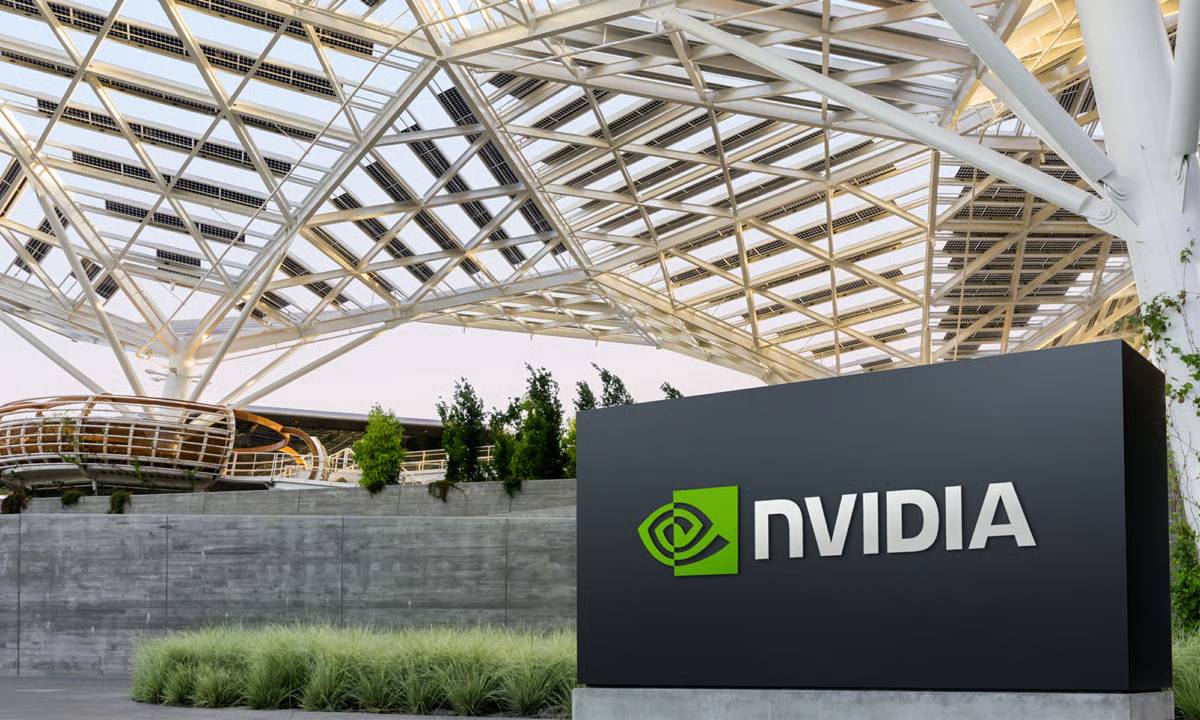
Investor attention is turning sharply toward the next phase of the artificial intelligence market cycle as NVIDIA prepares to report earnings later this month. While Nvidia remains the dominant force in AI chips, some market analysts and investors are beginning to shift focus toward alternative AI infrastructure and software companies offering potentially lower valuations and higher long-term upside.
Nvidia’s upcoming earnings report is expected to serve as a major indicator for the broader AI economy, particularly after the company’s extraordinary rally fueled by demand for generative AI hardware. However, some investors are expressing caution over the stock’s elevated valuation and increasingly intense competition across the semiconductor sector.
The discussion has prompted renewed interest in alternative AI-focused companies positioned to benefit from enterprise adoption, cloud expansion, and AI software integration. Market commentators argue that while Nvidia continues to dominate high-performance AI computing, other firms may offer stronger risk-reward profiles as the industry matures.
The debate reflects a broader transition from momentum-driven investing toward more selective AI market strategies. Over the past several years, Nvidia has emerged as one of the central beneficiaries of the global AI boom, driven by surging demand for GPUs powering large language models, enterprise AI systems, and cloud infrastructure. The company’s market capitalization expansion helped reshape global equity markets and intensified investor interest in semiconductor and AI infrastructure plays.
However, the AI market is entering a more competitive and capital-intensive phase. Rival chipmakers, hyperscalers, and software providers are all attempting to reduce dependence on Nvidia’s ecosystem by developing proprietary hardware, custom accelerators, and alternative AI architectures.
This evolving environment has created growing debate among investors about whether AI valuations remain sustainable. Historical technology cycles—from cloud computing to mobile platforms have shown that early leaders often face mounting pressure as competitors scale and enterprise buyers seek diversified supply chains.
Market strategists suggest Nvidia’s earnings will be closely scrutinized not only for revenue growth but also for signs of margin pressure, supply constraints, and enterprise spending trends. Analysts are particularly focused on whether AI infrastructure demand remains strong enough to justify current valuations across the semiconductor sector.
Some portfolio managers argue that the AI investment cycle is broadening beyond hardware providers into software orchestration, cybersecurity, networking, and AI services. According to industry observers, the next wave of AI value creation may emerge from companies enabling operational deployment rather than simply supplying compute power.
Meanwhile, bullish investors continue to defend Nvidia’s leadership position, pointing to its ecosystem dominance, developer adoption, and strong relationships with hyperscale cloud providers. The differing viewpoints highlight increasing market divergence over how sustainable the first phase of the AI rally may ultimately prove to be.
For businesses, the evolving investment landscape signals that AI adoption strategies may increasingly prioritize flexibility, interoperability, and vendor diversification. Enterprises deploying large-scale AI systems could seek alternatives to concentrated infrastructure dependency as costs and competition rise.
Investors may also begin rotating capital toward second-tier AI companies offering exposure to enterprise deployment, data management, and AI optimization services. This could reshape capital flows across the broader technology sector.
From a policy perspective, governments monitoring AI infrastructure concentration may support efforts to expand semiconductor competition and domestic manufacturing capabilities. The debate surrounding Nvidia’s dominance reflects wider concerns about supply-chain resilience and strategic control over next-generation computing technologies.
Nvidia’s upcoming earnings report is expected to become a critical test for AI market sentiment in 2026. Investors will closely watch guidance on data-center demand, enterprise spending, and competitive pressures. At the same time, attention is likely to broaden toward emerging AI infrastructure and software players positioned to capture the next stage of industry growth. The coming months may determine whether the AI rally continues consolidating around a few dominant firms or expands into a wider technology ecosystem.
Source: The Motley Fool
Date: May 13, 2026


