



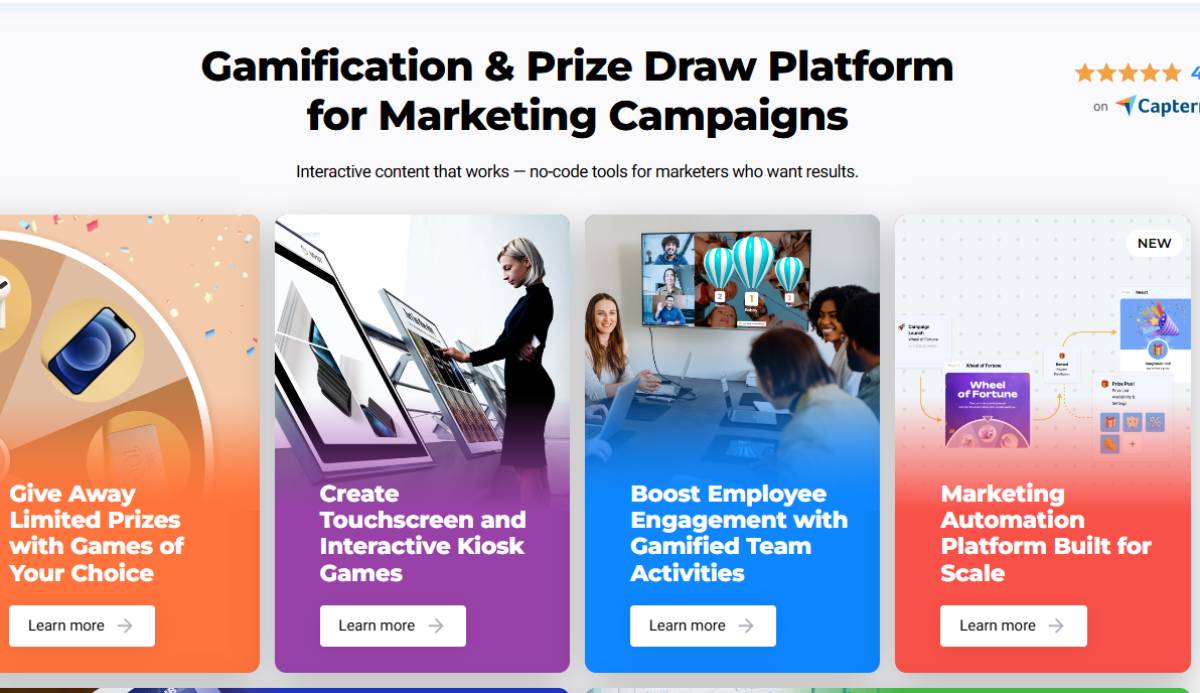
Interacty is strengthening the interactive-content landscape with a platform designed to help businesses, educators and creators develop engaging digital experiences without extensive technical expertise. Its approach reflects a broader shift in marketing and communications toward interactive formats that can capture attention, encourage participation and generate measurable audience insights across digital channels.
Interacty provides tools for creating interactive content such as quizzes, polls, surveys, games, interactive stories and other audience-engagement experiences. Its platform is designed to allow users to build and publish experiences without requiring advanced programming skills.
The technology can be applied across marketing, education, publishing, internal communications and customer engagement. Organizations can use interactive formats to collect responses, encourage participation and create more dynamic digital experiences than traditional static content.
The broader development reflects growing demand for no-code and low-code content creation platforms. As companies compete for limited audience attention, interactive experiences are increasingly being used to make campaigns, educational materials and digital communications more participatory and measurable.
The development aligns with a wider transformation in digital engagement, where organizations are moving beyond static webpages, advertisements and conventional content formats. Consumers and professional audiences increasingly expect personalized, responsive and interactive experiences across digital channels.
Interactive content can serve multiple business purposes. Marketing teams can use quizzes and polls to increase engagement and gather audience information, while educators can create interactive learning experiences designed to encourage participation. Publishers and media organizations can also use interactive formats to present information in more accessible and engaging ways.
The rise of no-code technology has accelerated this trend by allowing nontechnical teams to create sophisticated digital experiences without depending entirely on developers. This can reduce production timelines and enable marketing or communications teams to experiment more quickly.
For executives, the strategic value lies in combining engagement with measurable data. Interactive content can provide organizations with behavioral insights that may support campaign optimization, audience segmentation and customer understanding.
Industry specialists increasingly view interactive content as an important tool for addressing declining attention spans and increasing competition across digital channels. Rather than asking audiences to passively consume information, interactive experiences invite them to participate.
Interacty's platform reflects this broader movement by bringing multiple interactive formats into a single content-creation environment. The no-code approach can make these capabilities accessible to marketing teams, educators and creators without requiring specialized development resources.
From a business perspective, the effectiveness of interactive content depends on more than visual appeal. Organizations need to ensure that experiences are relevant, easy to navigate and connected to measurable objectives.
Executives evaluating such platforms would typically consider ease of use, customization, analytics, publishing flexibility and integration capabilities. Data collection is another important consideration, particularly when interactive experiences collect personal information from customers, students or other participants.
For businesses, interactive content can create new opportunities to increase engagement, gather audience feedback and differentiate digital campaigns. Marketing teams may use interactive experiences to support lead generation, education and customer research.
For executives, the technology can also reduce dependence on development teams for smaller content projects, potentially accelerating campaign experimentation and lowering production costs.
Consumers may benefit from more engaging and personalized digital experiences, although organizations must ensure that data collection is transparent and appropriately managed.
From a policy perspective, interactive platforms that collect user information must consider privacy, consent, data security and applicable regulations. Organizations should establish clear policies around how participant data is collected, stored and used.
The broader commercial impact will depend on whether engagement can translate into measurable outcomes such as leads, conversions, learning results or stronger customer relationships.
Interactive-content technology is likely to evolve toward greater personalization, artificial intelligence, automation and real-time analytics. Platforms may increasingly help users generate interactive experiences while automatically adapting content to audience behavior.
Decision-makers should watch whether these tools can move beyond engagement metrics and demonstrate measurable business or educational outcomes. The strongest platforms will be those that combine simplicity, creativity and analytics while maintaining responsible data practices.
Source: Crozdesk
Date: August 11, 2026


