



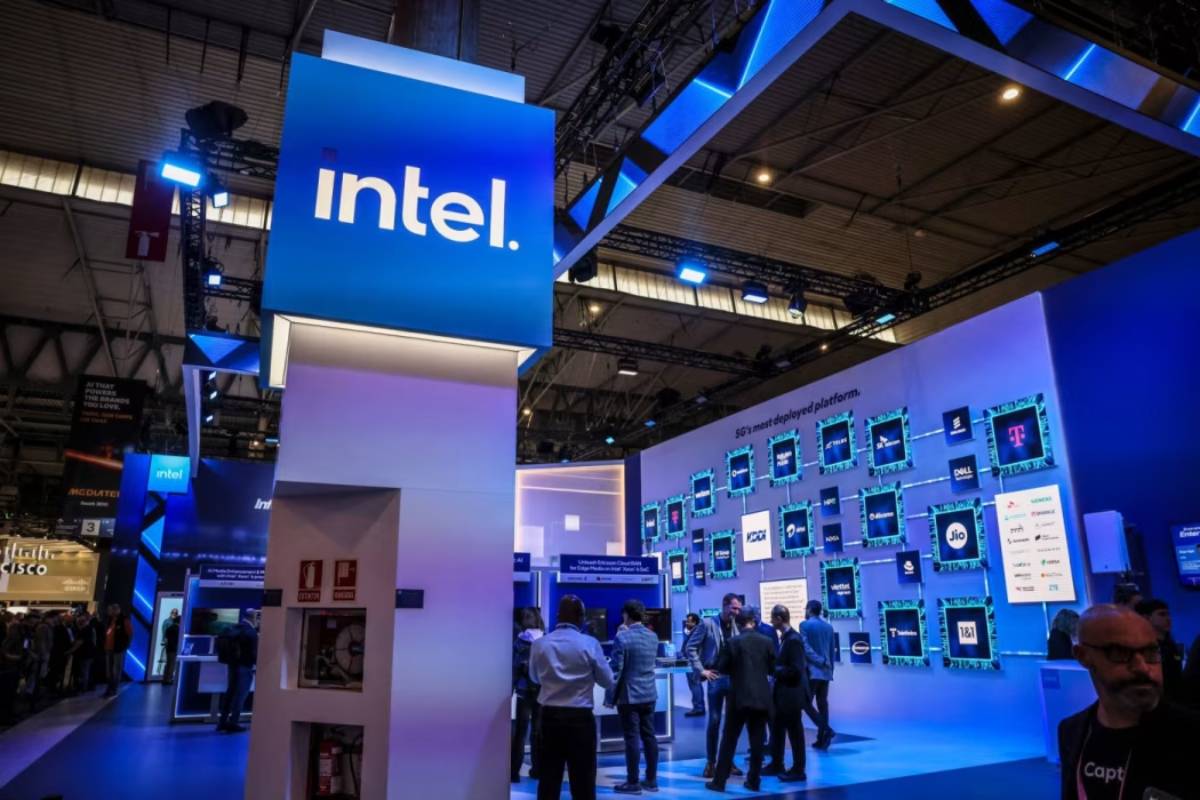
A sharp rally in semiconductor markets has propelled Intel shares up by 20%, driven by stronger-than-expected performance linked to rising adoption of AI agents. The surge highlights growing investor confidence in AI-driven computing demand and signals a potential inflection point in the global semiconductor growth cycle.
Intel reported a 7% rise in sales, with performance supported by increasing demand tied to AI agents and enterprise computing workloads. The earnings results triggered a significant market reaction, pushing the company’s stock up 20% in its strongest single-session gain in recent periods.
The growth was attributed to expanding adoption of AI-enabled applications across data centers and enterprise systems. Management highlighted improving demand visibility and strengthening order pipelines. The results also reflect broader stabilization in semiconductor markets following earlier inventory corrections, with AI infrastructure emerging as a key demand driver across multiple chip categories.
The performance of Intel reflects a broader structural shift in the semiconductor industry, where artificial intelligence particularly AI agents and automation systems is driving sustained demand for compute infrastructure. Unlike previous cycles driven primarily by consumer electronics, the current growth phase is anchored in enterprise AI deployment and cloud-scale computing.
Semiconductor markets have experienced volatility over the past two years due to inventory imbalances and macroeconomic uncertainty. However, AI adoption is reshaping demand patterns across CPUs, accelerators, and networking hardware.
Historically, Intel has faced competitive pressure from specialized chip designers, but the rise of AI agents is creating renewed demand for diversified compute architectures. Governments and enterprises are also increasing investment in digital infrastructure, reinforcing the strategic importance of semiconductor supply chains in global economic competitiveness.
Analysts suggest that the sharp market reaction to Intel’s earnings reflects renewed optimism about the company’s positioning in the AI-driven compute cycle. Experts highlight that while much attention has focused on high-performance AI accelerators, AI agents are expanding demand across a wider range of semiconductor products, including CPUs and system-level chips.
Market strategists note that enterprise adoption of AI agents is accelerating workload intensity in data centers, benefiting infrastructure providers across the semiconductor ecosystem.
Industry commentary also emphasizes that Intel’s improving performance signals a broader recovery in legacy chipmakers as AI demand diversifies beyond hyperscale GPU providers. While no direct quotes are cited, analysts broadly frame the results as evidence of a widening AI hardware investment cycle rather than a narrow segment-specific boom.
For global technology firms, the performance of Intel highlights expanding opportunities across the AI infrastructure stack, extending beyond GPUs into broader compute architectures. Enterprises deploying AI agents may increase demand for diversified semiconductor solutions.
For investors, the rally reinforces confidence that AI-driven growth is not limited to a few dominant players but is spreading across the semiconductor value chain. From a policy perspective, governments are likely to continue prioritizing semiconductor resilience, supply chain diversification, and domestic production capacity, given the strategic importance of AI infrastructure in economic and technological competitiveness.
Looking ahead, attention will focus on whether AI agent adoption continues to drive sustained demand growth across Intel’s product portfolio. Key uncertainties include macroeconomic conditions, competitive pressure, and the durability of AI infrastructure investment cycles. The company’s ability to maintain momentum will depend on continued expansion of enterprise AI workloads and stable semiconductor supply-demand dynamics.
Source: Wall Street Journal
Date: April 23, 2026


