
Intel MSI Unveil Next Gen Handheld

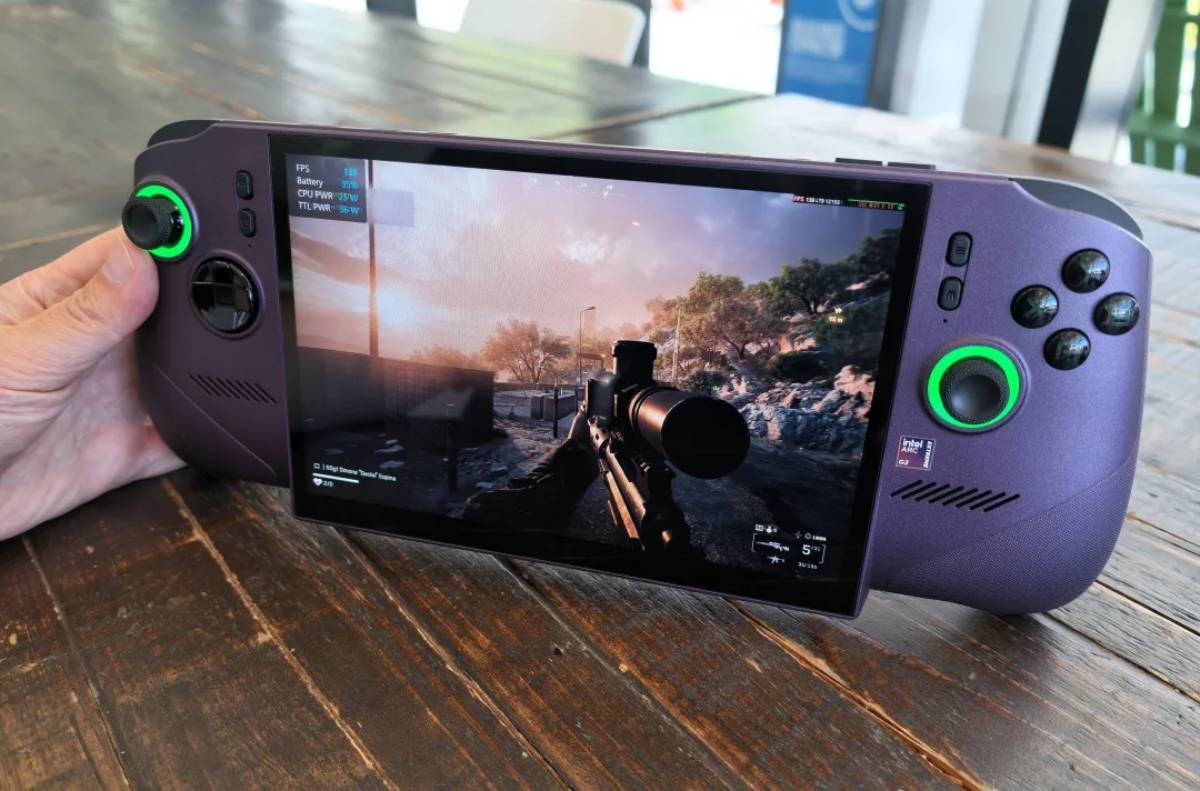
The hands-on preview centers around a next-gen handheld gaming prototype featuring Intel’s upcoming Arc G3 Extreme GPU architecture integrated into MSI’s handheld gaming platform.

June 3, 2026
|
Image Source:  The Verge

A major development in the gaming hardware space unfolded as Intel and MSI showcased the next-generation handheld gaming device powered by Intel’s Arc G3 Extreme graphics architecture. The preview highlights intensifying competition in portable gaming PCs, a segment rapidly evolving as consumers demand console-level performance in mobile form factors.

The hands-on preview centers around a next-gen handheld gaming prototype featuring Intel’s upcoming Arc G3 Extreme GPU architecture integrated into MSI’s handheld gaming platform.

The device represents an evolution of MSI’s portable gaming strategy, building on its earlier handheld efforts to compete in a growing category dominated by PC-console hybrids. Early impressions suggest improvements in graphics efficiency, thermal performance, and power optimization critical factors for sustained handheld gaming workloads.

The preview comes as hardware manufacturers race to define the next generation of portable gaming ecosystems, where performance-per-watt and AI-assisted graphics rendering are becoming key differentiators.

The emergence of next-generation handheld gaming systems reflects a broader shift in the global gaming industry toward hybrid computing devices. As PC gaming, cloud gaming, and console ecosystems converge, manufacturers are exploring compact systems capable of delivering high-end AAA gaming experiences in portable formats.

Intel has been expanding its discrete GPU roadmap to challenge established players in graphics computing, while MSI continues to diversify beyond traditional laptops and desktops into handheld gaming devices.

The competitive landscape is increasingly shaped by demand for energy-efficient, high-performance chips that can support real-time rendering, AI upscaling, and advanced thermal management in constrained environments. This shift is also influenced by the rise of gaming-on-the-go culture, where consumers expect console-like experiences without stationary hardware limitations.

The handheld segment, once niche, is now emerging as a strategic battleground for semiconductor and OEM players. Industry analysts view the collaboration between Intel and MSI as part of a broader push to diversify the handheld gaming ecosystem beyond existing dominant platforms.

Hardware specialists note that Intel’s Arc G3 Extreme architecture, if it delivers expected efficiency gains, could help close the performance gap with competing mobile GPU solutions while enabling better thermal control in compact devices.

Gaming industry observers also highlight that handheld devices are increasingly being positioned as “primary gaming systems” rather than secondary companions to consoles or PCs. However, experts caution that real-world performance, battery life, and developer optimization will determine long-term success.

While official technical benchmarks remain limited, early previews suggest strong emphasis on balancing power consumption with sustained graphical output an essential requirement for competitive handheld gaming hardware.

For businesses, the development signals intensifying competition in the portable gaming hardware segment, with semiconductor firms and OEMs racing to capture early leadership in next-generation handheld ecosystems. This could reshape supply chain priorities across GPUs, chip packaging, and thermal solutions.

For investors, the handheld gaming category is emerging as a new growth frontier within consumer electronics, driven by convergence between PC gaming and mobile form factors. Companies capable of delivering efficient, high-performance silicon may gain strategic advantage.

For consumers, the shift promises more powerful portable gaming experiences, though at potentially higher price points. From a broader industry perspective, this competition could accelerate innovation in energy-efficient computing and AI-driven graphics rendering technologies.

The next phase for Intel and MSI will depend on final product performance, pricing strategy, and developer ecosystem support. Key factors to watch include battery efficiency, real-world gaming benchmarks, and adoption against competing handheld platforms. As the segment matures, success will hinge on delivering console-grade experiences in truly portable, power-efficient designs.

Source: The Verge
Date: June 3, 2026

  • Featured tools
Figstack AI
Free

Figstack AI is an intelligent assistant for developers that explains code, generates docstrings, converts code between languages, and analyzes time complexity helping you work smarter, not harder.

#
Coding
Learn more
Kreateable AI
Free

Kreateable AI is a white-label, AI-driven design platform that enables logo generation, social media posts, ads, and more for businesses, agencies, and service providers.

#
Logo Generator
Learn more

Learn more about future of AI

Join 80,000+ Ai enthusiast getting weekly updates on exciting AI tools.
Thank you! Your submission has been received!
Oops! Something went wrong while submitting the form.

Intel MSI Unveil Next Gen Handheld

June 3, 2026

The hands-on preview centers around a next-gen handheld gaming prototype featuring Intel’s upcoming Arc G3 Extreme GPU architecture integrated into MSI’s handheld gaming platform.

Image Source:  The Verge

A major development in the gaming hardware space unfolded as Intel and MSI showcased the next-generation handheld gaming device powered by Intel’s Arc G3 Extreme graphics architecture. The preview highlights intensifying competition in portable gaming PCs, a segment rapidly evolving as consumers demand console-level performance in mobile form factors.

The hands-on preview centers around a next-gen handheld gaming prototype featuring Intel’s upcoming Arc G3 Extreme GPU architecture integrated into MSI’s handheld gaming platform.

The device represents an evolution of MSI’s portable gaming strategy, building on its earlier handheld efforts to compete in a growing category dominated by PC-console hybrids. Early impressions suggest improvements in graphics efficiency, thermal performance, and power optimization critical factors for sustained handheld gaming workloads.

The preview comes as hardware manufacturers race to define the next generation of portable gaming ecosystems, where performance-per-watt and AI-assisted graphics rendering are becoming key differentiators.

The emergence of next-generation handheld gaming systems reflects a broader shift in the global gaming industry toward hybrid computing devices. As PC gaming, cloud gaming, and console ecosystems converge, manufacturers are exploring compact systems capable of delivering high-end AAA gaming experiences in portable formats.

Intel has been expanding its discrete GPU roadmap to challenge established players in graphics computing, while MSI continues to diversify beyond traditional laptops and desktops into handheld gaming devices.

The competitive landscape is increasingly shaped by demand for energy-efficient, high-performance chips that can support real-time rendering, AI upscaling, and advanced thermal management in constrained environments. This shift is also influenced by the rise of gaming-on-the-go culture, where consumers expect console-like experiences without stationary hardware limitations.

The handheld segment, once niche, is now emerging as a strategic battleground for semiconductor and OEM players. Industry analysts view the collaboration between Intel and MSI as part of a broader push to diversify the handheld gaming ecosystem beyond existing dominant platforms.

Hardware specialists note that Intel’s Arc G3 Extreme architecture, if it delivers expected efficiency gains, could help close the performance gap with competing mobile GPU solutions while enabling better thermal control in compact devices.

Gaming industry observers also highlight that handheld devices are increasingly being positioned as “primary gaming systems” rather than secondary companions to consoles or PCs. However, experts caution that real-world performance, battery life, and developer optimization will determine long-term success.

While official technical benchmarks remain limited, early previews suggest strong emphasis on balancing power consumption with sustained graphical output an essential requirement for competitive handheld gaming hardware.

For businesses, the development signals intensifying competition in the portable gaming hardware segment, with semiconductor firms and OEMs racing to capture early leadership in next-generation handheld ecosystems. This could reshape supply chain priorities across GPUs, chip packaging, and thermal solutions.

For investors, the handheld gaming category is emerging as a new growth frontier within consumer electronics, driven by convergence between PC gaming and mobile form factors. Companies capable of delivering efficient, high-performance silicon may gain strategic advantage.

For consumers, the shift promises more powerful portable gaming experiences, though at potentially higher price points. From a broader industry perspective, this competition could accelerate innovation in energy-efficient computing and AI-driven graphics rendering technologies.

The next phase for Intel and MSI will depend on final product performance, pricing strategy, and developer ecosystem support. Key factors to watch include battery efficiency, real-world gaming benchmarks, and adoption against competing handheld platforms. As the segment matures, success will hinge on delivering console-grade experiences in truly portable, power-efficient designs.

Source: The Verge
Date: June 3, 2026

Promote Your Tool

Copy Embed Code

Similar Blogs

June 26, 2026
|

AlpineAI Raises Seed Round

AlpineAI has successfully closed a double-digit million seed funding round aimed at accelerating the development of sovereign AI technologies.
Read more
June 26, 2026
|

BLP Digital Raises $50M Funding Round

BLP Digital has secured $50 million in strategic funding from Goldman Sachs to accelerate the expansion of its AI-driven enterprise solutions.
Read more
June 26, 2026
|

Giotto AI RUAG Secure AI

Giotto.ai and RUAG have entered into a cooperation agreement focused on the distribution and deployment of state-of-the-art AI solutions across defense and industrial domains.
Read more
June 26, 2026
|

Fruitful AI Secures Funding Round

Fruitful AI has successfully completed a strategic investment round, strengthening its financial position to scale operations and enhance its AI-driven product suite.
Read more
June 26, 2026
|

Visium Raises AI Funding Round

Visium has successfully raised fresh funding aimed at scaling its operations across key European markets and expanding deeper into the US enterprise AI ecosystem.
Read more
June 26, 2026
|

Nuclidium Raises CHF 105M Series B

Nuclidium has successfully expanded its Series B funding round to CHF 105 million through a latest extension, attracting continued backing from existing and new investors.
Read more