
Infosys Identifies Financial Services as Primary Catalyst for AI Growth

The CEO emphasized partnerships with global banks, insurers, and fintech firms to co-develop AI solutions tailored to sector-specific challenges. Investments in AI platforms, cloud integration.

January 23, 2026
|

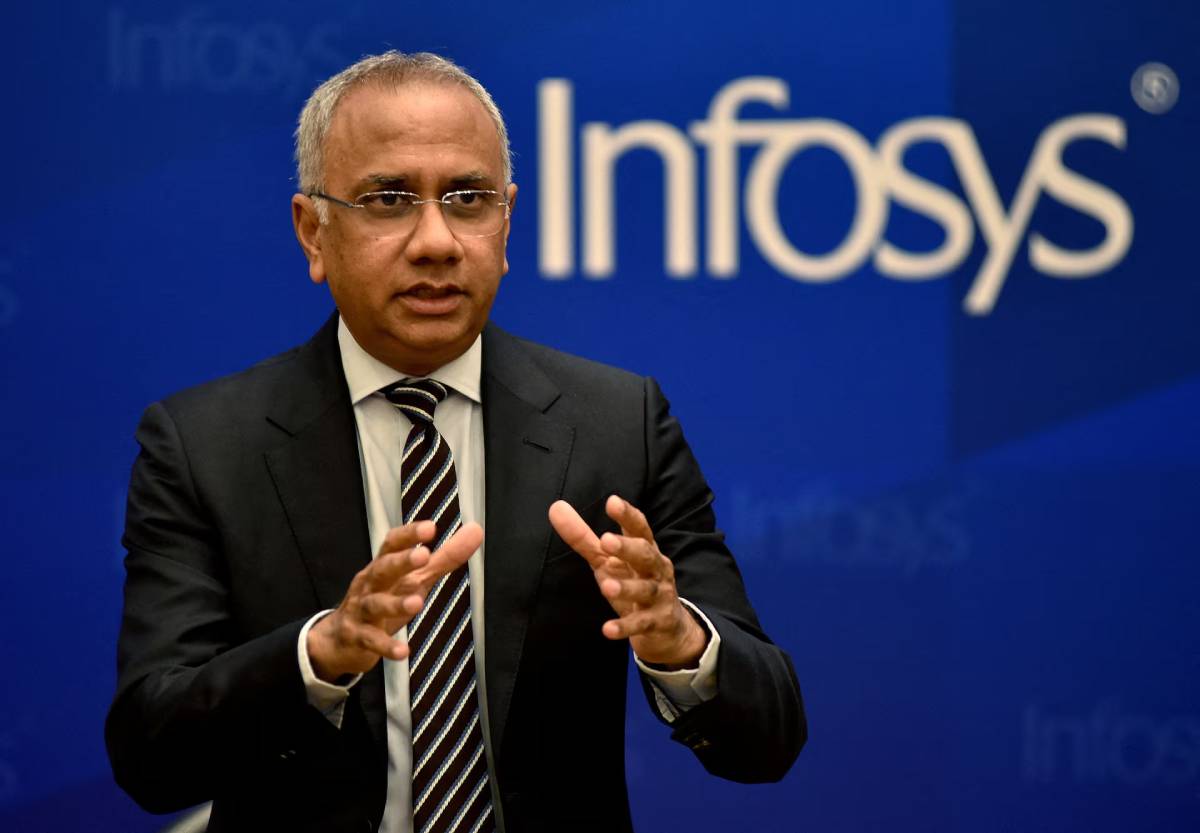
A major development unfolded today as Infosys CEO highlighted financial services as a critical driver of AI adoption and revenue growth. The sector’s demand for automation, predictive analytics, and risk management solutions is positioning it at the forefront of enterprise AI deployment, influencing global technology investments and signaling strategic opportunities for both service providers and financial institutions.

Infosys reported that financial services clients are increasingly deploying AI for fraud detection, personalized banking, risk management, and operational efficiency. The company expects these initiatives to contribute significantly to its AI-driven revenue streams in 2026.

The CEO emphasized partnerships with global banks, insurers, and fintech firms to co-develop AI solutions tailored to sector-specific challenges. Investments in AI platforms, cloud integration, and machine learning capabilities are accelerating, reflecting both market demand and competitive pressures. Analysts note that this trend is reshaping technology budgets in the financial sector, creating a ripple effect across global IT service providers and influencing AI adoption strategies worldwide.

The development aligns with a broader trend where financial services are leading AI adoption among enterprise sectors. Historically, banks and insurers relied heavily on manual processes and legacy systems, which limited scalability and agility. The convergence of AI with cloud computing, data analytics, and cybersecurity has created a fertile environment for transformation.

Global competition and regulatory pressures are compelling financial institutions to enhance efficiency, reduce operational risks, and deliver personalized customer experiences. Infosys, as a major IT services provider, leverages AI to address these challenges, offering solutions that span process automation, predictive analytics, and intelligent customer engagement. This focus positions the company as a strategic partner in the financial sector’s modernization journey, influencing investment patterns, technological roadmaps, and long-term industry competitiveness.

Industry analysts underscore financial services as a natural leader in AI adoption due to the sector’s high data intensity and regulatory complexity. “AI is no longer optional for banks and insurers it’s central to managing risk and improving customer engagement,” said a global fintech analyst.

Infosys executives highlighted their AI-first approach, including co-creation labs with clients, to deploy machine learning and natural language processing at scale. Early case studies report measurable gains in fraud detection accuracy, credit risk modeling, and process automation, validating investment returns.

Regulatory bodies are monitoring AI adoption closely, ensuring compliance with data privacy and ethical AI standards. Industry observers note that firms successfully integrating AI solutions will gain a competitive edge, while laggards risk losing operational efficiency and market share. This underscores AI’s strategic and operational importance in financial services.

For global executives, the financial sector’s AI adoption signals a shift in enterprise technology priorities. IT service providers like Infosys can leverage sector-specific AI solutions to drive growth, while investors may redirect capital toward companies demonstrating AI-enabled scalability and compliance.

Financial institutions face opportunities to enhance operational efficiency, improve risk management, and deepen customer personalization. Governments and regulators may update frameworks to address AI-driven financial decision-making, requiring alignment with ethical, transparency, and security standards. Analysts caution that early adoption will define competitive positioning, while delays in AI integration could result in higher operational costs, reduced profitability, and diminished market credibility.

Decision-makers should monitor AI-driven deployments in fraud prevention, risk analytics, and customer engagement, as these areas will define competitive differentiation. The pace of AI adoption, regulatory alignment, and technological scalability will be critical indicators of sector transformation. While uncertainties remain around integration complexity and ethical compliance, financial services are poised to remain the leading catalyst for enterprise AI innovation globally.

Source & Date

Source: CNBC
Date: January 22, 2026

  • Featured tools
Twistly AI
Paid

Twistly AI is a PowerPoint add-in that allows users to generate full slide decks, improve existing presentations, and convert various content types into polished slides directly within Microsoft PowerPoint.It streamlines presentation creation using AI-powered text analysis, image generation and content conversion.

#
Presentation
Learn more
Figstack AI
Free

Figstack AI is an intelligent assistant for developers that explains code, generates docstrings, converts code between languages, and analyzes time complexity helping you work smarter, not harder.

#
Coding
Learn more

Learn more about future of AI

Join 80,000+ Ai enthusiast getting weekly updates on exciting AI tools.
Thank you! Your submission has been received!
Oops! Something went wrong while submitting the form.

Infosys Identifies Financial Services as Primary Catalyst for AI Growth

January 23, 2026

The CEO emphasized partnerships with global banks, insurers, and fintech firms to co-develop AI solutions tailored to sector-specific challenges. Investments in AI platforms, cloud integration.

A major development unfolded today as Infosys CEO highlighted financial services as a critical driver of AI adoption and revenue growth. The sector’s demand for automation, predictive analytics, and risk management solutions is positioning it at the forefront of enterprise AI deployment, influencing global technology investments and signaling strategic opportunities for both service providers and financial institutions.

Infosys reported that financial services clients are increasingly deploying AI for fraud detection, personalized banking, risk management, and operational efficiency. The company expects these initiatives to contribute significantly to its AI-driven revenue streams in 2026.

The CEO emphasized partnerships with global banks, insurers, and fintech firms to co-develop AI solutions tailored to sector-specific challenges. Investments in AI platforms, cloud integration, and machine learning capabilities are accelerating, reflecting both market demand and competitive pressures. Analysts note that this trend is reshaping technology budgets in the financial sector, creating a ripple effect across global IT service providers and influencing AI adoption strategies worldwide.

The development aligns with a broader trend where financial services are leading AI adoption among enterprise sectors. Historically, banks and insurers relied heavily on manual processes and legacy systems, which limited scalability and agility. The convergence of AI with cloud computing, data analytics, and cybersecurity has created a fertile environment for transformation.

Global competition and regulatory pressures are compelling financial institutions to enhance efficiency, reduce operational risks, and deliver personalized customer experiences. Infosys, as a major IT services provider, leverages AI to address these challenges, offering solutions that span process automation, predictive analytics, and intelligent customer engagement. This focus positions the company as a strategic partner in the financial sector’s modernization journey, influencing investment patterns, technological roadmaps, and long-term industry competitiveness.

Industry analysts underscore financial services as a natural leader in AI adoption due to the sector’s high data intensity and regulatory complexity. “AI is no longer optional for banks and insurers it’s central to managing risk and improving customer engagement,” said a global fintech analyst.

Infosys executives highlighted their AI-first approach, including co-creation labs with clients, to deploy machine learning and natural language processing at scale. Early case studies report measurable gains in fraud detection accuracy, credit risk modeling, and process automation, validating investment returns.

Regulatory bodies are monitoring AI adoption closely, ensuring compliance with data privacy and ethical AI standards. Industry observers note that firms successfully integrating AI solutions will gain a competitive edge, while laggards risk losing operational efficiency and market share. This underscores AI’s strategic and operational importance in financial services.

For global executives, the financial sector’s AI adoption signals a shift in enterprise technology priorities. IT service providers like Infosys can leverage sector-specific AI solutions to drive growth, while investors may redirect capital toward companies demonstrating AI-enabled scalability and compliance.

Financial institutions face opportunities to enhance operational efficiency, improve risk management, and deepen customer personalization. Governments and regulators may update frameworks to address AI-driven financial decision-making, requiring alignment with ethical, transparency, and security standards. Analysts caution that early adoption will define competitive positioning, while delays in AI integration could result in higher operational costs, reduced profitability, and diminished market credibility.

Decision-makers should monitor AI-driven deployments in fraud prevention, risk analytics, and customer engagement, as these areas will define competitive differentiation. The pace of AI adoption, regulatory alignment, and technological scalability will be critical indicators of sector transformation. While uncertainties remain around integration complexity and ethical compliance, financial services are poised to remain the leading catalyst for enterprise AI innovation globally.

Source & Date

Source: CNBC
Date: January 22, 2026

Promote Your Tool

Copy Embed Code

Similar Blogs

January 23, 2026
|

Intel Faces AI Data Center Supply Crunch, Shares Slide 13%

Intel reported that its current production capacity is insufficient to meet skyrocketing demand from hyperscale data centers deploying AI workloads. Short-term supply constraints have affected new orders.
Read more
January 23, 2026
|

Johansson & Blanchett Support Campaign Accusing AI Firms Theft

A major development unfolded today as Scarlett Johansson and Cate Blanchett publicly endorsed a campaign alleging that AI companies are misappropriating creative content. The move highlights rising tensions.
Read more
January 23, 2026
|

OpenAI Faces Strategic Uncertainty Amid Investor Leadership Concerns

Noble, a renowned tech investor, publicly questioned CEO Sam Altman’s strategic decisions, citing risks tied to rapid scaling, competitive pressures, and operational governance.
Read more
January 23, 2026
|

Infosys Identifies Financial Services as Primary Catalyst for AI Growth

The CEO emphasized partnerships with global banks, insurers, and fintech firms to co-develop AI solutions tailored to sector-specific challenges. Investments in AI platforms, cloud integration.
Read more
January 23, 2026
|

Fossil fuels are a crutch: How AI’s unlikely winner could be renewable energy

AI applications are streamlining energy production, storage, and distribution in solar, wind, and battery systems, improving predictive maintenance and grid management. Several AI startups.
Read more
January 23, 2026
|

Apple Explores AI Pin with Cameras, Microphones, Next-Gen Wearable

Apple aims to leverage its ecosystem iOS, WatchOS, and AirPods for seamless connectivity, creating a cohesive experience across devices. Competitors in AI wearables, including Google, Meta, and emerging startups.
Read more