
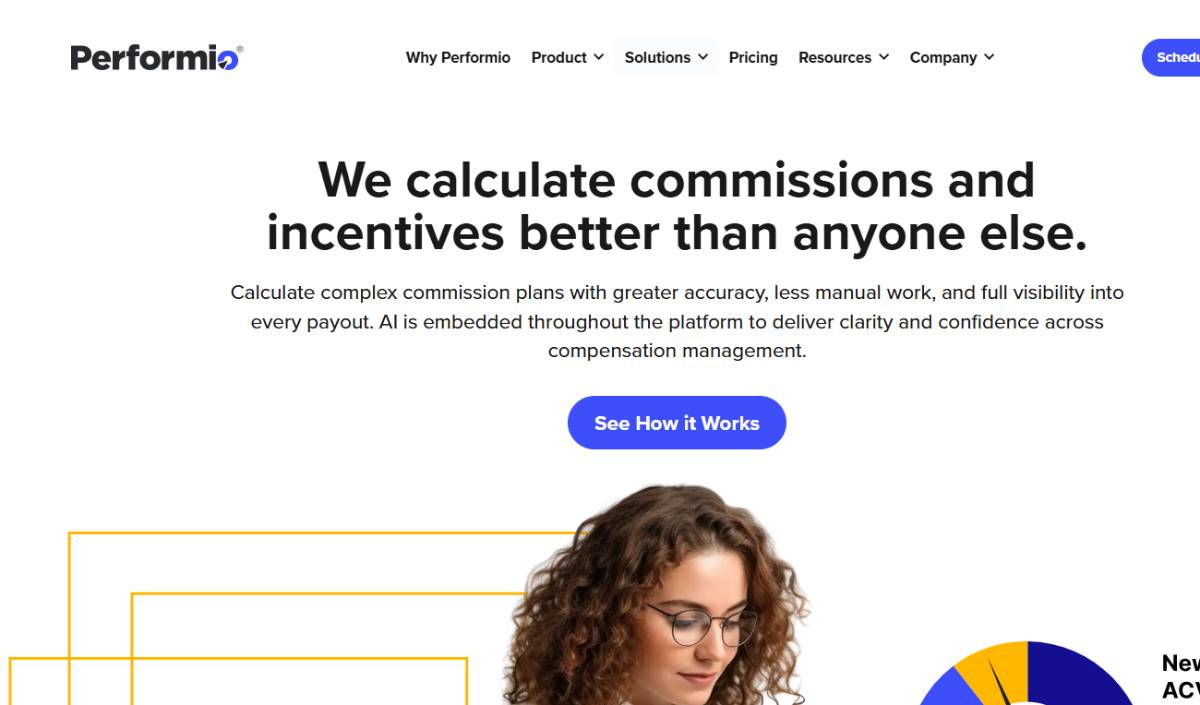
Incentive Software Reshapes Enterprise Performance Management

The incentive compensation management market is centered on software designed to automate the planning, calculation and administration of performance-based compensation.

August 10, 2026
|

Incentive compensation management is becoming a strategic priority as enterprises seek stronger links between employee performance, sales outcomes and business growth. Modern compensation platforms help organizations automate complex incentive calculations, improve payout accuracy and provide greater visibility into compensation programs, affecting sales teams, finance leaders, HR departments and senior executives.

The incentive compensation management market is centered on software designed to automate the planning, calculation and administration of performance-based compensation. Organizations can use these platforms to manage commission structures, bonus programs, quotas, targets and payout calculations.

The technology addresses a persistent enterprise challenge: compensation programs can become difficult to manage as organizations expand across products, territories, currencies and employee groups.

Automation can reduce manual spreadsheet-based processes while providing greater consistency and transparency. For sales organizations in particular, accurate and timely compensation calculations can influence employee motivation and confidence in the company's reward structure.

The growing adoption of analytics and workflow automation is further moving compensation management toward a more data-driven operating model. The development aligns with a broader trend across global enterprises where compensation is increasingly viewed as a strategic lever rather than a back-office administrative function. Companies are under pressure to attract and retain high-performing employees while ensuring compensation programs support broader commercial objectives.

Sales organizations face particular complexity because compensation can depend on multiple variables, including revenue, margins, product categories, customer segments, territories and performance thresholds. As these structures become more sophisticated, manual calculations can create errors, disputes and delays.

Global organizations also need to manage compensation across different currencies, tax environments and regulatory requirements. This makes centralized technology increasingly valuable for finance and HR leadership.

The rise of artificial intelligence and advanced analytics could further change the category by enabling organizations to model compensation scenarios, identify unusual payout patterns and evaluate whether incentive plans are producing the intended behaviors. The strategic objective is increasingly to connect compensation design with measurable business performance.

Industry experts generally emphasize that effective incentive programs require alignment between employee behavior and organizational strategy. A compensation plan that rewards the wrong metrics can increase costs without generating sustainable growth.

For finance and HR leaders, automation provides an opportunity to improve governance while reducing the operational burden associated with complex compensation structures. Centralized systems can establish consistent calculation rules, approval workflows and audit trails.

Sales executives also benefit from greater visibility. When employees can understand how targets translate into compensation, organizations may reduce disputes and improve confidence in incentive programs.

However, technology alone cannot solve poorly designed compensation structures. Executives must regularly evaluate whether incentives encourage profitable growth, customer retention and other strategic outcomes rather than simply maximizing short-term volume.

As businesses introduce AI into compensation processes, analysts will also focus on transparency, data quality and governance. Compensation decisions can directly affect employees' earnings, making accuracy and explainability especially important.

For businesses, incentive compensation software can improve operational efficiency, reduce calculation errors and provide executives with stronger visibility into compensation costs. Sales organizations may gain faster access to commission information, while finance teams can improve forecasting and reconciliation.

Investors may view effective incentive governance as an indicator of disciplined cost management and stronger alignment between workforce rewards and corporate objectives. For employees, transparent compensation calculations can improve trust, although poorly configured systems could create new disputes if underlying rules or data are inaccurate.

From a policy perspective, organizations must ensure incentive programs comply with employment, tax, financial-reporting and compensation regulations across relevant jurisdictions. Strong audit controls and data governance will therefore remain essential as enterprises increasingly automate compensation management.

The next phase of incentive compensation management is likely to combine automation, predictive analytics and AI-assisted planning. Enterprises will increasingly evaluate not only whether commissions are calculated correctly, but whether incentive structures actually drive profitable and sustainable performance. Decision-makers should monitor integration capabilities, reporting accuracy, governance, scalability and employee transparency. Compensation technology is moving toward becoming a strategic management system rather than simply a payroll-support function.

Source: Crozdesk
Date: August 10, 2026

  • Featured tools
Beautiful AI
Free

Beautiful AI is an AI-powered presentation platform that automates slide design and formatting, enabling users to create polished, on-brand presentations quickly.

#
Presentation
Learn more
Surfer AI
Free

Surfer AI is an AI-powered content creation assistant built into the Surfer SEO platform, designed to generate SEO-optimized articles from prompts, leveraging data from search results to inform tone, structure, and relevance.

#
SEO
Learn more

Learn more about future of AI

Join 80,000+ Ai enthusiast getting weekly updates on exciting AI tools.
Thank you! Your submission has been received!
Oops! Something went wrong while submitting the form.

Incentive Software Reshapes Enterprise Performance Management

August 10, 2026

The incentive compensation management market is centered on software designed to automate the planning, calculation and administration of performance-based compensation.

Incentive compensation management is becoming a strategic priority as enterprises seek stronger links between employee performance, sales outcomes and business growth. Modern compensation platforms help organizations automate complex incentive calculations, improve payout accuracy and provide greater visibility into compensation programs, affecting sales teams, finance leaders, HR departments and senior executives.

The incentive compensation management market is centered on software designed to automate the planning, calculation and administration of performance-based compensation. Organizations can use these platforms to manage commission structures, bonus programs, quotas, targets and payout calculations.

The technology addresses a persistent enterprise challenge: compensation programs can become difficult to manage as organizations expand across products, territories, currencies and employee groups.

Automation can reduce manual spreadsheet-based processes while providing greater consistency and transparency. For sales organizations in particular, accurate and timely compensation calculations can influence employee motivation and confidence in the company's reward structure.

The growing adoption of analytics and workflow automation is further moving compensation management toward a more data-driven operating model. The development aligns with a broader trend across global enterprises where compensation is increasingly viewed as a strategic lever rather than a back-office administrative function. Companies are under pressure to attract and retain high-performing employees while ensuring compensation programs support broader commercial objectives.

Sales organizations face particular complexity because compensation can depend on multiple variables, including revenue, margins, product categories, customer segments, territories and performance thresholds. As these structures become more sophisticated, manual calculations can create errors, disputes and delays.

Global organizations also need to manage compensation across different currencies, tax environments and regulatory requirements. This makes centralized technology increasingly valuable for finance and HR leadership.

The rise of artificial intelligence and advanced analytics could further change the category by enabling organizations to model compensation scenarios, identify unusual payout patterns and evaluate whether incentive plans are producing the intended behaviors. The strategic objective is increasingly to connect compensation design with measurable business performance.

Industry experts generally emphasize that effective incentive programs require alignment between employee behavior and organizational strategy. A compensation plan that rewards the wrong metrics can increase costs without generating sustainable growth.

For finance and HR leaders, automation provides an opportunity to improve governance while reducing the operational burden associated with complex compensation structures. Centralized systems can establish consistent calculation rules, approval workflows and audit trails.

Sales executives also benefit from greater visibility. When employees can understand how targets translate into compensation, organizations may reduce disputes and improve confidence in incentive programs.

However, technology alone cannot solve poorly designed compensation structures. Executives must regularly evaluate whether incentives encourage profitable growth, customer retention and other strategic outcomes rather than simply maximizing short-term volume.

As businesses introduce AI into compensation processes, analysts will also focus on transparency, data quality and governance. Compensation decisions can directly affect employees' earnings, making accuracy and explainability especially important.

For businesses, incentive compensation software can improve operational efficiency, reduce calculation errors and provide executives with stronger visibility into compensation costs. Sales organizations may gain faster access to commission information, while finance teams can improve forecasting and reconciliation.

Investors may view effective incentive governance as an indicator of disciplined cost management and stronger alignment between workforce rewards and corporate objectives. For employees, transparent compensation calculations can improve trust, although poorly configured systems could create new disputes if underlying rules or data are inaccurate.

From a policy perspective, organizations must ensure incentive programs comply with employment, tax, financial-reporting and compensation regulations across relevant jurisdictions. Strong audit controls and data governance will therefore remain essential as enterprises increasingly automate compensation management.

The next phase of incentive compensation management is likely to combine automation, predictive analytics and AI-assisted planning. Enterprises will increasingly evaluate not only whether commissions are calculated correctly, but whether incentive structures actually drive profitable and sustainable performance. Decision-makers should monitor integration capabilities, reporting accuracy, governance, scalability and employee transparency. Compensation technology is moving toward becoming a strategic management system rather than simply a payroll-support function.

Source: Crozdesk
Date: August 10, 2026

Promote Your Tool

Copy Embed Code

Similar Blogs

August 14, 2026
|

Benefitfocus Expands Digital Benefits Administration

Benefitfocus provides cloud-based technology covering benefits enrollment, administration, communications, billing, payments and data exchange.
Read more
August 14, 2026
|

Travel Agent Revenue Models Evolve Digitally

Travel agencies can earn commissions when customers book hotels, cruises, tours, vacation packages and other travel products through them. Suppliers may pay agents for generating bookings, making commissions a traditional component of agency revenue.
Read more
August 14, 2026
|

Sofon Advances Guided Selling CPQ Automation

Sofon's platform combines guided selling, product configuration, pricing, quotation and sales-management capabilities. Guided questionnaires help sales teams identify customer requirements and translate them into suitable product configurations.
Read more
August 14, 2026
|

WellRyde Advances Medical Transportation Management

WellRyde provides technology for managing non-emergency medical transportation operations, including trip scheduling, dispatch coordination, transportation-provider management and reporting.
Read more
August 14, 2026
|

Review WAVE Advances Digital Patient Engagement

Review WAVE provides healthcare practices with tools for online appointment scheduling, two-way texting, automated appointment reminders, digital forms, web chat, marketing campaigns and online review generation.
Read more
August 14, 2026
|

Edgenuity Expands Digital Virtual Education

Edgenuity provides digital curriculum and learning solutions covering core academic subjects, electives, Advanced Placement and career-oriented education.
Read more